 Back
BackCell Biology Study Guide: Nervous System, Homeostasis, and Regulation
Study Guide - Smart Notes
 Tailored notes based on your materials, expanded with key definitions, examples, and context.
The Nervous System and Cellular Response
Overview of the Nervous System
The nervous system is essential for organisms to detect and respond to environmental changes. It consists of specialized cells and organs that transmit electrical impulses rapidly throughout the body. - Key Point 1: The nervous system carries electrical impulses at speeds up to 120 m/sec, enabling quick reactions. - Key Point 2: The central nervous system (CNS) comprises the brain and spinal cord, coordinating responses to stimuli. 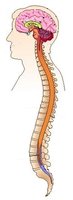
Receptors and Sense Organs
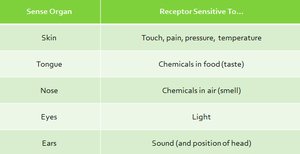
Receptors are specialized cells that detect specific stimuli and convert them into electrical impulses. These are often located in sense organs, each sensitive to particular types of stimuli. - Key Point 1: Sense organs include skin, tongue, nose, eyes, and ears, each with receptors for different stimuli. - Key Point 2: Receptors transform environmental changes into electrical signals for the nervous system.
Sense Organ | Receptor Sensitive To... |
|---|---|
Skin | Touch, pain, pressure, temperature |
Tongue | Chemicals in food (taste) |
Nose | Chemicals in air (smell) |
Eyes | Light |
Ears | Sound (and position of head) |
Neurones and Signal Transmission
Neurones are nerve cells that carry information as electrical signals. There are three main types, each with distinct functions. - Key Point 1: Sensory neurones transmit signals from receptors to the CNS. - Key Point 2: Relay neurones connect different parts of the CNS. - Key Point 3: Motor neurones carry signals from the CNS to effectors. 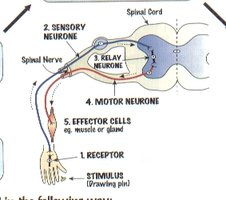
Stimulus-Response Pathway
The body responds to environmental changes through a coordinated pathway: stimulus → receptor → coordinator → effector → response. - Key Point 1: Stimulus: Change in the environment. - Key Point 2: Receptor: Specialized cell detecting the stimulus. - Key Point 3: Coordinator: CNS (brain/spinal cord) processes the signal. - Key Point 4: Effector: Muscle or gland producing the response. - Key Point 5: Response: The resulting change in the body.
Conscious vs Reflex Responses
Conscious responses involve the brain's decision-making, while reflex actions are rapid and bypass the brain for immediate reaction. - Key Point 1: Reflex actions protect the body from harm by providing quick, automatic responses. - Key Point 2: Reflex arc: stimulus → receptor → sensory neurone → relay neurone → motor neurone → effector → response.
Homeostasis: Maintaining Internal Stability
Definition and Importance
Homeostasis is the process of maintaining a stable internal environment, crucial for cell function and survival. It is regulated by the nervous system and hormones. - Key Point 1: Internal conditions controlled include water, ions, temperature, and blood glucose. - Key Point 2: Disruption of homeostasis can damage cells and affect overall health.
Water and Ion Regulation
Water and ion content are regulated to prevent cellular damage from osmotic imbalances. - Key Point 1: Water is lost via lungs, skin, and urine; ions are lost through sweating and urine. - Key Point 2: Proper regulation prevents excessive water movement in or out of cells. 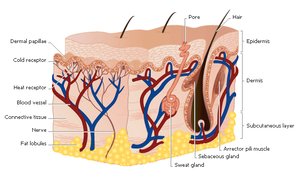
Thermoregulation
Body temperature is controlled to optimize enzyme activity and prevent harm from extreme temperatures. - Key Point 1: Blood flow to the skin, sweating, and shivering are mechanisms for temperature control. - Key Point 2: Vasodilation increases blood flow to the skin for heat loss; vasoconstriction reduces blood flow to conserve heat. 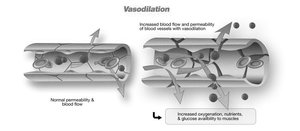 - Key Point 3: Hairs on the skin trap air for insulation when cold; lie flat when warm.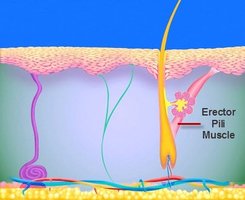
Sugar Regulation and Insulin
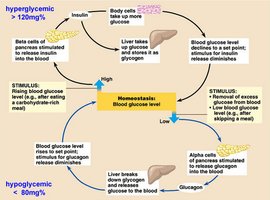
Blood glucose levels are regulated to ensure a constant energy supply for cells. Insulin, produced by the pancreas, converts glucose to glycogen for storage. - Key Point 1: Eating carbohydrates increases blood glucose; exercise and metabolism decrease it. - Key Point 2: Insulin lowers blood glucose by promoting uptake into cells and storage as glycogen. 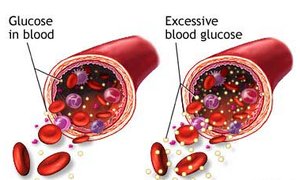
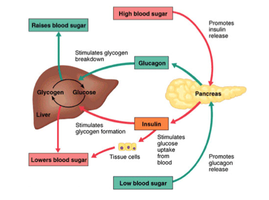
Hormonal Regulation
Hormones are chemical messengers secreted by glands, affecting specific target organs and transported via the bloodstream. - Key Point 1: The pancreas produces insulin to regulate blood sugar. - Key Point 2: Other glands (thyroid, adrenal, testes, ovary) produce hormones for metabolism, stress response, and reproduction. 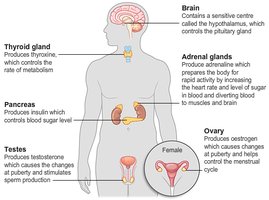
Diabetes and Blood Glucose Disorders
Diabetes is a disorder where blood glucose regulation fails. - Key Point 1: Type 1 diabetes: lack of insulin, managed by diet and insulin injections. - Key Point 2: Type 2 diabetes: insulin resistance, managed by diet and exercise. - Key Point 3: Body Mass Index (BMI) is used to assess obesity, a risk factor for type 2 diabetes. Additional info: BMI is a general guide and may not accurately reflect health in individuals with high muscle mass.
Summary Table: Stimulus-Response Examples
Stimulus | Receptor | Effector | Response |
|---|---|---|---|
Bright light | Eye | Iris muscle contracting | Pupil gets smaller |
Sour taste | Tongue | Muscles in the mouth | Spitting out the food |
Losing balance | Fluid in the ear | Muscles in the body | Steadying the body |
Sitting on a drawing pin | Skin | Muscles in the legs | Jumping out of the seat |
Reflex Actions: Eye Response to Light
Reflex actions in the eye adjust the pupil size in response to light intensity. - Key Point 1: In bright light, radial muscles relax and circular muscles contract, causing the pupil to contract. - Key Point 2: In dim light, radial muscles contract and circular muscles relax, causing the pupil to dilate. Additional info: These reflexes protect the retina from damage and optimize vision under varying light conditions.
