 Back
BackCell Cycle, Mitosis, Meiosis, and Mendelian Genetics: Study Notes
Study Guide - Smart Notes
 Tailored notes based on your materials, expanded with key definitions, examples, and context.
Cell Division and the Cell Cycle
Overview of the Eukaryotic Cell Cycle
The eukaryotic cell cycle is a highly regulated process that ensures accurate duplication and division of the cell's genetic material. It consists of interphase (G1, S, G2 phases) and the M phase (mitosis and cytokinesis).
Interphase: The cell grows, replicates its DNA, and prepares for division. It includes:
G1 phase (Gap 1): Cell growth and decision to divide, arrest, or differentiate (G0 phase).
S phase (Synthesis): DNA replication occurs.
G2 phase (Gap 2): Preparation for mitosis.
M phase: Includes mitosis (nuclear division) and cytokinesis (cytoplasmic division).
Mitotic Index: The percentage of cells in mitosis, used as a measure of cell proliferation (normal range: 3-5%).
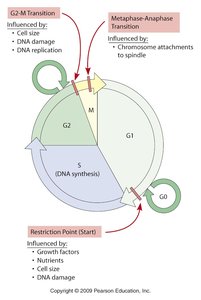
Cell Cycle Checkpoints and Control
Checkpoints are critical control mechanisms that ensure the fidelity of cell division. They monitor cell size, DNA integrity, and chromosome attachment to the spindle.
Restriction Point (G1/S): Influenced by growth factors, nutrients, cell size, and DNA damage.
G2/M Transition: Influenced by cell size, DNA damage, and DNA replication status.
Metaphase-Anaphase Transition: Ensures chromosomes are properly attached to the spindle before separation.
G0 Phase: Terminal differentiation; cells exit the cycle and do not divide again.
Apoptosis: Programmed cell death pathway activated if DNA damage cannot be repaired.
Mitosis: Stages and Key Events
Phases of Mitosis
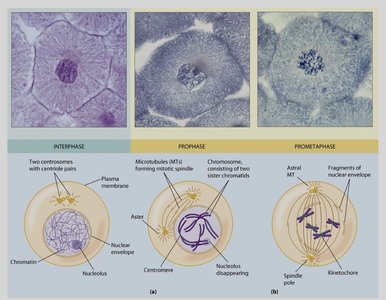
Mitosis is the process by which a eukaryotic cell separates its duplicated chromosomes into two identical nuclei. It is divided into several stages:
Prophase: Chromosomes condense, spindle apparatus forms, nucleolus disappears.
Prometaphase: Nuclear envelope breaks down, spindle microtubules attach to kinetochores.
Metaphase: Chromosomes align at the metaphase plate.
Anaphase: Sister chromatids separate and move toward opposite poles.
Telophase: Nuclear envelopes reform, chromosomes decondense, nucleolus reappears.
Cytokinesis: Division of the cytoplasm, resulting in two daughter cells.

Chromosome Structure and Movement
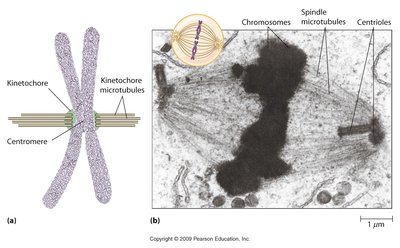
During mitosis, chromosomes are highly condensed and consist of two sister chromatids joined at the centromere. The kinetochore is a protein complex at the centromere where spindle fibers attach.
Centromere: The most condensed region of the chromosome, essential for proper segregation.
Kinetochore: Protein structure on the centromere that binds spindle microtubules.
Movements in Anaphase
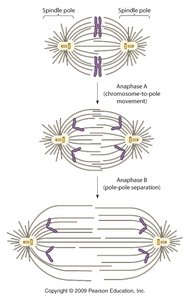
Anaphase is characterized by the separation of sister chromatids (Anaphase A) and the elongation of the cell (Anaphase B).
Anaphase A: Chromosomes move toward spindle poles.
Anaphase B: Spindle poles move apart, further separating the chromosomes.
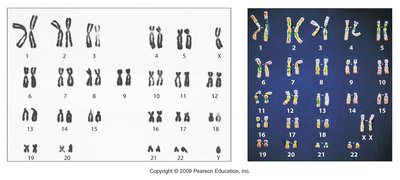
Karyotype
A karyotype is an organized profile of an individual's chromosomes, used to detect chromosomal abnormalities.
Cytokinesis and Cleavage Furrow
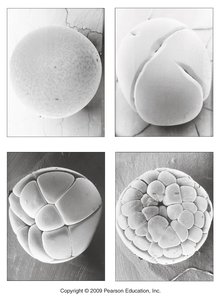
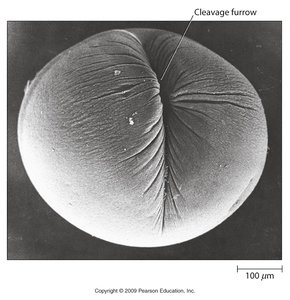
Cytokinesis is the division of the cytoplasm, typically following mitosis. In animal cells, this involves the formation of a cleavage furrow that pinches the cell into two.
Meiosis and Sexual Reproduction
Overview of Meiosis
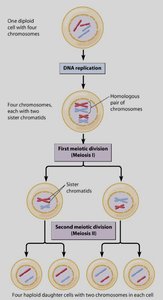
Meiosis is a specialized form of cell division that reduces the chromosome number by half, producing haploid gametes. It consists of two sequential divisions: meiosis I (reductional) and meiosis II (equational).
Meiosis I: Homologous chromosomes separate, reducing chromosome number by half.
Meiosis II: Sister chromatids separate, similar to mitosis.
Genetic Variation: Crossing over and independent assortment increase genetic diversity.
Sexual vs. Asexual Reproduction
Sexual reproduction involves the fusion of gametes from two parents, resulting in genetically diverse offspring. Asexual reproduction produces genetically identical or similar offspring from a single parent.
Diploid: Two sets of homologous chromosomes.
Haploid: One set of chromosomes.
Polyploid: More than two sets of chromosomes (common in plants).
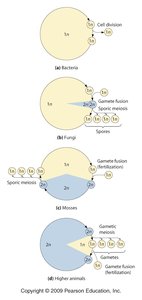
Life Cycles: Haploid and Diploid Phases
Organisms alternate between haploid and diploid phases in their life cycles. The timing and dominance of these phases vary among species (e.g., animals, plants, fungi).
Mendelian Genetics
Basic Principles
Mendelian genetics describes how traits are inherited through discrete units called genes. Each gene can have different forms, or alleles.
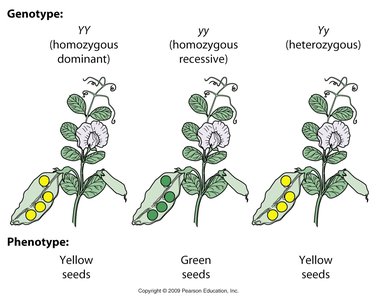
Genotype: The genetic makeup of an organism (e.g., YY, Yy, yy).
Phenotype: The observable traits (e.g., yellow or green seeds).
Dominant Allele: Expressed in the heterozygote.
Recessive Allele: Masked in the presence of a dominant allele.
Mendel's Laws
Law of Segregation: The two alleles for each gene separate during gamete formation.
Law of Independent Assortment: Alleles of different genes assort independently during gamete formation.
Punnett Squares and Probability
Punnett squares are used to predict the probability of offspring genotypes and phenotypes from parental crosses.
Example: Cross between Ss (heterozygous long hair) and ss (homozygous short hair) cats:
s | s | |
|---|---|---|
S | Ss | Ss |
s | ss | ss |
Probability of long-haired offspring (Ss): 50%
Linked Genes and Crossing Over
Genes located close together on the same chromosome tend to be inherited together (linked genes). Crossing over during meiosis can separate linked genes, creating recombinant genotypes.
Recombination Frequency: Used to estimate the distance between genes on a chromosome.
Chromosomal Theory of Inheritance
This theory states that genes are located on chromosomes, which segregate and assort independently during meiosis, explaining Mendel's laws at the molecular level.
Maternal and paternal homologues synapse and segregate independently.
Chromosomes retain their individuality throughout the life cycle.
Additional info: These notes integrate and expand upon the provided lecture slides and images, ensuring a comprehensive and academically rigorous overview suitable for college-level cell biology students.
