 Back
BackCellular Respiration: Glycolysis, Gluconeogenesis, and the Citric Acid Cycle
Study Guide - Smart Notes
 Tailored notes based on your materials, expanded with key definitions, examples, and context.
Cellular Respiration Overview
Introduction to Cellular Respiration
Cellular respiration is a series of metabolic pathways that convert biochemical energy from nutrients into adenosine triphosphate (ATP), and release waste products. It is essential for energy production in both aerobic and anaerobic conditions.
Aerobic respiration involves glycolysis, the citric acid (Krebs/TCA) cycle, and the electron transport chain.
Anaerobic respiration (fermentation) occurs when oxygen is not present, resulting in less ATP production.
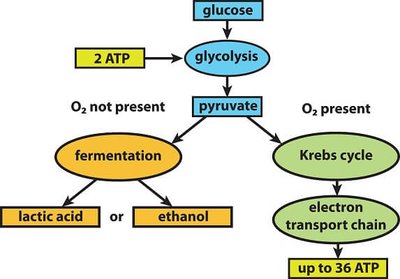
Glycolysis and Gluconeogenesis
Glycolysis: Steps and Regulation
Glycolysis is the metabolic pathway that converts glucose into pyruvate, generating ATP and NADH. It occurs in the cytoplasm and is the first step in both aerobic and anaerobic respiration.
Reactants: Glucose, 2 NAD+, 2 ATP, 2 Pi
Products: 2 Pyruvate, 2 NADH, 2 H+, 2 ATP
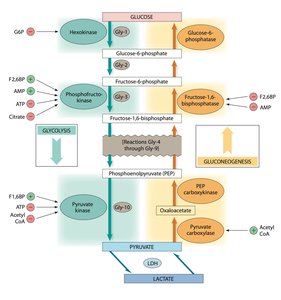
Key regulatory steps: Steps 1 (hexokinase), 3 (phosphofructokinase), and 10 (pyruvate kinase)
Allosteric regulation: ATP, citrate, and other metabolites regulate these enzymes to control the pathway's flux.
Gluconeogenesis: Bypass Reactions
Gluconeogenesis is the process of synthesizing glucose from non-carbohydrate precursors, essentially reversing glycolysis with a few bypass steps catalyzed by unique enzymes.
Reactants: Lactate or pyruvate, 4 ATP, 2 NADH, 2 GTP
Products: Glucose, 2 NAD+
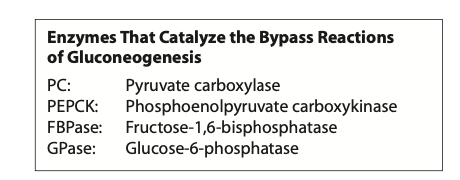
Key enzymes for bypass reactions:
Enzyme | Reaction Catalyzed |
|---|---|
Pyruvate carboxylase (PC) | Pyruvate to oxaloacetate |
Phosphoenolpyruvate carboxykinase (PEPCK) | Oxaloacetate to phosphoenolpyruvate |
Fructose-1,6-bisphosphatase (FBPase) | Fructose-1,6-bisphosphate to fructose-6-phosphate |
Glucose-6-phosphatase (GPase) | Glucose-6-phosphate to glucose |
Fermentation Pathways
Lactic Acid Fermentation
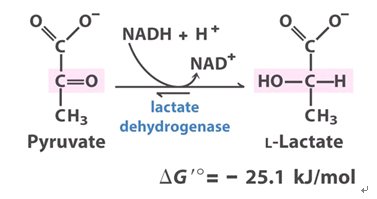
When oxygen is not present, cells convert pyruvate to lactate to regenerate NAD+, allowing glycolysis to continue. This process is catalyzed by lactate dehydrogenase.
Reaction: Pyruvate + NADH + H+ → L-Lactate + NAD+
ΔG'°: -25.1 kJ/mol (exergonic)
The Citric Acid Cycle (Krebs/TCA Cycle)
Overview and Location
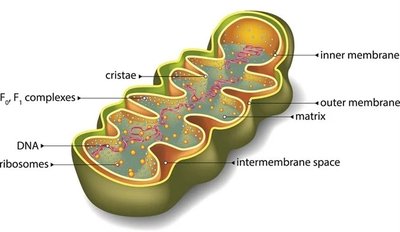
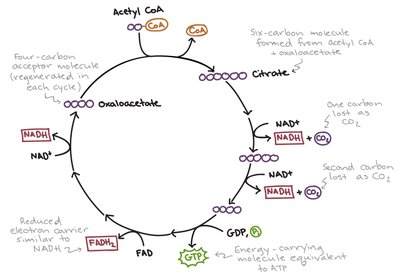
The citric acid cycle is a series of eight enzyme-catalyzed reactions that occur in the mitochondrial matrix. It oxidizes acetyl CoA to CO2 and reduces NAD+ and FAD to NADH and FADH2, which are used in the electron transport chain.
First product: Citrate (hence, citric acid cycle)
Location: Mitochondrial matrix
ATP yield: 1 ATP (or GTP) per cycle
Electron carriers produced: 3 NADH, 1 FADH2 per cycle
CO2 released: 2 per cycle
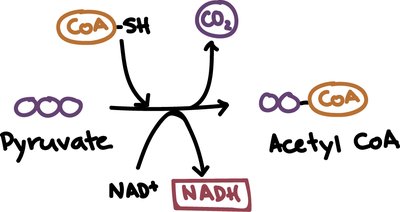
Pyruvate to Acetyl CoA (Link Reaction)
Before entering the TCA cycle, pyruvate is converted to acetyl CoA by the pyruvate dehydrogenase complex. This reaction produces NADH and CO2 and is a key regulatory point.
Reactants: Pyruvate, Coenzyme A, NAD+
Products: Acetyl CoA, CO2, NADH
Enzyme: Pyruvate dehydrogenase
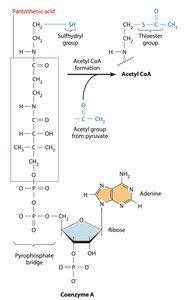
Coenzyme A Structure and Function
Coenzyme A is a large, complex molecule derived from pantothenic acid (a B vitamin). It forms high-energy thioester bonds with acyl groups, facilitating their transfer in metabolic reactions.
Key feature: Thioester bond (S–C=O) stores significant energy
Role: Transfers acetyl group into the TCA cycle
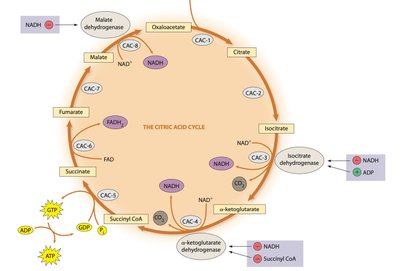
Steps of the Citric Acid Cycle
The TCA cycle consists of eight steps, each catalyzed by a specific enzyme. The cycle regenerates oxaloacetate and produces high-energy electron carriers and GTP/ATP.
Acetyl CoA + Oxaloacetate → Citrate (citrate synthase)
Citrate → Isocitrate (aconitase)
Isocitrate → α-Ketoglutarate (isocitrate dehydrogenase; produces NADH, CO2)
α-Ketoglutarate → Succinyl CoA (α-ketoglutarate dehydrogenase; produces NADH, CO2)
Succinyl CoA → Succinate (succinyl CoA synthetase; produces GTP/ATP)
Succinate → Fumarate (succinate dehydrogenase; produces FADH2)
Fumarate → Malate (fumarase)
Malate → Oxaloacetate (malate dehydrogenase; produces NADH)
Summary of TCA Cycle Yields
Per pyruvate: 3 NADH, 1 FADH2, 1 ATP (or GTP), 2 CO2
Per glucose (2 cycles): 6 NADH, 2 FADH2, 2 ATP (or GTP), 4 CO2
Regulation of Glycolysis and the TCA Cycle
Both glycolysis and the TCA cycle are tightly regulated to meet cellular energy demands. Key enzymes are regulated by allosteric effectors and feedback inhibition.
Pathway | Regulatory Enzyme/Step | Positive (+) Effectors | Negative (-) Effectors |
|---|---|---|---|
Glycolysis | Hexokinase (1) | — | Glucose 6-phosphate |
Glycolysis | Phosphofructokinase-1 (3) | AMP | Citrate |
Glycolysis | Pyruvate kinase (10) | Fructose 1,6-bisphosphate | ATP |
TCA Cycle | Pyruvate dehydrogenase (0) | Pyruvate, NAD+ | Acetyl CoA, NADH, ATP |
TCA Cycle | Isocitrate dehydrogenase (3) | ADP | NADH |
Key Concepts and Applications
Be able to draw and name the reactants and products of glycolysis and the TCA cycle.
Identify the number of carbons and high-energy bonds in intermediates.
Indicate which steps consume or produce ATP, NADH, FADH2, CO2, GTP, and H2O.
Understand the regulation and integration of glycolysis, gluconeogenesis, and the TCA cycle.
