 Back
BackDNA Structure, Replication, and Cell Division: Meiosis and Mitosis
Study Guide - Smart Notes
 Tailored notes based on your materials, expanded with key definitions, examples, and context.
DNA Structure and Function
Overview of DNA Structure
Deoxyribonucleic acid (DNA) is the hereditary material in almost all living organisms. Its structure is essential for its function in storing and transmitting genetic information.
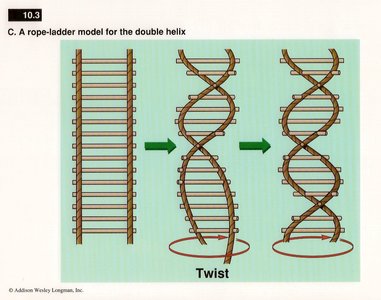
Double Helix: DNA consists of two antiparallel strands forming a double helix.
Nucleotides: Each strand is composed of nucleotides, which include a phosphate group, a deoxyribose sugar, and a nitrogenous base (adenine, thymine, cytosine, or guanine).
Base Pairing: Adenine pairs with thymine (A-T) and cytosine pairs with guanine (C-G) via hydrogen bonds.
Antiparallel Orientation: The two strands run in opposite directions (5' to 3' and 3' to 5').
DNA Replication
DNA replication is the process by which a cell duplicates its DNA before cell division. It ensures that each daughter cell receives an identical copy of the genetic material.
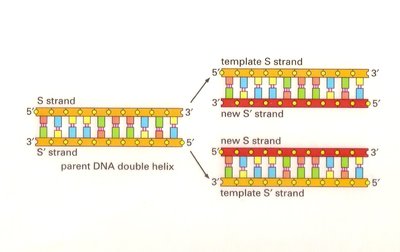
Semi-Conservative Replication: Each new DNA molecule consists of one parental strand and one newly synthesized strand.
Replication Origin: Replication begins at specific locations called origins. Prokaryotes typically have a single origin, while eukaryotes have multiple origins.
Directionality: DNA polymerase synthesizes new DNA in the 5' to 3' direction only.
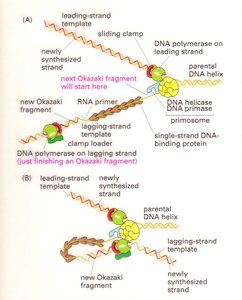
Leading and Lagging Strands: The leading strand is synthesized continuously, while the lagging strand is synthesized discontinuously in short segments called Okazaki fragments.
Primase: DNA polymerase cannot initiate synthesis de novo; it requires a short RNA primer synthesized by primase.
Enzyme Limitations: DNA polymerase cannot unwind DNA or hold it open; helicase and single-strand binding proteins assist in this process.
Cell Division: Meiosis and Mitosis
Duration of the Cell Cycle
The duration of the cell cycle varies depending on several factors:
Species: Different organisms have different cell cycle lengths.
Cell Type: Specialized cells may divide at different rates.
Age of Cells: Younger cells often divide more rapidly.
Temperature (in vitro): Higher temperatures can accelerate cell division in cultured cells.
Meiosis: Cell Division for Gametes
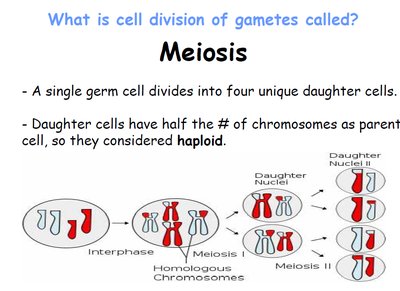
Meiosis is a specialized form of cell division that reduces the chromosome number by half, producing four genetically unique haploid gametes from a single diploid germ cell.
Purpose: Generates genetic diversity and maintains chromosome number across generations.
Outcome: Four haploid cells, each with half the chromosome number of the parent cell.
Phases of Meiosis
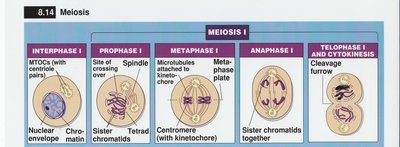
Meiosis consists of two sequential divisions: Meiosis I and Meiosis II.
Meiosis I
Prophase I: Homologous chromosomes pair (synapsis) and exchange genetic material (crossing over).
Metaphase I: Homologous pairs align at the metaphase plate.
Anaphase I: Homologous chromosomes separate to opposite poles.
Telophase I and Cytokinesis: Two haploid cells are formed.
Meiosis II
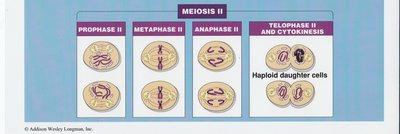
Prophase II: Chromosomes condense in each haploid cell.
Metaphase II: Chromosomes align at the metaphase plate.
Anaphase II: Sister chromatids separate.
Telophase II and Cytokinesis: Four haploid daughter cells are produced.
Genetic Variation in Meiosis
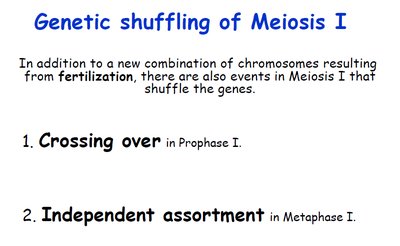
Meiosis introduces genetic diversity through two main mechanisms:
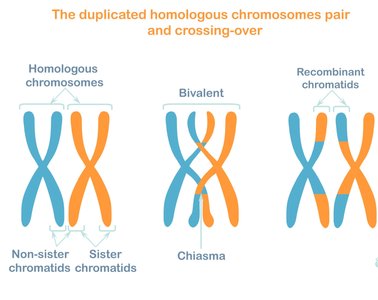
Crossing Over: Exchange of genetic material between non-sister chromatids during Prophase I, resulting in recombinant chromosomes.
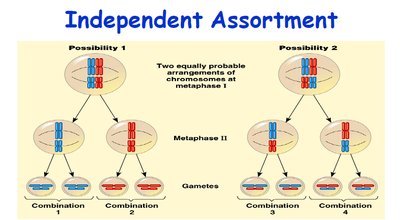
Independent Assortment: Random orientation of homologous chromosome pairs during Metaphase I leads to different combinations of maternal and paternal chromosomes in gametes.
Comparison of Meiosis and Mitosis
Meiosis and mitosis are two distinct processes of cell division with different outcomes and purposes.
Feature | Mitosis | Meiosis |
|---|---|---|
Purpose | Growth, repair, asexual reproduction | Sexual reproduction (gamete formation) |
Number of Divisions | One | Two |
Number of Daughter Cells | 2 | 4 |
Chromosome Number | Diploid (2N) | Haploid (N) |
Genetic Variation | Identical to parent | Genetically unique |
Synapsis/Crossing Over | Rare | Common |
Chromatid Separation | Anaphase | Anaphase II |
Key Terms and Definitions
Diploid (2N): A cell with two sets of chromosomes.
Haploid (N): A cell with one set of chromosomes.
Synapsis: Pairing of homologous chromosomes during Prophase I of meiosis.
Crossing Over: Exchange of genetic material between homologous chromosomes.
Independent Assortment: Random distribution of homologous chromosomes during meiosis.
Okazaki Fragments: Short DNA fragments synthesized on the lagging strand during DNA replication.
Relevant Equations
Number of possible gamete combinations due to independent assortment:
where n is the number of chromosome pairs.
Example: In humans, with 23 pairs of chromosomes, the number of possible combinations is .
Additional info: The above notes integrate and expand upon the provided materials, ensuring a comprehensive and self-contained study guide for cell biology students.
