 Back
DNA Structure, Replication, and Repair: Cell Biology Study Notes
Study Guide - Smart Notes
 Tailored notes based on your materials, expanded with key definitions, examples, and context.
DNA Structure
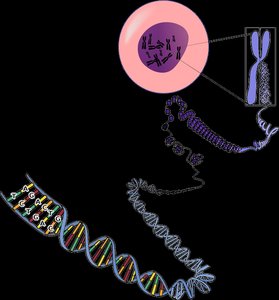
Overview of DNA and RNA
DNA (deoxyribonucleic acid) and RNA (ribonucleic acid) are the primary nucleic acids responsible for genetic information storage and transmission in cells. Both molecules are polymers of nucleotides, but they differ in structure and function.
DNA: Double-stranded, contains deoxyribose sugar, and uses thymine as a base.
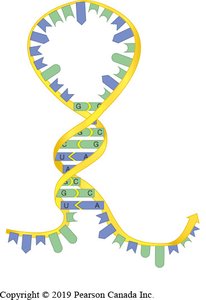
RNA: Single-stranded, contains ribose sugar, and uses uracil instead of thymine.
Nucleic acids: Essential for genome organization, gene expression, and heredity.
Genome: The complete set of genetic material in a cell.
Nucleotide Structure
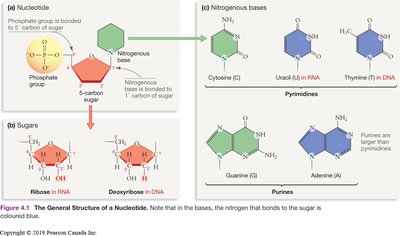
The basic unit of nucleic acids is the nucleotide, which is structurally polar due to its 5’ and 3’ ends. Each nucleotide consists of:
Nitrogenous base: Purines (adenine, guanine) and pyrimidines (cytosine, thymine in DNA, uracil in RNA).
Pentose sugar: Deoxyribose in DNA, ribose in RNA.
Phosphate group: Links nucleotides via phosphodiester bonds.
Polarity and Backbone
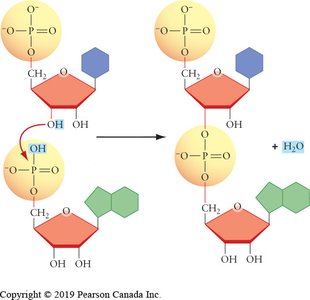
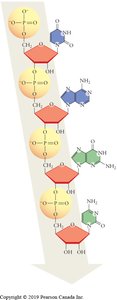
Nucleotides are linked by phosphodiester bonds between the 3’ hydroxyl of one sugar and the 5’ phosphate of the next. This creates a sugar-phosphate backbone with structural polarity.
Polarity: Refers to the directionality (5’ to 3’) of the nucleic acid strand.
Primary structure: The sequence of nucleotides.
Double Helix and Base Pairing
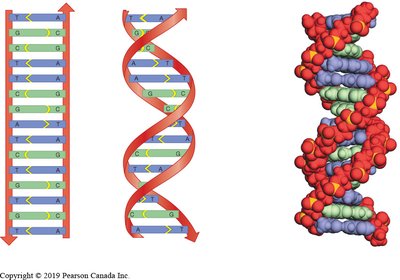
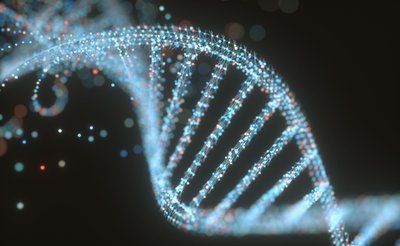
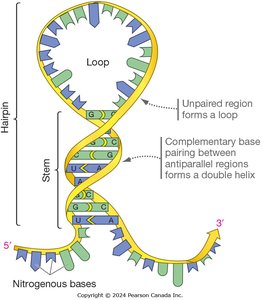
DNA is typically double-stranded, forming a double helix stabilized by complementary base pairing (A-T, G-C) via hydrogen bonds. The two strands are antiparallel, running in opposite directions.
Antiparallel: One strand runs 5’ to 3’, the other 3’ to 5’.
Complementary base pairing: Ensures accurate replication and information transfer.
Comparison of DNA and RNA
DNA and RNA share structural similarities but differ in several key aspects:
Strands: DNA is double-stranded; RNA is usually single-stranded.
Sugar: DNA contains deoxyribose; RNA contains ribose.
Bases: DNA uses thymine; RNA uses uracil.
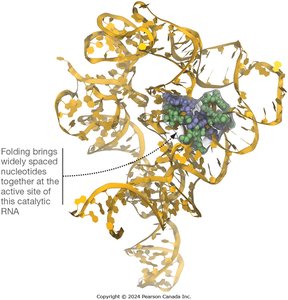
Function: DNA stores genetic information; RNA is involved in gene expression and regulation.
DNA Replication
Overview and Significance
DNA replication is the process by which cells copy their genetic material before cell division. It is essential for the continuity of life and accurate inheritance.
Semiconservative replication: Each new DNA molecule consists of one parental and one newly synthesized strand.
Replication occurs during the S phase of the cell cycle.
Replication Process and Enzymes
DNA replication involves multiple steps and specialized enzymes:
Origin of replication: Specific sequence where replication begins. Eukaryotes have many origins; bacteria have one.
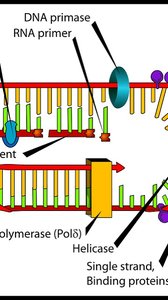
Helicase: Unwinds and separates DNA strands.
Single-stranded binding proteins (SSBPs): Stabilize separated strands.
Topoisomerase: Relieves twisting pressure ahead of the replication fork.
Primase: Synthesizes RNA primers as starting points for DNA polymerase.
DNA polymerase: Extends primers, synthesizing new DNA in the 5’ to 3’ direction.
DNA polymerase I: Removes RNA primers and replaces them with DNA.
DNA ligase: Joins Okazaki fragments on the lagging strand.
Leading and Lagging Strand Synthesis
Replication is continuous on the leading strand and discontinuous on the lagging strand:
Leading strand: Synthesized continuously toward the replication fork, requires one primer.
Lagging strand: Synthesized in short fragments (Okazaki fragments) away from the fork, requires multiple primers.
DNA ligase: Joins Okazaki fragments to form a complete strand.
Replication Machinery
The replisome is a complex of proteins that coordinates DNA synthesis at the replication fork.
Telomeres and Telomerase
Structure and Function of Telomeres
Telomeres are repetitive, non-coding DNA sequences at the ends of linear chromosomes. They protect genes from loss during replication.
Human telomeres: 100–1000 repeats of 5’TTAGGG3’.
Function: Prevent gene loss and chromosome degradation.
Role and Mechanism of Telomerase
Telomerase is an enzyme that extends telomeres by adding sequence repeats to the 3’ end. It carries an RNA template and has reverse transcriptase activity.
Active in: Germ cells, stem cells, embryonic cells, and many cancer cells.
Not active in: Most somatic cells.
Prevents: Chromosome shortening and gene loss.
DNA Damage and Repair
Sources and Impact of DNA Damage
DNA damage can arise from replication errors or external sources such as chemicals, radiation, and UV light. Damage may result in mutations, affecting one or both strands.
Mutations: Permanent changes in DNA sequence.
Cellular impact: Can lead to disease, cancer, or cell death.
DNA Proofreading and Repair Mechanisms
Cells have multiple mechanisms to maintain DNA integrity:
Proofreading: DNA polymerase checks and corrects errors during replication.
Mismatch repair: Enzymes detect and correct base mismatches.
Excision repair: Damaged regions are excised and replaced with correct nucleotides.
Summary Table: DNA vs. RNA
Feature | DNA | RNA |
|---|---|---|
Strands | Double-stranded | Single-stranded |
Sugar | Deoxyribose | Ribose |
Bases | A, T, G, C | A, U, G, C |
Function | Genetic information storage | Gene expression/regulation |
Key Equations
Phosphodiester bond formation:
Base pairing:
Additional info:
These notes expand on brief slide points to provide a comprehensive, self-contained study guide for cell biology students, covering DNA structure, replication, telomeres, and repair mechanisms.
