 Back
BackELISA: Principles, Applications, and Laboratory Practice
Study Guide - Smart Notes
 Tailored notes based on your materials, expanded with key definitions, examples, and context.
ELISA: Enzyme-Linked Immunosorbent Assay
Introduction to ELISA
The Enzyme-Linked Immunosorbent Assay (ELISA) is a widely used immunoassay technique for detecting and quantifying substances such as antibodies, antigens, hormones, and drug metabolites. ELISA relies on the specific binding between antibodies and antigens, and uses an enzyme-linked detection system to produce a measurable color change.
Assay: A procedure for measuring the presence, amount, or activity of a substance.
Immunoassay: An assay based on immune system components, typically antibodies and antigens.
Applications: ELISA is used in diagnostics, research, and industry to detect infectious diseases, hormones, drug levels, cancer biomarkers, allergens, and more.
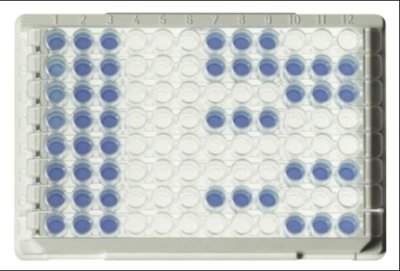
Uses for ELISAs
ELISA assays are versatile and have numerous applications in medicine, research, and industry.
Diagnosis of infectious diseases: Used to detect pathogens such as influenza, SARS-CoV-2, and West Nile virus.
Hormone measurement: Quantifies hormones like cortisol and HCG in biological samples.
Drug monitoring: Ensures therapeutic drug levels and detects drug metabolites in blood or urine.
Detection of genetically modified proteins: Used in agriculture to monitor crops.
Cancer biomarker identification: Detects molecules associated with cancer for diagnosis and treatment monitoring.
Food industry: Tests for allergens and contaminants, including specific IgE antibodies for allergy diagnosis.
Research: Measures proteins, finds specific antibodies, and studies molecular interactions, such as vaccine development.
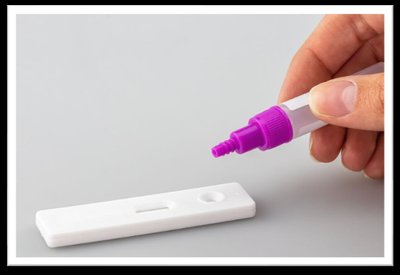
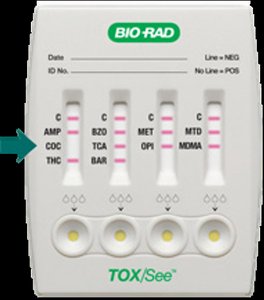



Antibodies and Antigens: The Basis of ELISA
Antibody Structure and Function
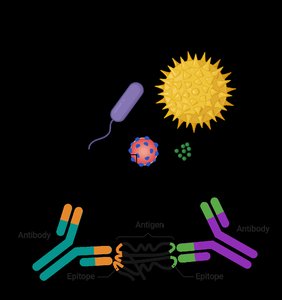
Antibodies are Y-shaped proteins produced by the immune system to recognize and bind specific antigens. The tips of the 'Y' (variable regions) are highly specific to particular antigens, while the stem (constant region) is more conserved.
Variable region: Binds to the epitope of an antigen.
Constant region: Provides structural stability and can be recognized by secondary antibodies.
Antigens and Epitopes
Antigens are molecules that elicit an immune response and stimulate antibody production. They can originate from external sources (e.g., bacteria, pollen) or internal sources (e.g., cancer, inflammation). Antibodies recognize and bind to specific regions on antigens called epitopes.
Epitope: The specific part of an antigen recognized by an antibody.
Immune detection: The immune system distinguishes between 'red flags' (antigens) and 'green flags' (non-threatening substances).
Types of ELISA
ELISA Variants
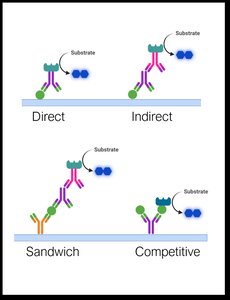
ELISA assays can be classified based on the arrangement of antibodies and antigens:
Direct ELISA: Uses a single enzyme-linked antibody to detect the antigen.
Indirect ELISA: Uses a primary antibody to bind the antigen and a secondary enzyme-linked antibody to detect the primary antibody.
Sandwich ELISA: Uses two antibodies (capture and detection) to 'sandwich' the antigen.
Competitive ELISA: Measures antigen concentration by competition between labeled and unlabeled antigen.
Colorimetric Detection in ELISA
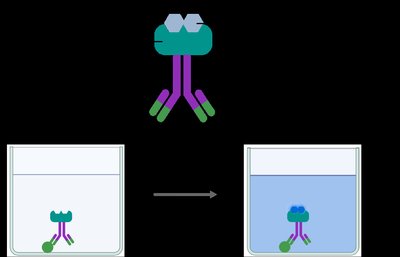
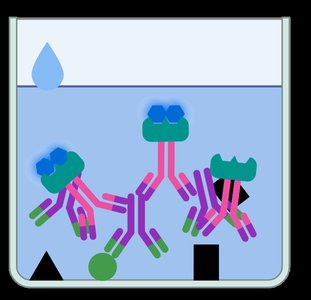
To visualize antibody binding, ELISA uses enzyme-conjugated antibodies. The enzyme reacts with a substrate to produce a color change, indicating the presence of the antigen.
Common enzyme: Horseradish peroxidase (HRP).
Common substrate: Tetramethylbenzidine (TMB), which produces a blue color upon reaction.
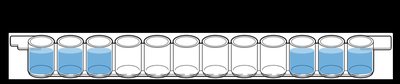
Interpretation: Color change signifies antigen presence; intensity correlates with antigen quantity.
Antibody Production and ELISA Components
Primary and Secondary Antibodies
ELISA relies on two types of antibodies:
Primary antibody: Binds directly to the antigen.
Secondary antibody: Binds to the primary antibody and is conjugated to an enzyme for detection.
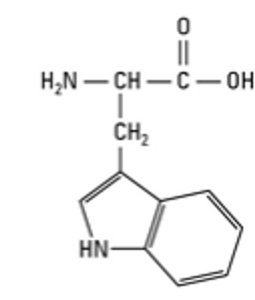
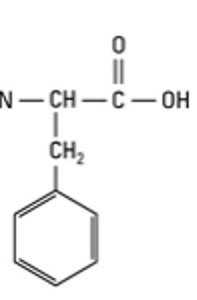
Protein Adsorption to ELISA Plates
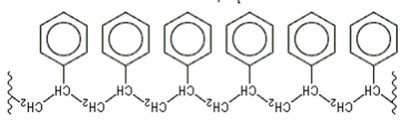
Proteins (antigens) adsorb to polystyrene plates via hydrophobic interactions, allowing immobilization for subsequent antibody binding.
Polystyrene: Common plastic used for ELISA plates.
Hydrophobic interactions: Facilitate protein attachment to plate wells.
Indirect ELISA: Laboratory Protocol
Steps in Indirect ELISA
Indirect ELISA is used to detect the presence of a specific antigen in a sample. The protocol involves several steps:
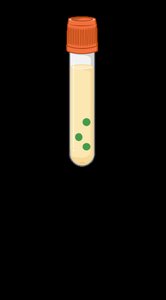
Coating: Add sample to wells; antigens bind nonspecifically to the plate.
Blocking: Add wash buffer to remove unbound antigens and block uncoated surfaces.
Detection Part 1: Add primary antibody to bind any bound antigen; wash to remove unbound antibody.
Detection Part 2: Add enzyme-linked secondary antibody to bind the primary antibody; wash to remove unbound secondary antibody.
Signal Measurement: Add substrate; enzyme reaction produces color change if antigen is present.
ELISA Controls and Experimental Design
Triplicate Testing and Controls
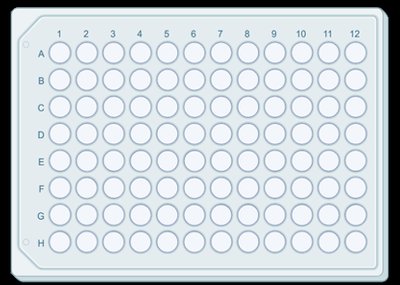
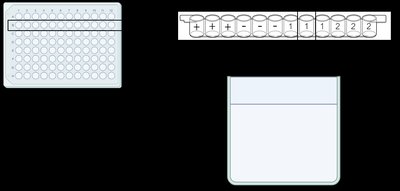
ELISA experiments are performed in triplicate to ensure reliability and reproducibility. Controls are essential for interpreting results:
Positive control: Wells known to contain antigen.
Negative control: Wells known to lack antigen.
Sample wells: Test unknown samples.
Plate layout: Typically uses 8 strips of 12 wells each.
Class Scenario: Outbreak Tracing
In a laboratory setting, ELISA can be used to trace infection outbreaks by testing samples from individuals and tracking the spread based on positive results.
Sample exchange: Students exchange samples and test for infection.
Tracing: Positive ELISA results help identify the source and spread of infection.
Preventing Cross-Contamination
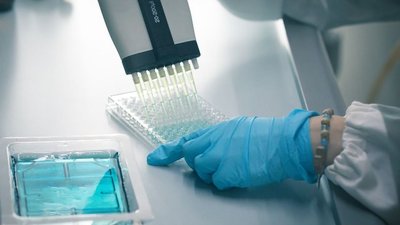
Strict protocols must be followed to prevent cross-contamination between samples and controls. Proper pipetting and washing are critical for accurate results.
Separate samples: Keep samples and controls isolated.
Wash pipets: Use clean pipets or wash between samples.
Importance of controls: Controls validate the assay and help interpret ambiguous results.
Safety and Cleanup
Laboratory Safety
ELISA reagents are generally not biohazardous, but gloves should be worn to protect samples and prevent irritation from chemicals. Work surfaces should be cleaned with bleach after the experiment.
Gloves: Protect against irritants and maintain sample integrity.
Cleanup: Bleach bench after use.

Summary Table: ELISA Types
The following table summarizes the main types of ELISA and their characteristics:
Type | Antibody Arrangement | Detection Method | Common Use |
|---|---|---|---|
Direct | Enzyme-linked primary antibody binds antigen | Color change from enzyme reaction | Simple antigen detection |
Indirect | Primary antibody binds antigen; enzyme-linked secondary antibody binds primary | Color change from enzyme reaction | Antibody detection, increased sensitivity |
Sandwich | Capture antibody binds antigen; detection antibody binds antigen | Color change from enzyme reaction | Quantitative antigen detection |
Competitive | Competition between labeled and unlabeled antigen | Inverse color change | Small molecule detection |
Key Terms and Concepts
Antibody: Y-shaped protein that binds antigens.
Antigen: Molecule recognized by antibodies.
Epitope: Specific region of antigen bound by antibody.
Enzyme-linked antibody: Antibody conjugated to an enzyme for detection.
Substrate: Molecule that reacts with enzyme to produce color change.
Polystyrene plate: Plastic plate used for ELISA assays.
Controls: Positive and negative samples used to validate assay.
Equations and Formulas
ELISA quantification often relies on absorbance measurements and standard curves:
Absorbance (A): Measured at a specific wavelength, proportional to antigen concentration.
Standard curve equation:
Additional info: ELISA is a fundamental technique in cell biology, immunology, and molecular biology, providing quantitative and qualitative data for research and diagnostics.
