 Back
BackCH 6 - Enzymes: The Catalysts of Life – Comprehensive Study Notes
Study Guide - Smart Notes
 Tailored notes based on your materials, expanded with key definitions, examples, and context.
Enzymes: The Catalysts of Life
Introduction to Enzymes
Enzymes are organic catalysts essential for nearly all cellular reactions. Their presence determines whether a reaction can occur and whether it will proceed at a significant rate. Without enzymes, many thermodynamically feasible reactions would not occur at appreciable rates due to high activation energy barriers.
Enzyme: A protein (or RNA) that accelerates biochemical reactions by lowering activation energy.
Catalysis: The process of increasing the rate of a chemical reaction via a catalyst.
Activation Energy and the Metastable State
Every reaction requires a minimum amount of energy, called activation energy (E_A), to proceed. Reactants must reach a transition state with higher free energy than the initial reactants. Most cellular reactions have activation energies so high that reactants remain in a metastable state unless a catalyst is present.
Activation Energy (E_A): The energy barrier that must be overcome for a reaction to occur.
Transition State: An intermediate state with higher free energy.
Metastable State: Reactants are thermodynamically unstable but lack sufficient energy to react.
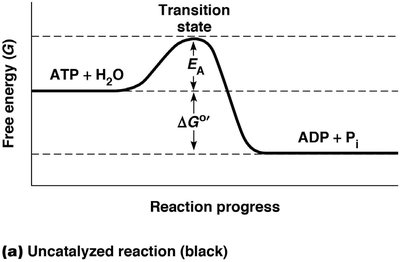
Catalysts and Activation Energy
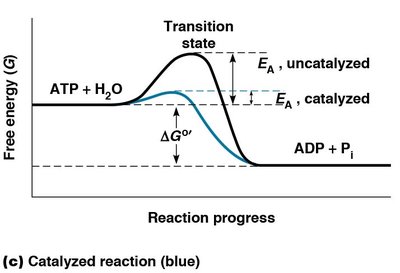
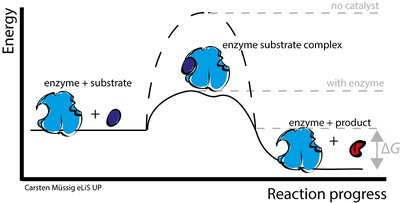
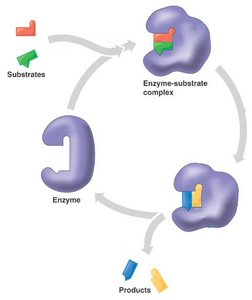
Catalysts, including enzymes, overcome the activation energy barrier by lowering the energy required for the reaction. This is achieved by bringing reactants together on their surface, facilitating the formation of the transition state.
Isothermal Nature of Cells: Cells cannot increase kinetic energy via heat, so they rely on catalysts.
Enzyme Function: Provides a surface for reactants, lowering E_A and increasing reaction rate.
Properties of Enzymes as Biological Catalysts
All catalysts share three basic properties:
Increase reaction rates by lowering E_A.
Form transient, reversible complexes with substrates.
Change the rate at which equilibrium is achieved, not the position of equilibrium.
Enzyme Structure: Proteins and Ribozymes
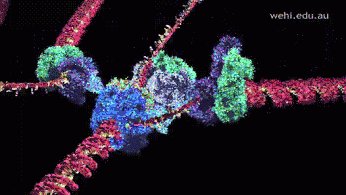
Most enzymes are proteins, but some RNA molecules, called ribozymes, also possess catalytic activity. Enzyme action is crucial in processes such as DNA replication.
Ribozyme: Catalytic RNA molecule.
The Active Site
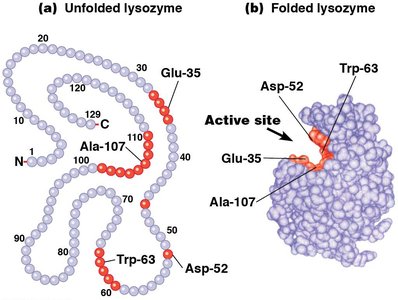
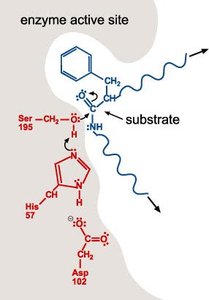
The active site is a cluster of amino acids where substrates bind and catalysis occurs. It is formed by the three-dimensional folding of the protein, creating a groove or pocket with high substrate affinity.
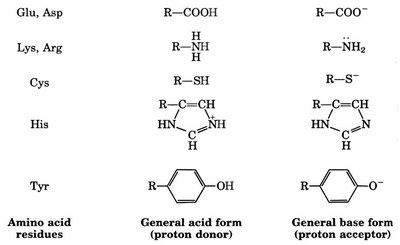
Only certain amino acids participate in substrate binding and catalysis, often serving as proton donors or acceptors.
Cofactors and Prosthetic Groups
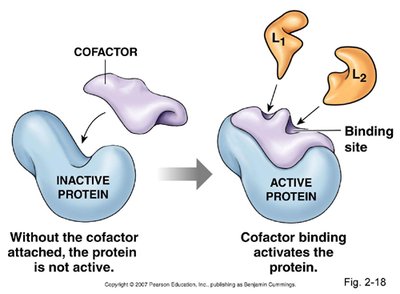
Some enzymes require nonprotein components called cofactors or prosthetic groups for activity. These are often metal ions or small organic molecules (coenzymes) derived from vitamins.
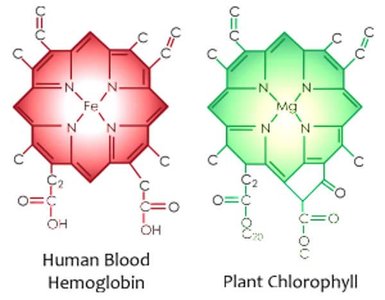
Porphyrin Ring: Multimeric structure with a bound metal atom (e.g., iron in hemoglobin).
Enzyme Specificity
Enzymes exhibit high substrate specificity due to the shape and chemistry of their active sites. Some enzymes display group specificity, accepting a group of related substrates.
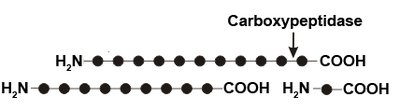
Example: Carboxypeptidase A hydrolyzes the carboxyl terminal peptide bond in polypeptides.
Enzyme Diversity and Nomenclature
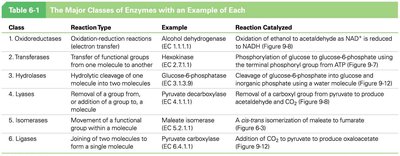
Enzymes are named based on their substrate or function and are classified into six major classes:
Oxidoreductases
Transferases
Hydrolases
Lysases
Isomerases
Ligases
Class | Reaction Type | Example | Reaction Catalyzed |
|---|---|---|---|
Oxidoreductases | Oxidation-reduction reactions | Alcohol dehydrogenase | Oxidation of ethanol to acetaldehyde |
Transferases | Transfer of functional groups | Hexokinase | Phosphorylation of glucose |
Hydrolases | Hydrolytic cleavage | Glucose-6-phosphatase | Cleavage of glucose-6-phosphate |
Lysases | Removal/addition of groups | Pyruvate decarboxylase | Removal of carboxyl group from pyruvate |
Isomerases | Isomerization | Maleate isomerase | Conversion of maleate to fumarate |
Ligases | Joining molecules | Pyruvate carboxylase | Addition of CO2 to pyruvate |
Sensitivity to Temperature
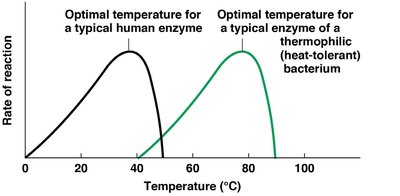
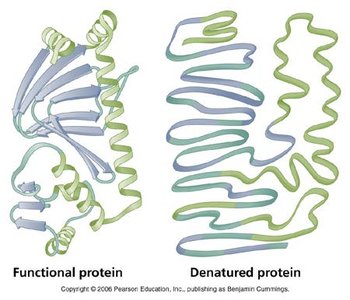
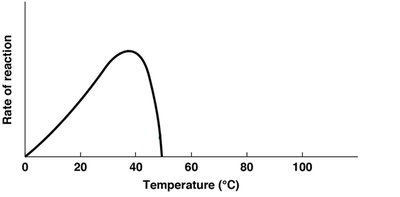
Enzyme activity is sensitive to temperature. Activity increases with temperature due to increased kinetic energy, but excessive heat leads to denaturation and loss of function. Each enzyme has an optimal temperature range.
Denaturation: Loss of protein structure and function due to heat.
Sensitivity to pH
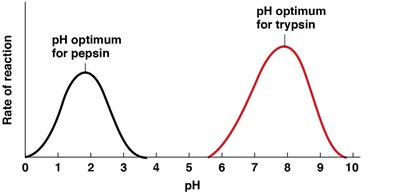
Most enzymes are active within a narrow pH range, typically 3–4 units. Changes in pH affect the charge of amino acids at the active site, disrupting ionic and hydrogen bonds and thus enzyme activity.
Example: Pepsin is active at low pH, trypsin at higher pH.
Sensitivity to Other Factors
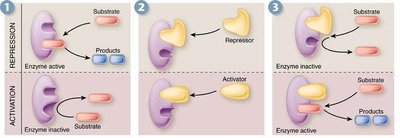
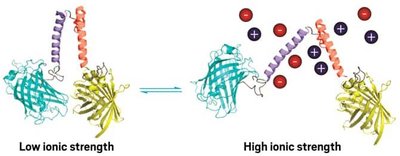
Enzyme activity can be affected by inhibitors, activators, and the ionic strength of the environment, which influences hydrogen bonding and ionic interactions necessary for maintaining tertiary structure.
Substrate Binding and Conformational Change
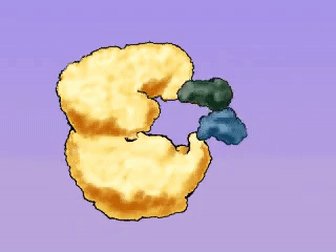
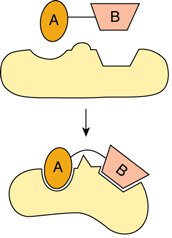
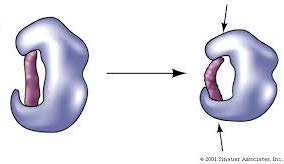
Substrates bind to the enzyme's active site via noncovalent interactions, causing a conformational change that optimally orients the substrate for catalysis. This binding is reversible.
Lock-and-Key vs Induced-Fit Model
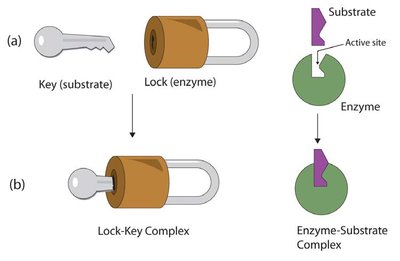
The lock-and-key model suggests a rigid enzyme structure, while the induced-fit model proposes that substrate binding induces a conformational change in the enzyme, enhancing catalysis.
Lock-and-Key: Substrate fits exactly into the active site.
Induced-Fit: Enzyme changes shape to accommodate substrate.
Substrate Activation Mechanisms
Substrate activation occurs via bond distortion, proton transfer, and electron transfer, making the substrate more susceptible to catalytic attack.
Bond Distortion: Weakens bonds for easier cleavage.
Proton Transfer: Increases substrate reactivity.
Electron Transfer: Forms temporary covalent bonds.
Ribozymes: Catalytic RNA Molecules
Ribozymes are RNA molecules with catalytic activity, discovered in the 1980s. Examples include Tetrahymena RNA, RNase P, and ribosomal RNA (rRNA). These findings suggest that early enzymes may have been self-replicating RNA molecules.
Tetrahymena RNA: Self-splicing RNA discovered by Thomas Cech.
RNase P: Cleaves tRNA precursors; RNA component is catalytic.
rRNA: Peptidyl transferase activity in ribosome.

Regulation of Enzyme Rates
Enzyme activity is regulated by substrate-level regulation and feedback inhibition. Increased substrate levels raise reaction rates, while increased product levels inhibit earlier steps in the pathway.
Feedback Inhibition: End-product inhibits an earlier step, adjusting reaction rates to cellular needs.
Additional Mechanisms Regulating Enzyme Rates
Enzymes can be regulated by allosteric regulation (non-covalent modification) and covalent modification.
Allosteric Regulation: Large, multisubunit enzymes with separate active and allosteric sites. Binding of effectors alters enzyme conformation and activity.
Covalent Modification: Addition or removal of chemical groups (e.g., phosphorylation, methylation, acetylation).
Phosphorylation and Dephosphorylation
Phosphorylation (addition of phosphate groups) and dephosphorylation (removal) are reversible modifications that regulate enzyme activity. Protein kinases catalyze phosphorylation, while protein phosphatases catalyze dephosphorylation.
Phosphorylation may activate or inhibit enzymes depending on context.
Enzyme Activation by Proteolytic Cleavage
Some enzymes are activated by irreversible removal of part of the polypeptide chain (proteolytic cleavage). For example, pancreatic zymogens are activated by cleavage as needed.
Enzyme Inhibition
Enzyme inhibition is vital for cellular control. Inhibitors may be products, allosteric effectors, or analogues of substrate/transition state. Inhibition can be reversible or irreversible.
Irreversible Inhibitors: Covalently bind, causing permanent loss of activity (e.g., heavy metals, nerve gas).
Reversible Inhibitors: Bind non-covalently and can dissociate. Two types: competitive and noncompetitive.
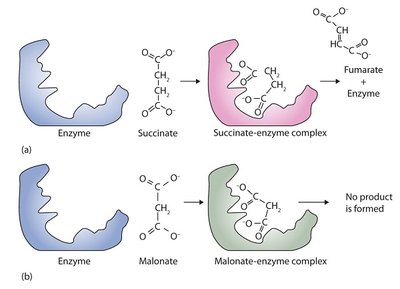
Competitive Inhibitors: Bind to active site, competing with substrate (e.g., malonate inhibits succinate dehydrogenase).
Noncompetitive Inhibitors: Bind outside active site, causing conformational changes that inhibit activity.
Summary of Enzyme Regulation
Activation: Substrate binding, covalent modification, proteolytic cleavage, allosteric activators.
Inhibition: Product inhibition, covalent modification, irreversible denaturation, reversible competitive/noncompetitive inhibition, allosteric inhibitors.
Enzyme Kinetics
Enzyme kinetics describes the quantitative aspects of catalysis, including the rate of substrate conversion to products. The initial reaction velocity (v) is measured before substrate depletion affects the rate.
Michaelis–Menten Equation: Describes the relationship between reaction velocity and substrate concentration.
Km (Michaelis constant): Substrate concentration at which reaction proceeds at half Vmax; measure of enzyme affinity for substrate.
Vmax: Maximum velocity at saturating substrate concentrations.
Turnover Number (kcat)
The turnover number is the rate at which substrate molecules are converted to product by a single enzyme at maximum velocity.
Lineweaver–Burk (Double-Reciprocal) Plot
The Lineweaver–Burk equation is an inversion of the Michaelis–Menten equation, useful for visualizing kinetic data:
Plotting 1/v vs 1/[S] yields a straight line; slope is Km/Vmax, y-intercept is 1/Vmax, x-intercept is –1/Km.
Additional info:
Enzyme kinetics is fundamental for understanding drug action, metabolic regulation, and disease states.
Feedback inhibition is a common mechanism in metabolic pathways to prevent overproduction of end products.
