 Back
BackFeedback Loops and Homeostasis in Multicellular Organisms
Study Guide - Smart Notes
 Tailored notes based on your materials, expanded with key definitions, examples, and context.
Feedback Loops and Homeostasis
Introduction to Feedback Loops
Feedback loops are fundamental mechanisms by which organisms regulate their internal environments to maintain stability or to amplify changes. These loops are essential for understanding physiological regulation and homeostasis in multicellular life.
Feedback Loop: A system where the output of a process influences the operation of the process itself, either by amplifying (positive feedback) or dampening (negative feedback) the effect.
No Feedback: A process where changes in one variable do not influence the original variable.
Example: In physiology, feedback loops regulate variables such as body temperature, blood glucose, and blood pressure.
Types of Feedback Loops
Negative Feedback Loop: Occurs when a change in a variable triggers a response that counteracts the initial change, promoting stability and homeostasis.
Positive Feedback Loop: Occurs when a change in a variable triggers a response that amplifies the initial change, often pushing the system into a new state.
Key Point: Positive does not mean 'good' and negative does not mean 'bad'—the terms refer to amplification or stabilization, respectively.
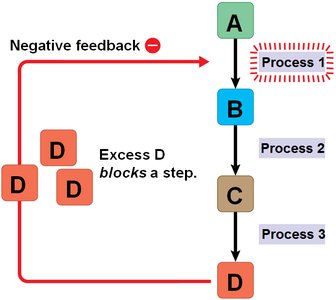
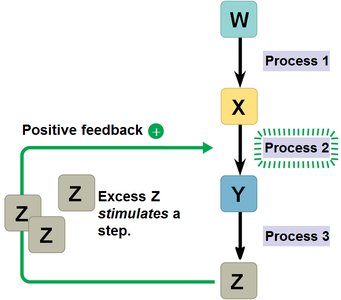
Examples of Feedback Loops
Negative Feedback Example: Regulation of blood glucose levels—when blood glucose rises, insulin is released to lower it back to normal.
Positive Feedback Example: Blood clotting—thrombin activates factors that promote more thrombin activation, amplifying the response until clotting is complete.
Homeostasis
Definition and Importance
Homeostasis is the process by which organisms maintain a relatively stable internal environment, even when external conditions change. This stability is crucial for optimal cellular and molecular function.
Examples of Homeostatically Regulated Variables: Blood glucose (75-95 mg/dL), blood osmolarity, body temperature (37ºC), blood pressure (120/80 mmHg), blood pH (7.35-7.45).
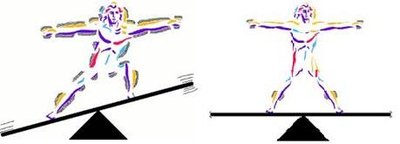
Components of a Homeostatic System
A typical homeostatic circuit includes the following components:
Set Point: The desired value or range for the regulated variable.
Sensor: Detects changes in the regulated variable.
Control Center: Receives information from the sensor and initiates a response.
Effector: Carries out the response to return the variable to the set point.
Regulated Variable: The specific aspect of the internal environment being controlled.
Example: In temperature regulation, thermosensors (sensor) detect changes, the hypothalamus (control center) processes the information, and sweat glands or muscles (effectors) adjust body temperature.
Is Heart Rate Homeostatically Regulated?
Heart rate is not strictly regulated by homeostasis because there is no fixed set point; it varies with activity and other factors. While there are effectors and a control center, the absence of a constant set point and sensor for heart rate means it is not homeostatically regulated in the same way as body temperature or blood glucose.


Surface Area-to-Volume Ratio and Heat Regulation
Concept and Biological Importance
The surface area-to-volume (SA/V) ratio is a key factor in how organisms exchange heat and materials with their environment. A higher SA/V ratio increases the rate of heat loss, while a lower SA/V ratio helps retain heat.
Small organisms (e.g., mice) have a high SA/V ratio and lose heat quickly.
Large organisms (e.g., elephants) have a low SA/V ratio and retain heat more efficiently.
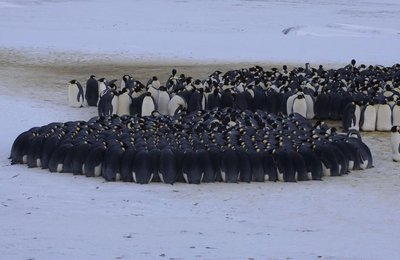

Mathematical Relationship
For a cube of side length L:
Surface Area =
Volume =
SA/V Ratio =
As size increases, the SA/V ratio decreases, reducing heat loss per unit volume.
Heat Generation and Loss in Organisms
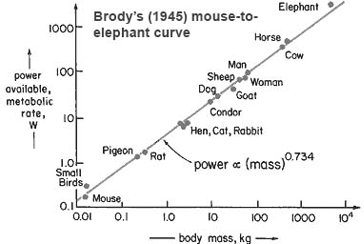
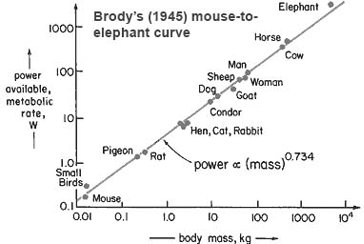
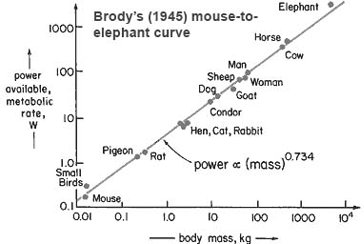
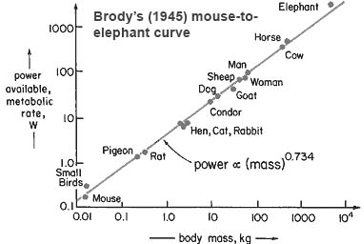
All organisms generate heat as a byproduct of metabolism. The rate of heat loss depends on the organism's surface area, while the rate of heat generation depends on its volume (mass).
Example: Mice generate more heat per gram of body mass than elephants but lose it more quickly due to their higher SA/V ratio.
Adaptations for Heat Regulation
Desert animals often have large ears or other adaptations to increase SA/V ratio and promote heat loss.
Arctic animals tend to have compact bodies and small extremities to minimize heat loss.

Thermoregulation in Mammals
Endothermy vs. Ectothermy
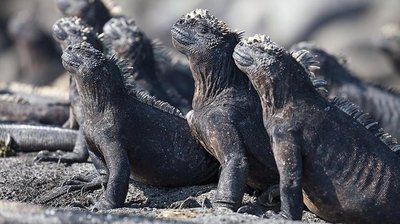
Some animals, such as mammals and birds, are endothermic—they regulate their body temperature internally. Others, like reptiles, are ectothermic and rely on external sources for heat.
Endotherms maintain a constant body temperature regardless of the environment.
Ectotherms may bask in the sun to warm up or seek shade to cool down.

Mechanisms of Temperature Regulation
Mammals use several mechanisms to maintain core body temperature:
Cooling Mechanisms:
Sweating: Evaporation of sweat removes heat from the skin.
Vasodilation: Blood vessels near the skin widen, increasing heat loss.
Warming Mechanisms:
Shivering: Muscle activity generates heat.
Vasoconstriction: Blood vessels near the skin constrict, reducing heat loss.
Homeostatic Circuit for Temperature Regulation
Component | Example in Mammals |
|---|---|
Set Point | ~37ºC (normal body temperature) |
Sensor | Thermosensors in brain and skin |
Control Center | Hypothalamus |
Effector | Muscles, sweat glands, blood vessels |
Regulated Variable | Core body temperature |
Perturbations of Homeostasis: Fever
Fever and Set Point Regulation
A fever is not a positive feedback loop but rather a regulated increase in the set point for body temperature, usually in response to infection. The body maintains the new, higher set point homeostatically until the infection is resolved.
Myth: Fever will keep rising uncontrollably unless treated.
Truth: Most fevers stabilize below 104ºF and return to normal after recovery.


Mechanism of Fever
Immune system signals the hypothalamus to raise the set point.
The body responds by shivering and vasoconstriction to reach the new set point.
Once the infection is cleared, the set point returns to normal and the body cools down.
Conclusion: Fever is an example of a temporary change in the set point, not a breakdown of homeostasis or a positive feedback loop.
Summary Table: Feedback Loops vs. Homeostasis
Feature | Negative Feedback | Positive Feedback | Homeostasis |
|---|---|---|---|
Effect | Stabilizes variable | Amplifies change | Maintains internal stability |
Example | Blood glucose regulation | Blood clotting | Body temperature regulation |
Set Point | Maintained | Often overridden | Maintained |
