 Back
BackGene Expression and the Central Dogma: From DNA to Protein and Mendelian Genetics
Study Guide - Smart Notes
 Tailored notes based on your materials, expanded with key definitions, examples, and context.
Gene Expression and the Central Dogma of Molecular Biology
The Central Dogma: Flow of Genetic Information
The central dogma of molecular biology describes the one-way flow of genetic information within a biological system. Genetic information is stored in DNA, transcribed into RNA, and then translated into protein. This process is fundamental to all living cells and underlies the diversity of cell types and functions.
DNA (Deoxyribonucleic Acid): The hereditary material containing instructions for all proteins in an organism.
Transcription: The process by which a segment of DNA is copied into RNA by the enzyme RNA polymerase. This RNA copy (mRNA) can exit the nucleus and enter the cytosol.
Translation: The process in the cytosol where ribosomes use the mRNA sequence to assemble amino acids into a specific protein.
Genome refers to all the genetic material in an organism, while the proteome is the complete set of proteins expressed by a cell, tissue, or organism at a certain time. The proteome varies between cell types and in response to environmental conditions, development, and cell function.
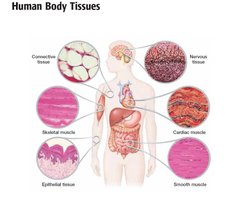
Levels of Gene Expression
Although every cell contains the same DNA, only a subset of genes is expressed in each cell type, leading to the production of specific proteins that determine cell function. Environmental conditions, developmental stage, and cell type influence which genes are active.
Transcriptional Regulation: Determines if a gene is transcribed into RNA.
Post-transcriptional Regulation: Includes RNA processing, transport, and stability.
Translational and Post-translational Regulation: Controls protein synthesis and modification.
Structure and Function of Nucleic Acids
DNA and RNA: Structure and Stability
Both DNA and RNA are polymers of nucleotides, but they differ in structure and stability. DNA is more chemically stable due to the absence of a hydroxyl group at the 2' carbon of its sugar, while RNA contains a hydroxyl group at this position, making it more reactive and less stable.
DNA: Contains deoxyribose sugar (2' carbon has a hydrogen atom).
RNA: Contains ribose sugar (2' carbon has a hydroxyl group).
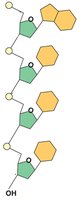
Nucleotide Structure
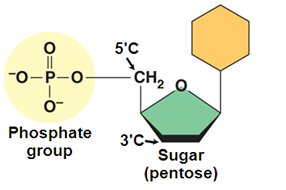
Each nucleotide consists of three components: a phosphate group, a five-carbon sugar (pentose), and a nitrogenous base. The sequence of these bases encodes genetic information.
Phosphate group
Pentose sugar (deoxyribose in DNA, ribose in RNA)
Nitrogenous base (adenine, thymine, cytosine, guanine in DNA; uracil replaces thymine in RNA)
Transcription and Translation: From Gene to Protein
Transcription: DNA to RNA
During transcription, a gene's DNA sequence is copied to make a complementary RNA molecule. In eukaryotes, this process occurs in the nucleus and involves several steps, including initiation, elongation, and termination. The resulting pre-mRNA undergoes processing (capping, splicing, polyadenylation) before becoming mature mRNA.
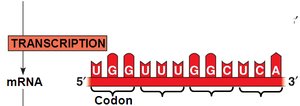
Translation: RNA to Protein
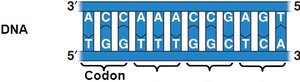
Translation is the process by which ribosomes read the mRNA sequence and synthesize the corresponding protein by linking amino acids in the order specified by the mRNA codons. Each codon (a sequence of three nucleotides) codes for a specific amino acid.
Codon: A triplet of nucleotides in mRNA that specifies an amino acid.
tRNA: Transfer RNA molecules bring amino acids to the ribosome during translation.
Mendelian Genetics and Gene Function
Mendel’s Pea Plant Experiments
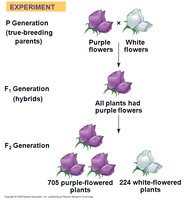
Gregor Mendel’s experiments with pea plants established the basic principles of inheritance. He observed that traits are determined by discrete units (genes) that are inherited in predictable patterns.
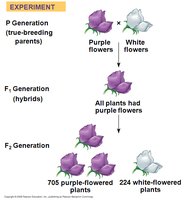
P Generation: True-breeding parents (e.g., purple and white flowers)
F1 Generation: All offspring had purple flowers (dominant trait)
F2 Generation: 3:1 ratio of purple to white flowers, revealing the presence of recessive alleles
Genes, Proteins, and Phenotype
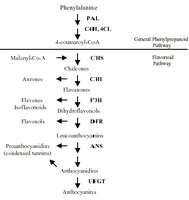
The phenotype (observable trait) is determined by the function of the protein encoded by a gene. For example, the purple color in pea flowers is due to the production of anthocyanin pigments, which requires a functional enzyme encoded by the dominant allele. If the gene is non-functional (recessive allele), the enzyme is not produced, and the flowers are white.
Dominant allele: Produces a functional protein (e.g., enzyme for anthocyanin synthesis)
Recessive allele: Non-functional or absent protein, resulting in a different phenotype
Punnett Squares and Inheritance Patterns
Punnett squares are used to predict the genotypes and phenotypes of offspring from genetic crosses. Dominant and recessive inheritance patterns can be visualized and calculated using these tools.
Gene Regulation and Expression
Levels of Gene Regulation
Gene expression can be regulated at multiple levels, including transcription, RNA processing, mRNA transport and stability, translation, and post-translational modifications. Only a small fraction of the genome encodes proteins; much of the DNA is involved in regulating gene expression or has unknown functions.
Initiating transcription
pre-RNA Processing
mRNA Transport (nucleus to cytoplasm)
mRNA Stability
Protein Translation
Protein Modifications and Degradation
Genetic Disorders: Case Study
Glycogen Storage Disease Type VII (GSDVII)
GSDVII is an autosomal recessive disorder caused by mutations in the gene encoding an enzyme required for glycogen metabolism in skeletal muscle. Symptoms include muscle pain, cramps, and weakness, especially after strenuous exercise. Only individuals with two defective alleles (homozygous recessive) are affected.
Autosomal recessive inheritance: Both copies of the gene must be mutated for the disease to manifest.
Carriers: Individuals with one normal and one mutated allele do not show symptoms but can pass the mutation to offspring.
Summary Table: DNA, RNA, and Protein
Molecule | Function | Location | Stability |
|---|---|---|---|
DNA | Information storage | Nucleus (eukaryotes) | Very stable |
RNA | Information transfer, regulation, catalysis | Nucleus & cytoplasm | Less stable |
Protein | Cell structure, function, catalysis | Cytoplasm, organelles, membranes | Variable |
Key Terms and Concepts
Gene: A segment of DNA that encodes a functional product (RNA or protein).
Allele: Different versions of a gene.
Genotype: The genetic makeup of an organism.
Phenotype: The observable traits of an organism.
Mutation: A change in the DNA sequence that can affect gene function.
Additional info: The notes above integrate foundational concepts from Chapters 14, 16, and 17, including Mendelian genetics, the molecular basis of inheritance, and gene expression. The included images were selected for their direct relevance to the described processes and concepts.
