 Back
BackGene Expression: From DNA to RNA to Protein
Study Guide - Smart Notes
 Tailored notes based on your materials, expanded with key definitions, examples, and context.
Gene Expression: The Central Dogma
Overview of Genetic Information Flow
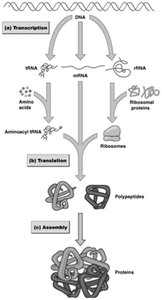
The central dogma of molecular biology describes the directional flow of genetic information within a cell: DNA is transcribed into RNA, which is then translated into protein. This process is fundamental to all living organisms and underlies cellular structure and function.
Transcription: Synthesis of RNA from a DNA template.
Translation: Synthesis of protein from an RNA template.
RNA Processing: Modifications of the primary RNA transcript to produce mature RNA molecules.
Reverse Transcription: In some viruses, RNA is reverse-transcribed into DNA.
Structure and Types of RNA
Major Classes of RNA
RNA acts as an intermediary in the flow of genetic information. There are several types of RNA, each with distinct roles:
mRNA (messenger RNA): Encodes the amino acid sequence of a protein.
tRNA (transfer RNA): Brings amino acids to the ribosome during translation.
rRNA (ribosomal RNA): Forms the core of the ribosome's structure and catalyzes protein synthesis.
miRNA (microRNA): Regulates gene expression post-transcriptionally.
Key features of RNA:
Contains ribose sugar with a 2’-OH group (less stable than DNA).
Single-stranded, but can form secondary structures.
Uses uracil (U) instead of thymine (T).
Nucleotides: Building Blocks of Nucleic Acids
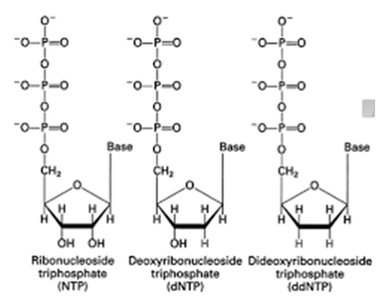
Nucleotides are the monomers of nucleic acids. There are three main types relevant to gene expression:
NTP (Ribonucleoside triphosphate): Building block of RNA.
dNTP (Deoxyribonucleoside triphosphate): Building block of DNA.
ddNTP (Dideoxyribonucleoside triphosphate): Chain terminator used in Sanger sequencing.
Transcription: DNA to RNA
Mechanism and Steps of Transcription
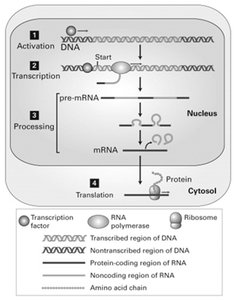
Transcription is the process by which the genetic code in DNA is copied into a complementary RNA sequence. This process is catalyzed by RNA polymerase and occurs in the nucleus of eukaryotic cells.
Initiation: RNA polymerase binds to the promoter region of DNA with the help of transcription factors.
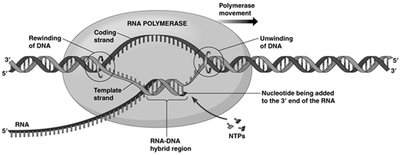
Elongation: RNA polymerase synthesizes RNA in the 5’ to 3’ direction, using the DNA template strand.
Termination: Transcription ends when RNA polymerase encounters a termination signal.
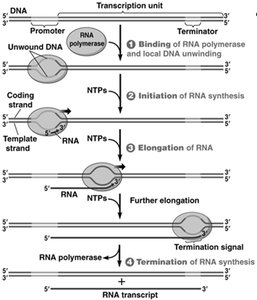
DNA Strands in Transcription
During transcription, only one DNA strand serves as the template:
Coding strand: Has the same sequence as the RNA (except T is replaced by U).
Template strand: Used by RNA polymerase to synthesize RNA; complementary to the RNA product.
Promoters and Transcription Factors
Promoters are specific DNA sequences where RNA polymerase and transcription factors assemble to initiate transcription. In eukaryotes, there are three main RNA polymerases, each recognizing different promoter elements:
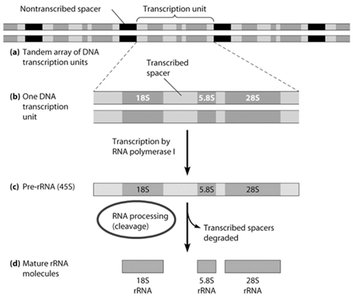
RNA Polymerase I: Synthesizes most rRNAs.
RNA Polymerase II: Synthesizes mRNA and miRNA.
RNA Polymerase III: Synthesizes tRNAs and 5S rRNA.
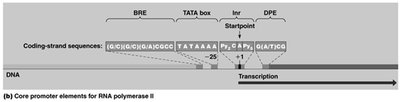
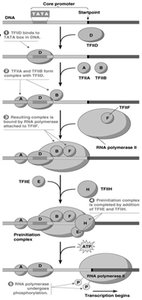
Experimental Techniques: DNA-Protein Interactions
Transcription factors bind to promoter DNA sequences, and their interactions can be studied using biochemical techniques:
DNA affinity chromatography: Used to purify transcription factors.
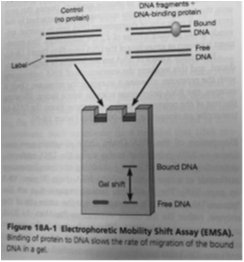
Electrophoretic Mobility Shift Assay (EMSA): Detects DNA-protein binding by observing shifts in DNA migration on a gel.
Termination of Transcription
Termination mechanisms differ among the three eukaryotic RNA polymerases:
Pol I: Terminated by a protein recognizing an 18-nucleotide signal.
Pol III: Terminated by a short run of uracils (U) in the RNA; no protein factors required.
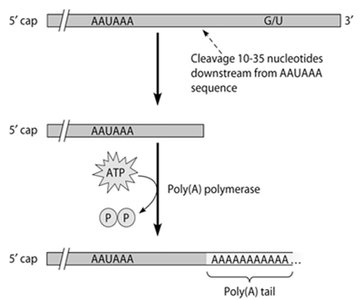
Pol II: Transcripts are cleaved 10–35 nucleotides downstream of an AAUAAA sequence; coupled with RNA processing.
Processing of Eukaryotic mRNA
Pre-mRNA Modifications
Primary transcripts (pre-mRNA) produced by RNA polymerase II undergo several modifications before becoming mature mRNA:
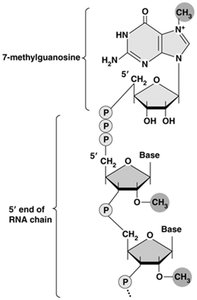
5’ Capping: Addition of a 7-methylguanosine cap via a 5’-5’ linkage; stabilizes mRNA and aids ribosome binding.
Polyadenylation: Addition of a poly(A) tail at the 3’ end; enhances stability and export from the nucleus.
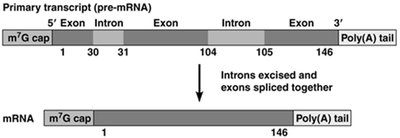
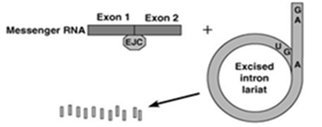
Splicing: Removal of non-coding introns and joining of coding exons.
RNA Splicing and Alternative Splicing
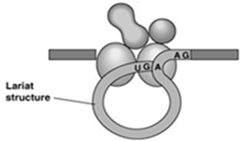
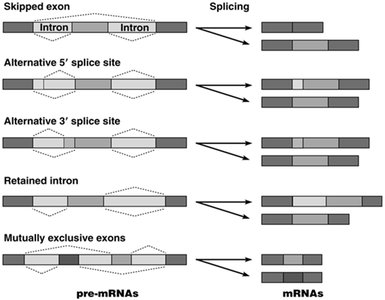
Splicing is carried out by the spliceosome, a complex of small nuclear ribonucleoproteins (snRNPs). Alternative splicing allows a single gene to produce multiple protein isoforms by varying the combination of exons included in the final mRNA.
5’ Splice Site (Donor Site): Start of the intron.
3’ Splice Site (Acceptor Site): End of the intron.
Branch-point Sequence: Internal site important for lariat formation during splicing.
Processing of rRNA and tRNA
rRNA Genes and Processing
Ribosomal RNA (rRNA) genes are transcribed as large precursors that are processed into mature rRNAs, which assemble with proteins to form ribosomes.
tRNA Processing and Structure
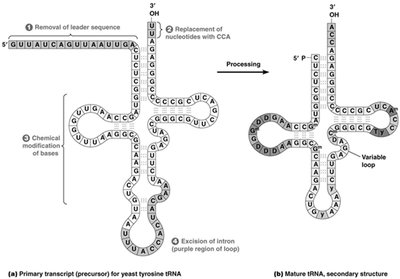
Transfer RNAs (tRNAs) are also transcribed as precursors and undergo processing, including removal of leader sequences, base modifications, and intron excision, to form the mature cloverleaf structure.
Retroviruses and Reverse Transcription
Retroviral Life Cycle
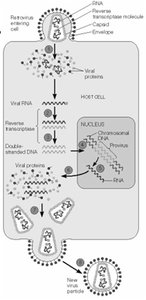
Retroviruses have an RNA genome and replicate via reverse transcription, producing a DNA copy that integrates into the host genome (provirus). The host machinery then transcribes viral genes to produce new viral particles.
RNA and DNA Editing
Post-Transcriptional Modifications
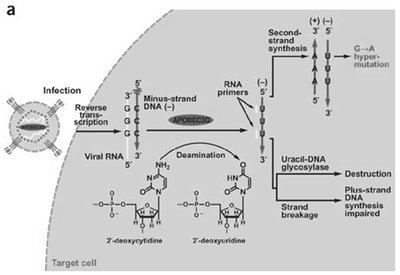
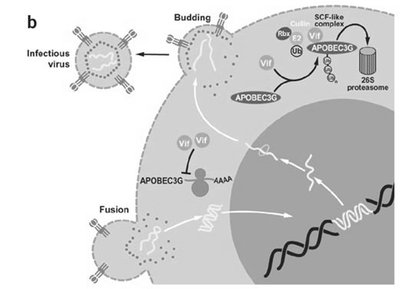
RNA editing involves enzymatic modifications of RNA sequences after transcription, such as nucleotide insertion, deletion, or modification. DNA editing can serve as an antiviral defense mechanism, as seen with APOBEC3G in T-cells, which edits viral DNA to inhibit replication.
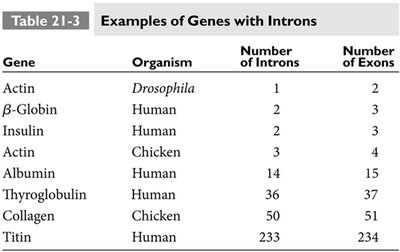
Summary Table: Examples of Genes with Introns
Gene | Organism | Number of Introns | Number of Exons |
|---|---|---|---|
Actin | Drosophila | 1 | 2 |
β-Globin | Human | 2 | 3 |
Insulin | Human | 2 | 3 |
Actin | Chicken | 3 | 4 |
Albumin | Human | 14 | 15 |
Thyroglobulin | Human | 36 | 37 |
Collagen | Chicken | 50 | 51 |
Titin | Human | 233 | 234 |
