 Back
BackHematology: Structure, Function, and Components of Blood
Study Guide - Smart Notes
 Tailored notes based on your materials, expanded with key definitions, examples, and context.
Hematology: Introduction and Relevance
Definition and Scope
Hematology is the branch of medicine and biology that studies blood, its components, the organs and tissues involved in blood formation (hematopoietic system), coagulation mechanisms, and diseases affecting these systems. Hematological analysis is fundamental for diagnosing and monitoring various health conditions related to blood and the hematopoietic system.
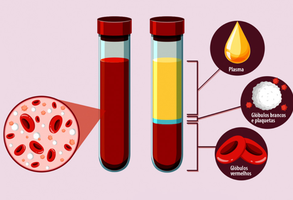
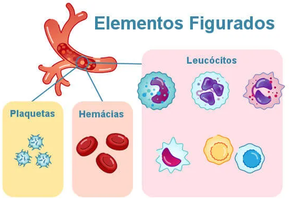
Blood is a fluid connective tissue circulating through the vascular system, composed of plasma (liquid portion), blood cells (erythrocytes and leukocytes), and cell fragments (platelets).
Blood cells and platelets make up about 45% of blood volume, while plasma constitutes 55%.
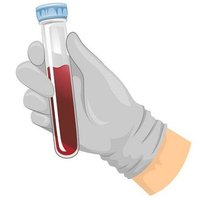
Blood: Structure and Main Components
Blood Composition
Blood is composed of two main fractions: the cellular elements and the plasma. Each component plays a specific role in maintaining homeostasis and supporting physiological functions.
Cellular elements:
Erythrocytes (Red Blood Cells): Responsible for oxygen transport.
Leukocytes (White Blood Cells): Involved in immune defense.
Platelets (Thrombocytes): Essential for blood clotting.
Plasma: The liquid matrix, mainly water, containing proteins, electrolytes, nutrients, hormones, and waste products.
Functions of Blood
Blood serves as a transport medium and regulator for various physiological processes:
Transports nutrients, respiratory gases (O2 and CO2), waste products, hormones, and enzymes.
Maintains osmotic and water balance.
Acts as a buffer to prevent large pH variations (buffer effect).
Distributes heat throughout the body (thermoregulation).
Provides immune defense via leukocytes and antibodies.
Hematopoiesis: Formation of Blood Cells
Definition and Overview
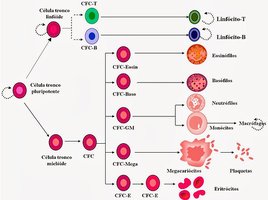
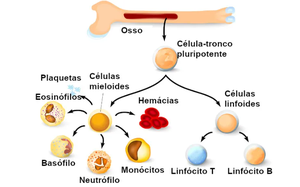
Hematopoiesis is the process of blood cell formation from hematopoietic stem cells. These stem cells are multipotent, capable of self-renewal and differentiation into all blood cell types.
Originates from hematopoietic stem cells (HSCs), which give rise to two main lineages:
Myeloid lineage: Produces erythrocytes, platelets, and most leukocytes (neutrophils, eosinophils, basophils, monocytes).
Lymphoid lineage: Produces lymphocytes (B and T cells).
Phases and Sites of Hematopoiesis
Hematopoiesis occurs in different anatomical sites during development:
Embryonic phase (yolk sac): First weeks of embryonic life.
Hepato-splenic (fetal) phase: Liver and spleen from the sixth week of gestation.
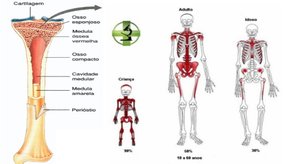
Medullary phase: Bone marrow becomes the main site from 6-7 months of fetal life onward.
After birth, red bone marrow is the primary site, gradually replaced by yellow (fatty) marrow with age.
Regulation of Hematopoiesis
Hematopoiesis is regulated by growth factors, hormones, and the bone marrow microenvironment:
Growth factors:
Erythropoietin (EPO): Stimulates erythrocyte production.
Trombopoietin (TPO): Stimulates platelet production.
G-CSF, GM-CSF, IL-3, IL-6: Stimulate leukocyte production.
Hormonal and nutritional regulation: Iron, vitamin B12, and folic acid are essential for effective hematopoiesis.
Microenvironment: Stromal cells, extracellular matrix, and cytokines in the bone marrow support stem cell maintenance and differentiation.
Hematopoietic Organs
Main Organs and Their Functions
Bone marrow: Primary site of blood cell production after birth.
Thymus: Site of T lymphocyte maturation.
Spleen: Filters blood, destroys old or damaged cells, and produces lymphocytes.
Liver: Hematopoietic organ during fetal development.
Detailed Blood Components
Plasma
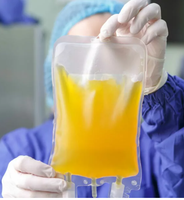
Plasma is the liquid portion of blood, making up about 55% of its volume. It is approximately 90-93% water, with the remainder consisting of proteins, electrolytes, nutrients, hormones, and waste products.
Proteins:
Albumin: Maintains osmotic pressure and transports fatty acids and hormones.
Globulins: Include antibodies (immunoglobulins) for immune defense.
Fibrinogen: Essential for blood clotting.
Lipoproteins: Transport lipids and cholesterol.
Electrolytes: Sodium (Na+), potassium (K+), chloride (Cl-), calcium (Ca2+), phosphate (PO43-), zinc (Zn2+), iron (Fe2+/3+).
Other components: Amino acids, hormones, vitamins, gases, and metabolic waste.
Serum
Serum is plasma without clotting factors. It is obtained after blood has clotted and is used in various diagnostic tests.
Cellular Elements
Erythrocytes (Red Blood Cells):
Biconcave, anucleate cells specialized for oxygen transport via hemoglobin.
Average diameter: 7-8 μm; lifespan: ~120 days.
Lack mitochondria and nucleus when mature.
Leukocytes (White Blood Cells):
Less than 1% of blood cells; key players in immune defense.
Granulocytes: Neutrophils, eosinophils, basophils (contain cytoplasmic granules).
Agranulocytes: Monocytes and lymphocytes (lack granules).
Platelets (Thrombocytes):
Cell fragments derived from megakaryocytes, essential for blood clotting.
Summary Table: Main Blood Components and Functions
Component | Main Function | Key Features |
|---|---|---|
Erythrocytes | Oxygen transport | Biconcave, anucleate, contain hemoglobin |
Leukocytes | Immune defense | Granulocytes (neutrophils, eosinophils, basophils), Agranulocytes (monocytes, lymphocytes) |
Platelets | Blood clotting | Cell fragments from megakaryocytes |
Plasma | Transport medium | Water, proteins, electrolytes, nutrients, hormones |
Conclusion
Understanding the structure, function, and formation of blood and its components is fundamental in cell biology and medicine. Hematology integrates knowledge of cell biology, physiology, and pathology to diagnose and treat diseases of the blood and hematopoietic organs.
