 Back
BackIntracellular Vesicular Traffic: Mechanisms and Pathways
Study Guide - Smart Notes
 Tailored notes based on your materials, expanded with key definitions, examples, and context.
Intracellular Vesicular Traffic
Overview of Vesicular Transport
Intracellular vesicular traffic is essential for the transport of proteins, lipids, and other molecules between membrane-bound compartments in eukaryotic cells. This process maintains compartmental diversity and enables cells to secrete, ingest, and remodel their plasma membrane in response to environmental changes.
Vesicular transport involves the budding and fusion of membrane-bound vesicles that carry cargo between organelles.
Key pathways include the biosynthetic–secretory pathway (ER to Golgi to plasma membrane/lysosomes) and the endocytic pathway (plasma membrane to endosomes to lysosomes).
Transport is highly organized and directional, with retrieval pathways balancing the flow of membrane and proteins.
Coated Vesicles and Their Functions
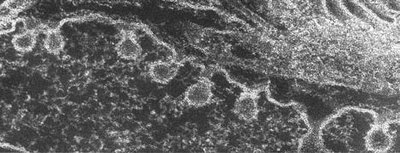
Most transport vesicles form from specialized, coated regions of membranes. The protein coats serve to select cargo and shape the vesicle.
Clathrin-coated vesicles: Mediate transport from the Golgi apparatus and plasma membrane.
COPI-coated vesicles: Mediate retrograde transport from the Golgi to the ER and between Golgi cisternae.
COPII-coated vesicles: Mediate anterograde transport from the ER to the Golgi apparatus.
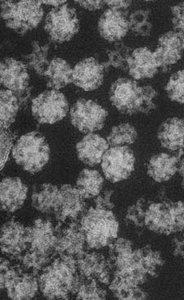
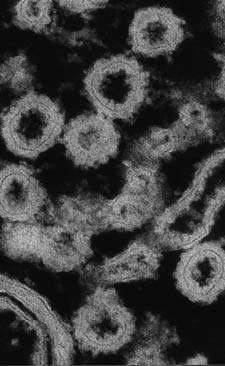
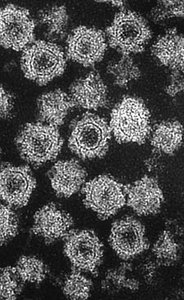
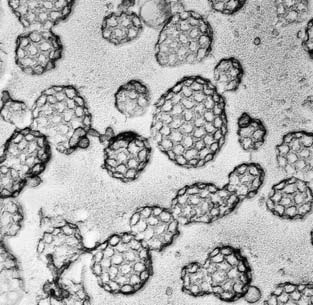
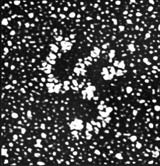
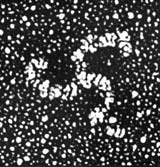
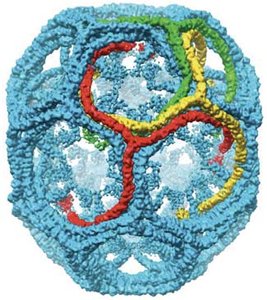
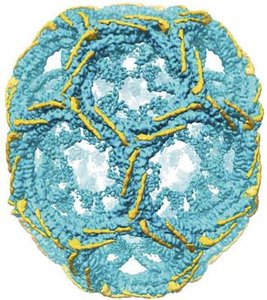
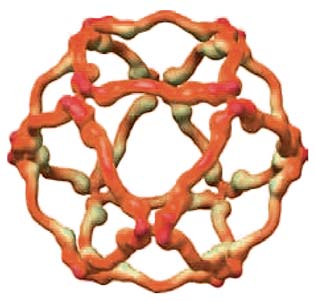
Clathrin structure: Clathrin forms a triskelion shape, assembling into a polyhedral lattice that shapes the vesicle.
Clathrin Coat Assembly and Vesicle Formation
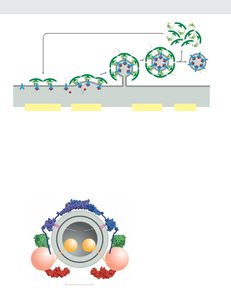
Clathrin-coated vesicles are formed by the sequential assembly of adaptor proteins and clathrin triskelions on the cytosolic face of the membrane. Adaptor proteins link clathrin to the membrane and select cargo via cargo receptors.
Adaptor proteins are specific for different cargo and membrane sources.
After budding, the clathrin coat is rapidly removed to allow vesicle fusion with the target membrane.
Specialized Coats: Retromer and Phosphoinositides
Not all coats are basketlike. The retromer complex forms on endosomes to return specific receptors to the Golgi. Coat assembly is regulated by phosphoinositides (PIPs), which act as molecular markers for membrane identity and recruit coat proteins.
Vesicle Budding and Pinching-Off
Vesicle scission from the membrane is mediated by cytoplasmic proteins such as dynamin, which forms a ring around the neck of the budding vesicle and uses GTP hydrolysis to drive membrane fission.
GTPases in Coat Assembly and Vesicle Targeting
Monomeric GTPases (e.g., Arf, Sar1) regulate the assembly and disassembly of vesicle coats. GTP binding triggers membrane association and coat recruitment; GTP hydrolysis leads to coat disassembly.
Rab Proteins and SNAREs: Vesicle Targeting and Fusion
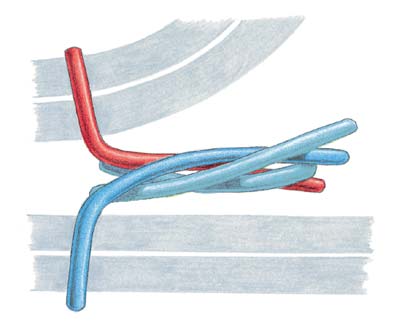
Rab GTPases and their effectors ensure vesicles dock at the correct target membrane. SNARE proteins (v-SNAREs on vesicles, t-SNAREs on targets) mediate membrane fusion by forming a stable four-helix bundle that brings membranes into close proximity.
Summary Table: Types of Coated Vesicles and Their Functions
Coat Type | Main Protein | Origin | Destination | Main Function |
|---|---|---|---|---|
Clathrin | Clathrin triskelion | Golgi, Plasma Membrane | Endosomes, Lysosomes, Cell Surface | Endocytosis, sorting at TGN |
COPI | COPI complex | Golgi | ER, Golgi cisternae | Retrograde transport |
COPII | COPII complex | ER | Golgi | Anterograde transport |
Retromer | Retromer complex | Endosome | Golgi | Receptor recycling |
Key Terms and Definitions
Vesicular transport: The movement of materials within small, membrane-bound vesicles between organelles.
Coated vesicle: A vesicle surrounded by a protein coat that helps select cargo and shape the vesicle.
Adaptor protein: A protein that links the vesicle coat to the membrane and selects cargo.
Rab GTPase: A family of small GTP-binding proteins that regulate vesicle targeting and fusion.
SNARE proteins: Transmembrane proteins that mediate the fusion of vesicles with target membranes.
Phosphoinositides (PIPs): Phosphorylated derivatives of phosphatidylinositol that act as membrane identity markers.
Example: Clathrin-Mediated Endocytosis
Clathrin-mediated endocytosis is a well-studied process in which clathrin-coated pits form on the plasma membrane, selectively internalizing receptors and their bound ligands. After vesicle scission, the clathrin coat is removed, and the vesicle fuses with early endosomes for sorting.
Additional info:
Clathrin triskelions can self-assemble into polyhedral cages in vitro, demonstrating their intrinsic ability to shape vesicles.
Defects in vesicular transport can lead to diseases such as cystic fibrosis and lysosomal storage disorders.
