 Back
BackIntroduction to Eukaryotic Cell Biology: Structure, Membranes, and Organelle Function
Study Guide - Smart Notes
 Tailored notes based on your materials, expanded with key definitions, examples, and context.
Introduction to Eukaryotic Cell Biology
Overview
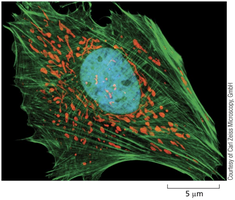
Eukaryotic cell biology focuses on the structure, function, and evolution of cells with a membrane-bound nucleus and organelles. Understanding these features is fundamental to cell biology, as they distinguish eukaryotes from prokaryotes and underpin the complexity of multicellular life.
Eukaryotic cells possess a nucleus and various membrane-bound organelles.
They are typically larger and more complex than prokaryotic cells.
Examples include plants, animals, fungi, protozoa, and algae.
Defining Features of Eukaryotic Cells
Membrane-Bound Organelles
The presence of membrane-bound organelles is the hallmark of eukaryotic cells. These structures compartmentalize cellular functions, allowing for greater specialization and efficiency.
Nucleus: Separates genetic material from the cytoplasm.
Cytoplasm: Everything between the nucleus and plasma membrane, including other organelles.
Ribosomes: Eukaryotic ribosomes are 80S, larger than prokaryotic 70S ribosomes, with distinct rRNA composition.
Cell Wall: Present in plants and fungi, absent in animals and protozoa.
Theory of Eukaryotic Evolution
Endosymbiotic Theory
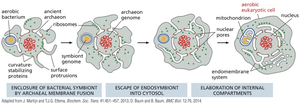
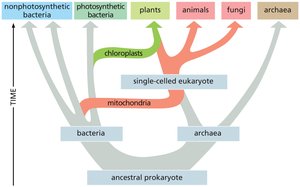
The currently accepted theory for the origin of eukaryotic cells is the endosymbiotic theory. It proposes that key organelles, such as mitochondria and chloroplasts, originated from symbiotic relationships with ancestral bacteria.
Mitochondria: Evolved from aerobic bacteria engulfed by ancestral archaea; essential for aerobic respiration.
Chloroplasts: Originated from photosynthetic cyanobacteria engulfed by a eukaryote already containing mitochondria.
Intracellular Membranes and Organelles
Structure and Function
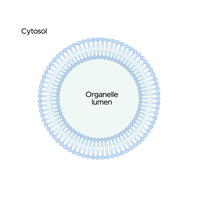
Organelles are surrounded by membranes that separate their internal environment (lumen) from the cytosol. This compartmentalization is crucial for maintaining distinct biochemical environments and regulating cellular processes.
Membrane Composition: Organelle membranes have unique lipid, protein, and carbohydrate compositions, and are generally more fluid than the plasma membrane.
Dynamic Nature: Organelle abundance, size, and location can change in response to cellular needs.
Cytosol: The aqueous fluid surrounding organelles within the cytoplasm.
Membrane Transport Mechanisms
Factors Affecting Molecular Movement
The movement of molecules across membranes depends on their chemical properties, size, and the presence of concentration or electrochemical gradients.
Polarity: Hydrophobic (lipophilic) molecules cross membranes easily; hydrophilic and charged molecules do not.
Size: Small molecules pass more efficiently than large ones.
Concentration Gradient: Drives passive diffusion from high to low concentration.
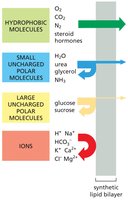
Types of Membrane Transport
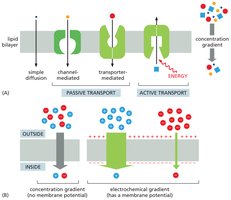
Simple Diffusion: Movement of hydrophobic molecules down their concentration gradient without assistance.
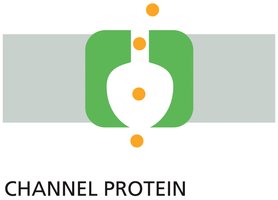
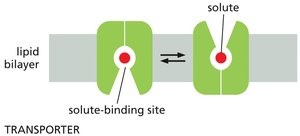
Passive Transport: Movement of large or polar molecules via channel or transporter proteins, down their concentration gradient.
Active Transport: Movement of molecules against their concentration gradient, requiring energy input (often ATP).
Electrochemical Gradients: Combined effect of concentration and electrical gradients, important for processes like oxidative phosphorylation.
Overview of Organelle Function
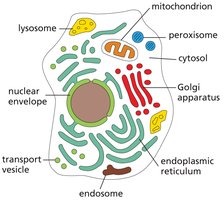
Major Eukaryotic Organelles
Each organelle in a eukaryotic cell has specialized functions essential for cellular life.
Nucleus: Stores genetic information, site of DNA/RNA synthesis, and ribosome assembly.
Endoplasmic Reticulum (ER): Smooth ER synthesizes lipids; rough ER synthesizes and glycosylates proteins.
Golgi Apparatus: Sorts, modifies, and packages proteins and lipids for transport.
Lysosomes: Contain acid hydrolases for macromolecule degradation; maintain acidic pH for enzyme activity.
Mitochondria: Generate ATP via aerobic respiration.
Peroxisomes: Involved in lipid metabolism and detoxification.
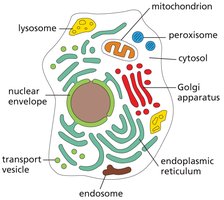
Nucleus
The nucleus is the control center of the cell, housing genetic material and coordinating activities such as growth, metabolism, and reproduction.
Nuclear Envelope: Double membrane separating nucleoplasm from cytosol.
Nuclear Pores: Regulate transport of molecules between nucleus and cytoplasm.
Nucleolus: Site of ribosome assembly.
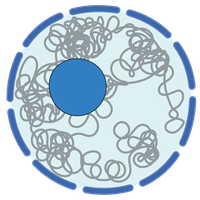
Endoplasmic Reticulum (ER)
The ER is a network of membranes involved in protein and lipid synthesis, as well as transport and glycosylation.
Smooth ER: Lipid synthesis, metabolism, and transport.
Rough ER: Protein synthesis (with ribosomes), glycosylation, and transport to other organelles or extracellular space.
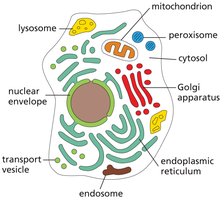
Golgi Apparatus
The Golgi apparatus is responsible for sorting, modifying, and packaging proteins and lipids for delivery to their destinations.
Protein Sorting: Directs proteins to correct cellular locations or for secretion.
Glycosylation: Addition of carbohydrates to proteins.
Structure: Series of ordered compartments held together by structural proteins.
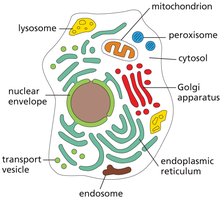

Lysosomes
Lysosomes are acidic organelles containing enzymes (acid hydrolases) that degrade macromolecules. Their low pH ensures that these enzymes are only active within the lysosome, preventing damage to the rest of the cell.
Acid Hydrolases: Enzymes that use water to break chemical bonds, active only at low pH (4.5–5.0).
pH Regulation: Maintained by vacuolar ATPase (v-ATPase), which actively transports protons into the lysosome.
Function: Degradation of macromolecules, recycling of cellular components.
Summary Table: Membrane Transport Mechanisms
Transport Type | Energy Requirement | Direction | Example Molecules | Transport Proteins Needed? |
|---|---|---|---|---|
Simple Diffusion | No | Down concentration gradient | O2, CO2, steroid hormones | No |
Passive Transport | No | Down concentration gradient | Glucose, ions | Yes (channels/transporters) |
Active Transport | Yes (e.g., ATP) | Against concentration gradient | Na+, K+, H+ | Yes (pumps) |
Key Terms and Concepts
Organelle: Specialized subunit within a cell with a specific function, usually membrane-bound.
Electrochemical Gradient: Combined effect of concentration and electrical gradients across a membrane.
Hydrolase: Enzyme that catalyzes the hydrolysis of chemical bonds.
v-ATPase: Vacuolar ATPase, a proton pump that acidifies organelle lumens such as lysosomes.
Relevant Equations
Nernst Equation (for membrane potential):
Fick's Law of Diffusion:
