 Back
BackIntroduction to Microbiology: Foundations, History, and Impact on Health
Study Guide - Smart Notes
 Tailored notes based on your materials, expanded with key definitions, examples, and context.
Introduction to Microbiology
What Is Microbiology?
Microbiology is the scientific study of microorganisms—organisms too small to be seen with the naked eye. This field explores how these entities interact with humans, animals, and the environment, particularly in ways that influence health, disease transmission, and prevention strategies.
Microorganisms include bacteria, viruses, fungi, protozoa, and algae.
Specialized tools, such as microscopes, are required to study them.
Importance of Microbiology in Healthcare and Public Health
Microbiology provides the biological foundation for infection control, antimicrobial use, outbreak investigation, and disease prevention in healthcare and public health.
Microorganisms are the underlying cause of infectious diseases encountered in clinical and community settings.
Decisions regarding hand hygiene, personal protective equipment, cleaning protocols, and patient isolation are based on microbiological principles.
Understanding microbial growth and transmission enables proactive risk reduction.
Ubiquity and Roles of Microorganisms
Microorganisms are present in all environments, including soil, water, air, food, and the human body. Constant exposure does not always result in disease.
Most microorganisms are harmless or beneficial to humans.
Normal microbiota are resident microbes that protect against infection by competing with harmful organisms.
When Do Microbes Cause Disease?
Disease occurs only when specific conditions are met: the presence of a pathogenic organism, a susceptible host, and an appropriate route of entry.
Exposure does not always lead to infection, and infection does not always result in disease.
Outcomes vary among individuals exposed to the same microorganism.
Categories of Microorganisms
Microorganisms are classified into several groups based on structure and behavior:
Bacteria
Viruses
Fungi
Protozoa
Algae
Other infectious agents: prions and viroids
History of Microbiology
Early Perceptions and Negative Aspects
Historically, microorganisms were associated with disease, food spoilage, and other damage due to limited knowledge. Infectious diseases were common in developed countries in the past and remain prevalent in many developing regions.
Examples of foodborne diseases: Salmonella, E. coli O157:H7, Noroviruses, Listeria
Emerging infectious diseases: Avian influenza, Swine influenza, West Nile Virus, Zika virus, SARS-CoV2, Legionnaires disease, antibiotic-resistant bacteria (MRSA, VRE), C. difficile
Positive Aspects of Microorganisms
Microorganisms play essential roles in nature and industry:
Produce much of the world’s oxygen (e.g., cyanobacteria)
Form the basis of marine and freshwater food chains
Used in food and beverage production (dairy, fermented products, beer, wine)
Manufacture industrial products (enzymes, organic acids, antibiotics, hormones, vaccines)
Bioremediation (oil spills, heavy metals, pesticides)
Recycle vital elements (carbon, oxygen, nitrogen, sulfur, phosphorus)
Symbiosis with other organisms (ruminants, human commensals)
Development of Microbiology as a Science
Microbiology is a relatively young science, though microbes have existed for billions of years. Early discoveries include ancient DNA from Mycobacterium tuberculosis and endospores millions of years old. Photosynthetic cyanobacteria contributed to the development of Earth’s oxygen atmosphere.

Major Figures in Early Microbiology
Zacharias Janssen: Credited with inventing the microscope.
Anton van Leeuwenhoek: First to observe live microorganisms, coined the term “animalcules.”



Spontaneous Generation vs. Biogenesis
The spontaneous generation theory posited that living organisms could arise from non-living matter. This was challenged by the theory of biogenesis, which states that living cells arise only from pre-existing living cells.
Francesco Redi: Disproved spontaneous generation for flies using sealed and mesh-covered jars with meat.
John Needham: Supported spontaneous generation with flawed experiments.
Lazzaro Spallanzani: Improved Needham’s experiments, showing no growth in properly sealed and heated flasks.
Louis Pasteur: Definitively disproved spontaneous generation with swan-necked flask experiments.
The Golden Age of Microbiology (1857–1914)
This period saw rapid advances, including the establishment of microbiology as a science, improvements in microscopes and culture techniques, development of vaccines, and improved surgical techniques.
Pasteur’s Contributions
Developed pasteurization to prevent wine and beer spoilage.
Linked yeast to fermentation, showing microbes as agents of chemical change.
Proposed the Germ Theory of Disease: Microbes cause disease.
Theories of Disease Before Germ Theory
Supernatural explanations (punishment, demons, witchcraft)
Miasma theory (disease from "bad air")
Contagion theory (disease passed by contact or fomites)
Support for Germ Theory
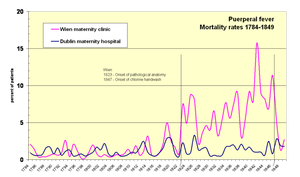
Ignaz Semmelweis: Linked hand hygiene to reduced puerperal fever in maternity wards.
John Snow: Traced cholera outbreak to contaminated water, using epidemiological mapping.
Joseph Lister: Introduced antiseptic surgery using carbolic acid.
Robert Koch: Identified anthrax bacterium and developed Koch’s postulates for linking microbes to disease.











Koch’s Postulates
Koch’s postulates are a series of steps to confirm or exclude a bacterium as the causative agent of a disease:
The microorganism must be found in all organisms suffering from the disease, but not in healthy organisms.
The microorganism must be isolated from a diseased organism and grown in pure culture.
The cultured microorganism should cause disease when introduced into a healthy organism.
The microorganism must be re-isolated from the inoculated, diseased experimental host and identified as being identical to the original specific causative agent.
Exceptions: Some microbes cannot be cultured on artificial media, and some diseases have multiple causes.
Advances in Microbial Culture Techniques
Solid media (e.g., agar) and the Petri dish were developed to improve isolation and study of microbes.
Fanny Hesse suggested agar as a solidifying agent; Julius Petri designed the Petri dish.


Vaccination and Immunology
Edward Jenner: Developed the first vaccination technique using cowpox to protect against smallpox.
Pasteur expanded vaccination methods, including attenuation of pathogens for immunization against anthrax and rabies.
Chemotherapy and Antibiotics
Discovery of agents to kill pathogenic microbes, such as quinine for malaria and salversan for syphilis.
Development of sulfonamides (sulfa drugs) and the accidental discovery of penicillin by Alexander Fleming in 1928.
Antibiotic resistance emerged soon after widespread use.

Modern Branches of Microbiology
Bacteriology: Study of bacteria
Mycology: Study of fungi
Parasitology: Study of parasites
Immunology: Study of immune responses to infectious agents
Virology: Study of viruses
Recombinant DNA technology: Using microbes as tools to study and manipulate DNA
Impact of Germ Theory on Practice
The acceptance of germ theory led to the development of handwashing, sterilization, disinfection, and vaccination. Infection prevention and control protocols in healthcare, as well as public health strategies such as surveillance and outbreak investigation, are direct applications of this foundational concept.
