 Back
Membrane Transport Mechanisms in Cell Biology
Study Guide - Smart Notes
 Tailored notes based on your materials, expanded with key definitions, examples, and context.
Membrane Transport
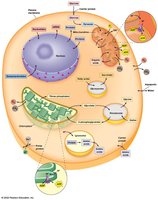
The Importance of the Membrane
The cell membrane is a critical structure that separates the internal environment of the cell from the external surroundings. It regulates the movement of substances in and out of the cell, maintaining homeostasis and enabling cellular function.
Selective Permeability
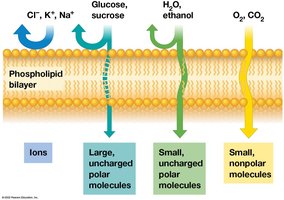
Cell membranes exhibit selective permeability, allowing certain molecules to pass while restricting others. This property is essential for maintaining the proper internal composition of the cell.
Permeable by diffusion: Nonpolar molecules and small polar molecules can cross the membrane easily.
Impermeable by diffusion: Ions, charged molecules, and large molecules require specialized transport mechanisms.
Mechanisms of Solute Transport Across Membranes
Types of Transport
Solutes can cross the membrane via three main mechanisms:
Simple Diffusion: Passive movement of molecules from high to low concentration.
Facilitated Diffusion: Passive movement aided by transport proteins.
Active Transport: Movement against a concentration gradient, requiring energy input.
“Down” and “Up” the Gradient
Transport direction is determined by gradients:
Concentration gradient: Difference in solute concentration across the membrane.
Electrochemical potential: Combined effect of concentration and electrical charge.
Membrane potential: Voltage difference across the membrane due to ion distribution.
Simple Diffusion
Principles of Simple Diffusion
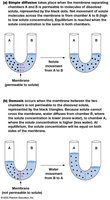
Simple diffusion is a passive process where molecules move from areas of high concentration to low concentration, driven by entropy and resulting in a negative ΔG (free energy change).
No proteins required: Molecules pass directly through the lipid bilayer.
Main factors: Size, polarity, and charge of the molecule.
Osmosis
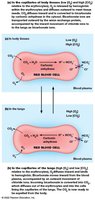
Osmosis is the diffusion of water across a selectively permeable membrane, typically from low solute concentration to high solute concentration. The osmolarity of solutions determines the direction of water movement.
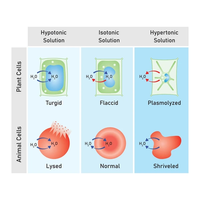
Hypertonic solution: Higher solute concentration outside the cell; water leaves the cell.
Hypotonic solution: Lower solute concentration outside; water enters the cell.
Isotonic solution: Equal solute concentration; no net water movement.
Simple Diffusion Kinetics
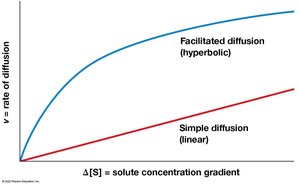
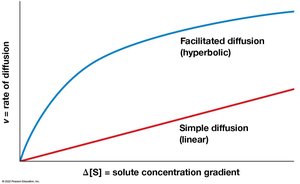
The rate of simple diffusion depends on the permeability coefficient, which is influenced by the size and charge of the solute, and the concentration gradient across the membrane. Fick’s Law describes this relationship:
Fick’s Law:
ΔS: Difference in solute concentration ([S] outside – [S] inside)
Facilitated Diffusion
Principles of Facilitated Diffusion
Facilitated diffusion is a passive process that requires transport proteins to move solutes down their concentration gradient. It is characterized by negative ΔG and does not require metabolic energy.
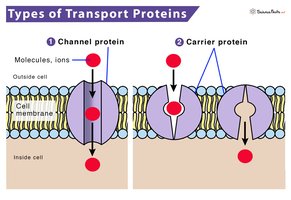
Types of Transport Proteins
Carrier Proteins: Bind specific solutes and undergo conformational changes to transport them.
Channel Proteins: Form pores that allow specific ions or molecules to pass through.
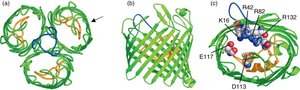
Channel Proteins
Channel proteins can be large and nonspecific (porins, aquaporins) or smaller and highly selective (ion channels).
Porins: Allow passage of large molecules.
Aquaporins: Specialized for water transport.
Ion channels: Selective for specific ions.
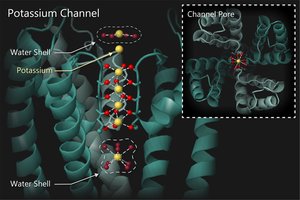
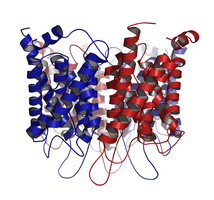
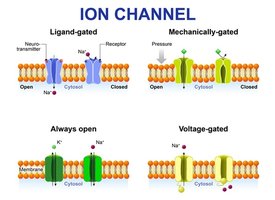
Ion Channels
Ion channels are classified based on their gating mechanisms:
Voltage-gated channels: Open in response to changes in membrane potential.
Ligand-gated channels: Open when a specific molecule binds.
Mechanosensitive channels: Respond to mechanical forces.
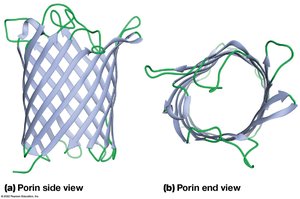
Porins
Porins are large, barrel-shaped proteins found in the outer membranes of bacteria, mitochondria, and chloroplasts. They allow the passage of solutes up to a certain size.
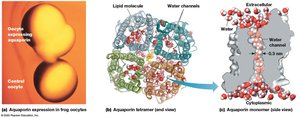
Aquaporins
Aquaporins are highly selective water channels that facilitate rapid water movement across membranes.
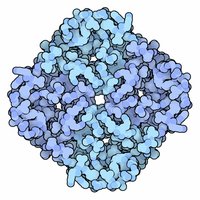
Carrier Proteins
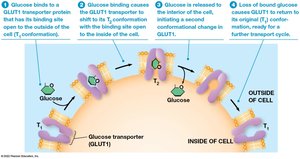
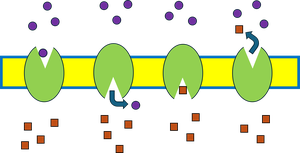
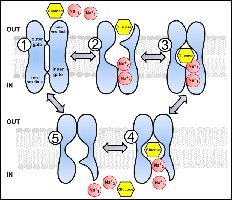
Carrier proteins operate via the alternating conformation model, binding substrates at specific sites and releasing them after a conformational change. They are analogous to enzymes in their specificity and regulation.
High specificity: Only certain molecules are transported.
Regulated: Activity can be modulated by cellular signals.
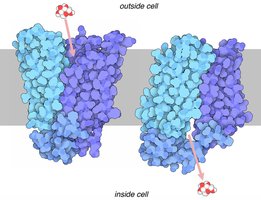
Carrier Protein Kinetics
Carrier proteins exhibit saturation kinetics and can be competitively inhibited, similar to enzyme-catalyzed reactions.
Saturation kinetics: Rate of transport levels off at high substrate concentrations.
Competitive inhibition: Other molecules can compete for the binding site.
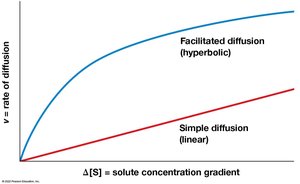
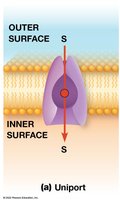
Types of Carrier Proteins
Uniporter: Transports a single type of molecule.
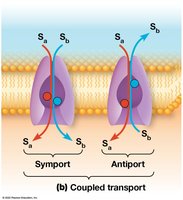
Symporter: Transports two molecules in the same direction.
Antiporter: Transports two molecules in opposite directions.
Examples of Carrier Proteins
Uniporter: GLUT1 transports glucose.
Antiporter: Chloride-bicarbonate exchanger.
Symporter: SGLT1 transports sodium and glucose together.
Active Transport
Principles of Active Transport
Active transport moves solutes against their concentration gradient, requiring energy input (usually from ATP hydrolysis). This process is essential for nutrient uptake, waste removal, and maintaining ion gradients.
Endergonic: Requires energy.
Pumps: Specialized proteins that perform active transport.
Direct Active Transport
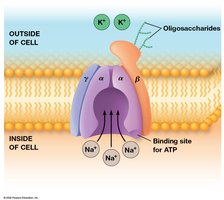
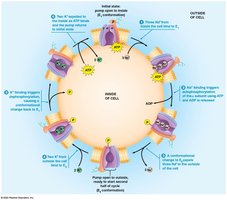
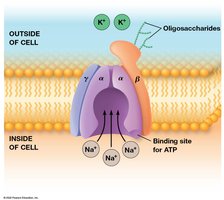
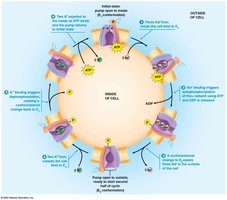
Direct active transport typically involves ATPases, which hydrolyze ATP to drive the movement of ions or molecules across the membrane.
Indirect Active Transport
Indirect active transport couples the movement of one solute up its gradient with the movement of another solute down its gradient, often using symporters or antiporters.
The Energetics of Transport
Free Energy Change (ΔG) in Transport
Transport processes are governed by changes in free energy (ΔG). For uncharged solutes, the equilibrium constant (Keq) is always 1, so the standard free energy change (ΔG°) is zero. For charged solutes, membrane potential must be considered:
R: Gas constant (1.987 cal/mol·K)
T: Temperature (K)
Z: Charge of solute
F: Faraday constant (23062 cal/mol·V)
Vm: Membrane potential (volts)
Equation for charged solute transport:
Summary Table: Comparison of Transport Mechanisms
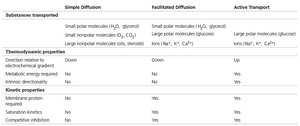
The following table summarizes the key differences between simple diffusion, facilitated diffusion, and active transport:
Property | Simple Diffusion | Facilitated Diffusion | Active Transport |
|---|---|---|---|
Substances Transported | Small polar molecules (H2O), small nonpolar molecules (O2, CO2) | Small polar molecules (H2O, glucose), large polar molecules (glucose) | Large polar molecules (glucose), ions (Na+, K+, Ca2+) |
Direction relative to electrochemical gradient | Down | Down | Up |
Metabolic energy required | No | No | Yes |
Membrane protein required | No | Yes | Yes |
Saturation kinetics | No | Yes | Yes |
Competitive inhibition | No | Yes | Yes |
Summary
Membrane transport is fundamental to cell biology, encompassing passive and active mechanisms that regulate the movement of solutes and water. Understanding these processes is essential for comprehending cellular physiology and homeostasis.
