 Back
BackMendelian Genetics and Genetic Recombination: Study Notes for Cell Biology
Study Guide - Smart Notes
 Tailored notes based on your materials, expanded with key definitions, examples, and context.
Mendelian Genetics and Genetic Recombination
Genetic Recombination
Genetic recombination is the process by which genetic material is exchanged between chromosomes or different regions of the same chromosome, resulting in new combinations of alleles in offspring. This process is fundamental for increasing genetic diversity and restricting the accumulation of harmful mutations in populations.
Definition: Exchange of genetic material between chromosomes.
Benefits:
Increases genetic diversity, aiding adaptation and evolution.
Restricts build-up of harmful mutations (prevents Muller's ratchet).
Mechanism: Occurs naturally during meiosis and fertilization.
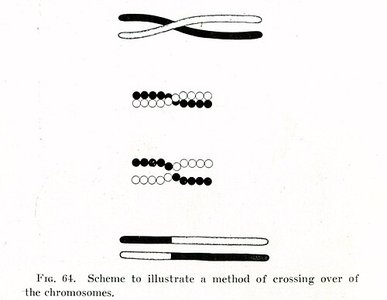
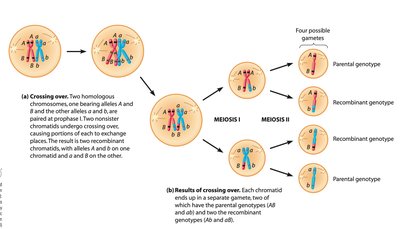
Natural Genetic Recombination
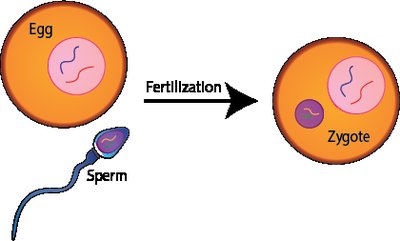
Recombination occurs during meiosis and fertilization, where gametes fuse to form a zygote. Each gamete is genetically unique due to random assortment and crossing over, resulting in offspring with new allele combinations.
Fertilization: Fusion of egg and sperm to form a zygote.
Random Combination: Maternal and paternal homologs combine randomly.
Result: Each zygote is a new genetic recombination.
Linked Genes and Crossing Over
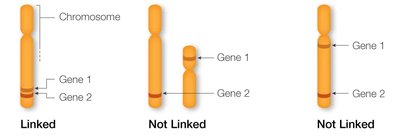
Genes located close together on the same chromosome are called linked genes and tend to be inherited together. Crossing over during meiosis can disrupt this linkage, creating recombinant chromosomes.
Linked Genes: Genes inherited together due to proximity on a chromosome.
Crossing Over: Exchange of genetic material between homologous chromosomes, breaking linkage.
Recombination Frequency: Proportional to the distance between genes; closer genes recombine more frequently.
Gene Mapping and Recombination Frequency
Gene mapping uses recombination frequency to determine the order and spacing of genes on a chromosome. The unit of measurement is the centimorgan (cM), where 1 cM corresponds to a 1% recombination frequency.
Genetic Mapping: Determining gene order and spacing based on recombination frequency.
Map Units: Centimorgans (cM).
Example: If two genes recombine 15% of the time, they are 15 cM apart.
Genetic Recombination in Bacteria and Viruses
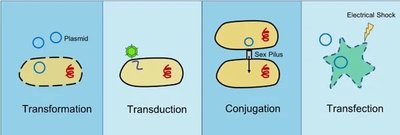
Bacteria and viruses reproduce asexually but can still undergo genetic recombination through three main mechanisms: transformation, transduction, and conjugation.
Transformation: Bacterium incorporates new DNA from the environment.
Transduction: Bacteriophage transfers DNA between bacteria.
Conjugation: Direct DNA transfer between bacteria via a mating bridge.
Bacterial Transformation
Transformation involves the uptake of DNA (often plasmid) from the environment by a bacterium, which then incorporates it into its genome. This process is used in laboratories to introduce new genes into bacteria.
Plasmid: Small, circular DNA molecule used in lab transformations.
Example: pGLO plasmid used to introduce GFP gene.

Griffith's Experiment: Transforming Principle
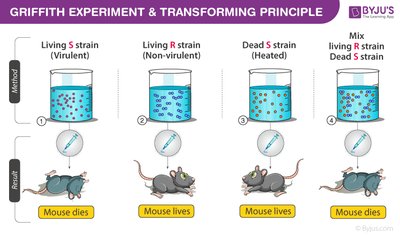
Frederick Griffith's experiment demonstrated that genetic material could be transferred between bacteria, leading to the concept of the transforming principle.
S strain: Lethal, has polysaccharide coat.
R strain: Non-lethal, no coat.
Result: Mice injected with live R strain and dead S strain developed live S strain, indicating transformation.
Avery-McLeod-McCarty Experiment
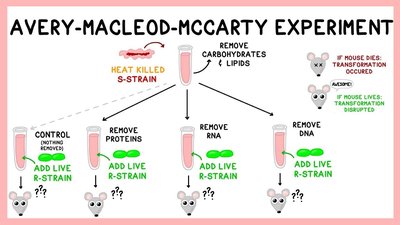
This experiment identified DNA as the molecule responsible for transformation by selectively removing proteins, RNA, or DNA from heat-killed S strain and observing which conditions allowed transformation of R strain.
Conclusion: Only removal of DNA prevented transformation, confirming DNA as genetic material.
Bacterial Transduction
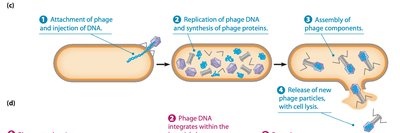
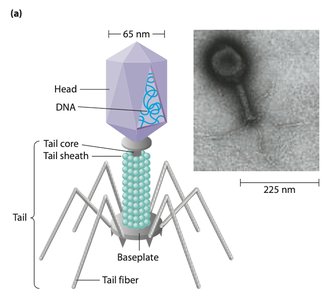
Transduction is the process by which a bacteriophage transfers DNA from one bacterium to another. The new phage can incorporate bacterial DNA into its genome and infect new bacteria, spreading genetic material.
Bacteriophage: Virus that infects bacteria.
Mechanism: Phage DNA is injected, replicated, and can carry bacterial genes to new hosts.
Hershey & Chase Blender Experiment
This experiment used labeled sulfur (in protein) and phosphorus (in DNA) to show that DNA, not protein, is the genetic material transferred by bacteriophages during infection.
Result: Phosphorus (DNA) entered cells, not sulfur (protein).

Recombination of Bacteriophages
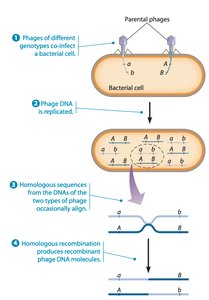
Multiple phages can co-infect a bacterial cell, allowing crossing over between phage genomes if they are homologous, resulting in recombinant phage DNA.
Homologous Recombination: Exchange of genetic material between similar DNA sequences.
Result: New recombinant phage genotypes.
Bacterial Conjugation
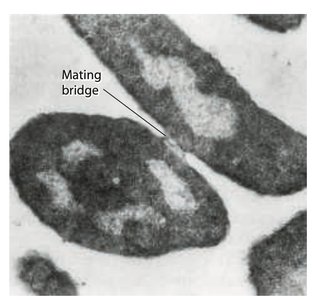
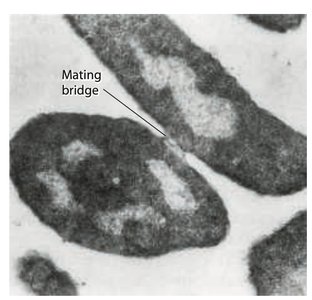
Conjugation is the direct transfer of DNA between two bacteria via a mating bridge. The F (fertility) factor determines if a bacterium can be a donor.
F+ Bacterium: Contains F factor, acts as donor.
F- Bacterium: Lacks F factor, acts as recipient.
Pilus: Protein structure encoded by F factor, forms mating bridge.
Sexual Reproduction and Genetic Variety
Sexual reproduction creates genetic variety by combining different alleles from parents. Genes are units of DNA that code for proteins, and alleles are different versions of a gene.
Gene: DNA sequence coding for a protein.
Allele: Variant of a gene (e.g., blue/brown eyes).
Result: Offspring have new combinations of alleles, differing from parents and siblings.
Genetic Makeup: Homozygous and Heterozygous
Organisms can be homozygous (same alleles) or heterozygous (different alleles) for a gene. The locus is the gene's location on a chromosome.
Homozygous: Both alleles are the same (AA or aa).
Heterozygous: Two different alleles (Aa).
Locus: Specific location of a gene on a chromosome.
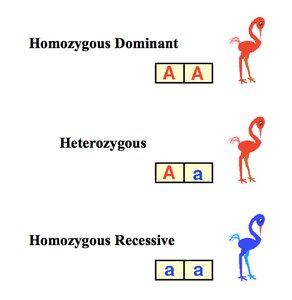
Genotype and Phenotype
The genotype is the genetic makeup of an organism, while the phenotype is the observable physical traits. Multiple genotypes can produce the same phenotype due to dominance and environmental influences.
Genotype: Allele combination for a gene.
Phenotype: Observable traits influenced by genotype and environment.
Dominant and Recessive Genes
Dominant alleles determine the phenotype even if a recessive allele is present. Recessive alleles only affect phenotype if no dominant allele is present.
Dominant: Represented by uppercase letter, masks recessive allele.
Recessive: Represented by lowercase letter, only expressed if homozygous.
Example: Brown eyes (dominant) vs. blue eyes (recessive).
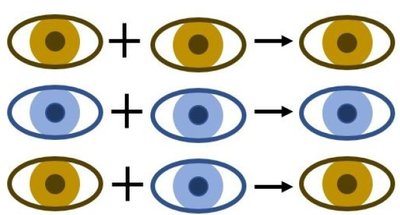
Mendel's Genetic Experiments
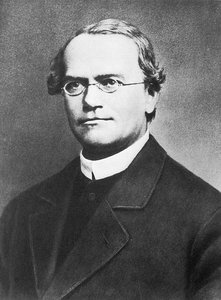
Mendel studied inheritance in pea plants, testing the blending theory and establishing the laws of inheritance. He used true-breeding plants and observed trait ratios across generations.
True Breeding: Self-crosses produce offspring identical to parents.
Generations: P (parental), F1 (first offspring), F2 (second generation).
Results: F1 generation all purple (dominant), F2 generation 3:1 phenotypic ratio.
Mendel's Laws of Inheritance
Mendel established three laws: inheritance of discrete factors (genes), organisms inherit two alleles per gene, and the dominant allele determines phenotype in heterozygotes.
Law 1: Traits are determined by genes (factors) and alleles (versions).
Law 2: Each organism inherits two alleles per gene, one from each parent.
Law 3: Dominant allele determines phenotype in heterozygotes.
Principle of Segregation
The two alleles of a gene separate during gamete formation (meiosis), ensuring each gamete receives only one allele. This explains the reappearance of traits in later generations.
Segregation: Alleles separate during meiosis.
Result: Traits can reappear in subsequent generations.
Punnett Squares
Punnett squares are diagrams used to predict the outcomes of genetic crosses, showing all possible genotype combinations from parental gametes.
Usage: Orient genotypes of two gametes, each box represents a possible genotype.
Example: Seed shape: round (R) or wrinkled (r).
Multi-factor Crosses and Law of Independent Assortment
Dihybrid crosses involve two genes or traits. Mendel's law of independent assortment states that alleles of different genes segregate independently during gamete formation.
Independent Assortment: All possible combinations of alleles occur with equal frequency.
Result: Genetic variation in offspring.
Chromosomal Theory of Inheritance
This theory integrates Mendelian genetics with chromosome behavior during meiosis, explaining how homologous chromosomes segregate and assort independently.
Homologous Chromosomes: Maternal and paternal chromosomes pair and segregate during meiosis.
Diploid Cells: Contain two sets of homologous chromosomes.
Segregation: Chromosomes move to opposite poles, ensuring independent assortment.
Exceptions and Extensions to Mendel's Laws
Mendel's laws apply to traits controlled by single, independent genes. Exceptions include linked genes, sex-linked genes, incomplete dominance, co-dominance, polygenic traits, and pleiotropy.
Linked Genes: Genes close together on a chromosome may not assort independently.
Sex-linked Genes: Located on sex chromosomes, inheritance patterns differ.
Polygenic Traits: Controlled by multiple genes.
Pleiotropy: One gene affects multiple traits.
Summary Table: Mechanisms of Genetic Recombination
Mechanism | Description | Example |
|---|---|---|
Transformation | Uptake of DNA from environment | Griffith's experiment |
Transduction | DNA transfer via bacteriophage | Hershey & Chase experiment |
Conjugation | Direct DNA transfer between bacteria | F factor transfer |
Additional info: Academic context was added to clarify mechanisms, provide definitions, and integrate textbook-level explanations for each topic.
