 Back
BackThe Respiratory System: Structure, Function, and Pulmonary Circulation
Study Guide - Smart Notes
 Tailored notes based on your materials, expanded with key definitions, examples, and context.
The Respiratory System
General Functions of the Respiratory System
The respiratory system is essential for gas exchange, acid-base balance, air conditioning, communication, and protection. It ensures the delivery of oxygen to tissues and the removal of carbon dioxide, while also conditioning inspired air and defending the body from pathogens and particulates.
Ventilation: The process of moving air into (inspiration) and out of (expiration) the lungs, driven by pressure gradients.
Gas Exchange: Oxygen (O2) diffuses from alveoli into blood; carbon dioxide (CO2) diffuses from blood into alveoli and is exhaled.
Acid-Base Balance: Regulates blood pH by controlling CO2 exhalation.
Air Conditioning: Cleans, moistens, and warms inspired air.
Speech and Smell: Enables communication and olfaction.
Protection/Defence: Physical barriers, immune responses, and reflexes protect the respiratory tract.
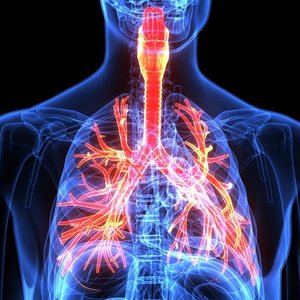
Gross Anatomy of the Thorax and Lungs
The Thorax
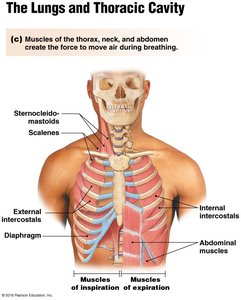
The thorax encases the lungs and provides structural support and protection. It includes the rib cage, sternum, and respiratory muscles.
Rib Cage and Sternum: Protects the lungs and heart.
Respiratory Muscles: Diaphragm (primary muscle of inspiration), external and internal intercostals, and accessory muscles (e.g., scalenes, abdominals) facilitate breathing.
Pleural Membranes: The parietal pleura lines the thorax; the visceral pleura covers the lungs.
Macro Anatomy of the Lungs
The lungs are paired organs divided into lobes and connected to the thoracic wall and diaphragm by pleural membranes. They contain a branching network of airways and specialized tissues for gas exchange.
Lobes: The right lung has three lobes; the left lung has two.
Visceral Pleura: Covers the lung surface and connects to the parietal pleura.
Respiratory (Alveolar) Membrane: The thin surface where gas exchange occurs.
Supporting Tissues: Provide strength and elasticity.
Zones of the Respiratory System
The Conductive Zone
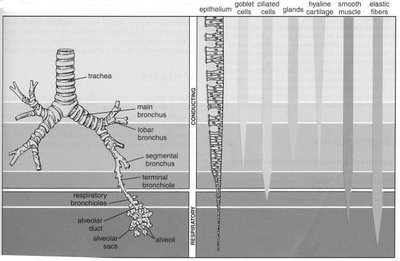
The conductive zone transports, filters, humidifies, and warms air as it moves toward the gas exchange surfaces. It consists of a series of branching tubes with specialized structures.
Structures: Mouth/nasal cavity, pharynx, larynx, trachea, primary and segmental bronchi, bronchioles, and terminal bronchioles.
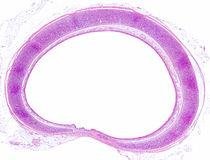
Histology: Lined with pseudostratified ciliated columnar epithelium, goblet cells, smooth muscle, hyaline cartilage, elastic fibers, seromucous glands, and blood vessels.
Functions: Efficient air movement, filtration (hairs, mucociliary escalator), humidification, warming, sensory protection, and localized immunity.
The Respiratory Exchange Zone
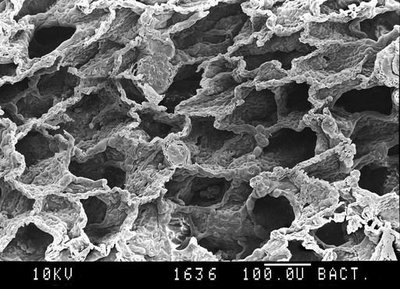
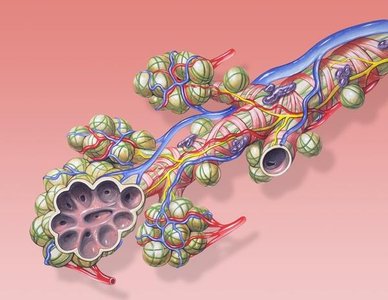
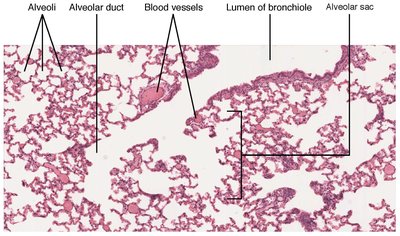
The respiratory exchange zone is where gas exchange occurs. It includes the respiratory bronchioles, alveolar ducts, alveolar sacs, and alveoli. The structure and large surface area of alveoli optimize diffusion of gases between air and blood.
Structures: Respiratory bronchioles, alveolar ducts, alveolar sacs, and alveoli (about 300 million in total).
Respiratory Membrane: Composed of type I pneumocytes (simple squamous epithelium), type II pneumocytes (surfactant-secreting cuboidal cells), alveolar macrophages, fibroblasts, and elastin fibers.
Functions: Facilitates efficient gas exchange (O2 and CO2) due to thin membrane and large surface area.
Summary Table: Zones of the Respiratory System
Zone | Main Structures | Key Functions |
|---|---|---|
Conductive Zone | Trachea, Bronchi, Terminal Bronchioles | Airflow, humidifies, warms, and filters air |
Respiratory Exchange Zone | Respiratory Bronchioles, Alveolar Ducts, Alveoli | Airflow, large surface area, thin barrier for gas diffusion |
Pulmonary Blood Circulation
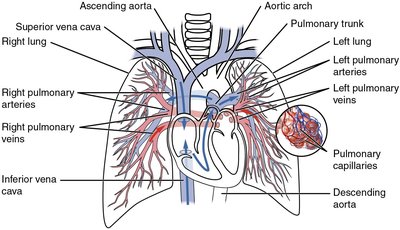
Pulmonary circulation is responsible for transporting deoxygenated blood from the right ventricle of the heart to the lungs and returning oxygenated blood to the left atrium. This close association between alveoli and capillaries enables efficient gas exchange.
Pulmonary Arteries: Carry deoxygenated blood from the right ventricle to the lungs, following the branching pattern of the airways.
Pulmonary Capillaries: Surround alveoli, allowing for the exchange of O2 and CO2 between air and blood.
Pulmonary Veins: Return oxygenated blood from the lungs to the left atrium, then to the left ventricle for systemic circulation.
Key Equations
Bulk Flow (Ventilation): Where is airflow, is the pressure gradient, and is resistance.
Fick's Law of Diffusion (Gas Exchange): Where is surface area, is diffusion coefficient, is partial pressure difference, and is membrane thickness.
