 Back
Transcription, Translation, and Gene Expression: Cell Biology Study Guide
Study Guide - Smart Notes
 Tailored notes based on your materials, expanded with key definitions, examples, and context.
DNA, RNA, and Proteins
Key Differences and Locations
DNA, RNA, and proteins are fundamental molecules in cell biology, each with distinct structures, functions, and cellular locations.
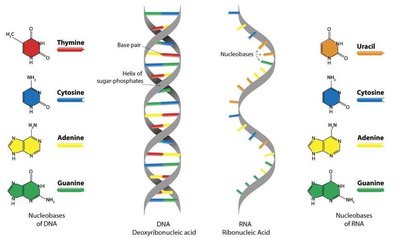
DNA: Double-stranded, contains deoxyribose sugar, nucleotides A, T, G, C, and is located in the nucleus.
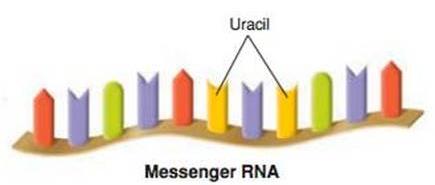
RNA: Single-stranded, contains ribose sugar, nucleotides A, U, G, C, and can be found in the nucleus and cytoplasm.
Proteins: Polymers of amino acids, synthesized in the cytoplasm, perform diverse cellular functions.
Property | DNA | RNA |
|---|---|---|
Strandedness | Double | Single |
Sugar | Deoxyribose | Ribose |
Nucleotides | A, T, G, C | A, U, G, C |
Location | Nucleus | Nucleus & Cytoplasm |
Gene Expression: From DNA to Protein
Overview of Gene Expression
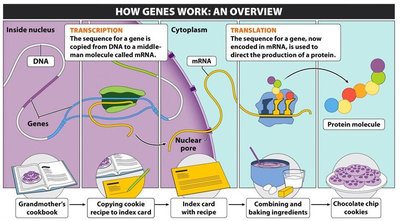
Gene expression is the process by which information in a gene is used to synthesize a functional protein. It consists of two main steps:
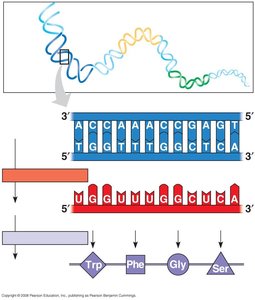
Transcription: DNA is copied into messenger RNA (mRNA).
Translation: mRNA is used as a template to assemble a protein.
Types of RNA in Protein Synthesis
Multiple types of RNA are involved in gene expression:
mRNA (Messenger RNA): Carries genetic information from DNA to ribosomes.
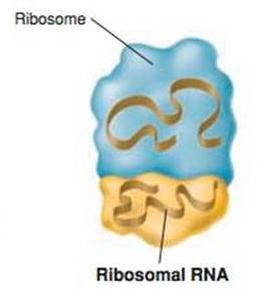
rRNA (Ribosomal RNA): Forms the core of ribosome structure and catalyzes protein synthesis.
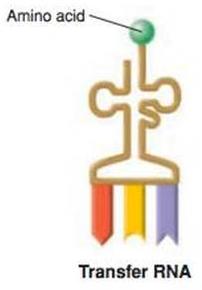
tRNA (Transfer RNA): Brings amino acids to the ribosome during translation.
Transcription
Process and Base Pairing
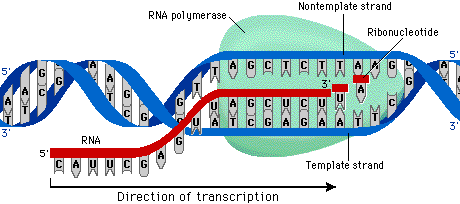
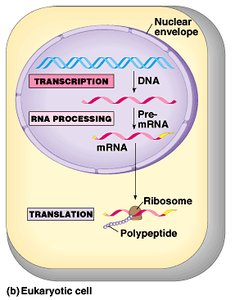
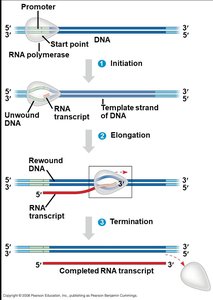
Transcription is the synthesis of mRNA from a DNA template. RNA polymerase opens the DNA double helix and creates a complementary pre-mRNA strand.
Base pairing rules: A-U, C-G
Occurs in the nucleus of eukaryotic cells
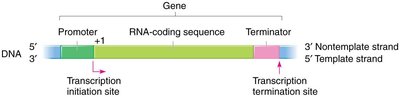
Parts of a Gene
Genes contain specific regions:
Promoter: Site where RNA polymerase binds to initiate transcription.
Coding sequence: Contains instructions for building the protein.
Terminator: Signals the end of transcription.
RNA Processing and Alternative Splicing
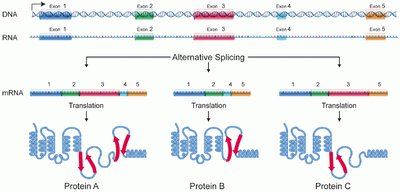
Pre-mRNA contains introns (non-coding) and exons (coding).
Introns are removed, and exons are spliced together.
Alternative splicing allows a single gene to produce multiple proteins by varying exon combinations.
Translation
Mechanism and Ribosome Structure
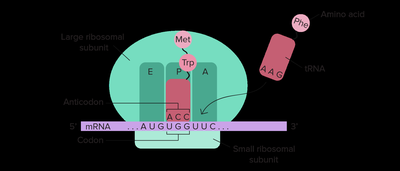
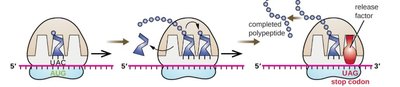
Translation is the process by which ribosomes synthesize proteins using mRNA as a template.
Occurs in the cytoplasm
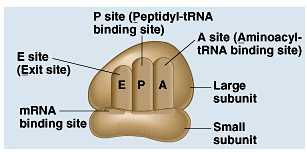
Ribosomes have two subunits (large and small) and three tRNA binding sites (A, P, E)
tRNA "reads" mRNA codons and brings corresponding amino acids
Codons and the Genetic Code
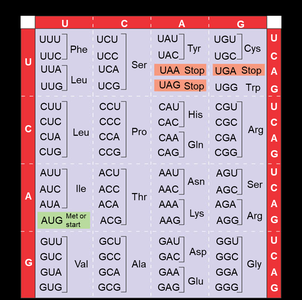
A codon is a sequence of three mRNA nucleotides that codes for a specific amino acid.
The genetic code is degenerate: multiple codons can code for the same amino acid.
The wobble base is the third nucleotide in a codon, allowing flexibility in base pairing.
Differential Gene Expression
Cell Specialization and Transcription Factors
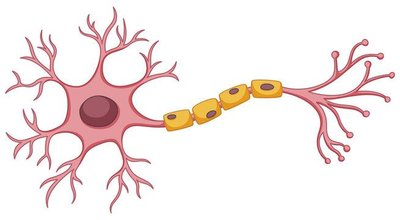
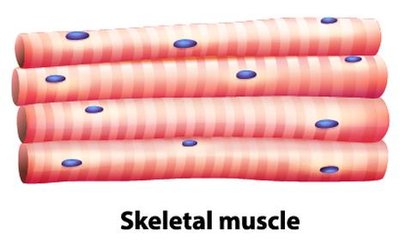
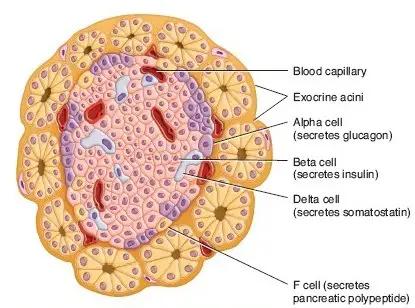
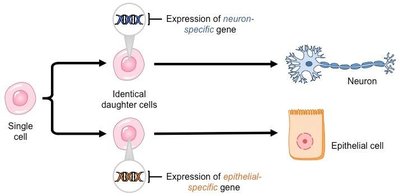
Although all cells contain the same genome, they express different genes to perform specialized functions.
Differential gene expression enables stem cells to differentiate into specific cell types.
Transcription factors regulate gene expression by acting as activators or repressors.
Transcription factors bind to cis-regulatory elements (promoters, enhancers, silencers) to control transcription.
Mutations
Types and Effects
Mutations are changes in DNA or mRNA that can affect protein structure and function.
Point mutation: A single nucleotide change
Frameshift mutation: Insertion or deletion of nucleotides shifts the reading frame
Silent mutation: No change in amino acid
Missense mutation: Wrong amino acid is added
Nonsense mutation: Generates a stop codon
Mutation Type | Effect |
|---|---|
Silent | No change in protein |
Missense | Wrong amino acid |
Nonsense | Premature stop codon |
Frameshift | Disrupts reading frame |
Sources and Cellular Response
Mutations can arise from errors in cellular processes or environmental mutagens.
Cells respond by attempting DNA repair, halting the cell cycle, or undergoing apoptosis.
Example: Diabetes and INS Gene Mutations
Mutations in the insulin-encoding gene (INS) can affect both coding and non-coding regions, leading to structural changes in the insulin protein and contributing to diabetes.
Summary Table: DNA vs. RNA, Transcription vs. Translation
Process | Starts With | Ends With | Location | Key Molecules Used |
|---|---|---|---|---|
Transcription | DNA | mRNA | Nucleus | RNA Polymerase, Nucleotides |
Translation | mRNA | Protein | Cytoplasm | Ribosomes, tRNA, Amino acids |
Key Equations and Concepts
Central Dogma of Molecular Biology
DNA → RNA → Protein
Base Pairing Rules
Genetic Code Table
Each codon (three nucleotides) codes for one amino acid.
Study Tips
Review class notes and textbook resources.
Practice transcribing DNA to mRNA and translating mRNA to protein using the genetic code table.
Understand the effects of different types of mutations.
Be able to explain the role of transcription factors and alternative splicing in gene expression.
