 Back
Transport Across Membranes: Overcoming the Permeability Barrier (Cell Biology Study Guide)
Study Guide - Smart Notes
 Tailored notes based on your materials, expanded with key definitions, examples, and context.
Transport Across Membranes: Overcoming the Permeability Barrier
Introduction to Membrane Transport
Cell membranes are selectively permeable barriers that regulate the movement of substances into and out of cells and organelles. This selective permeability is essential for maintaining cellular homeostasis and proper function. The transport of molecules across membranes can occur via several mechanisms, each suited to the chemical nature and size of the solute.
8.1 Cells and Transport Processes
Homeostasis and Solute Accumulation
Cells and their compartments maintain concentrations of substances that differ from their surroundings, a process known as homeostasis. Most substances crossing membranes are solutes—dissolved gases, ions, and small organic molecules.
Selective Permeability of Membranes
Membranes allow certain molecules to pass while restricting others. The permeability depends on the size, polarity, and charge of the molecule:
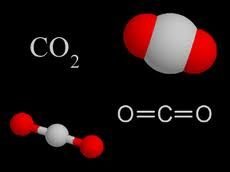
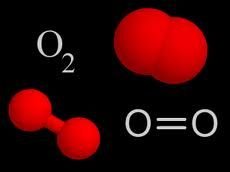
Small hydrophobic molecules (e.g., hydrocarbons, CO2, O2) pass easily.
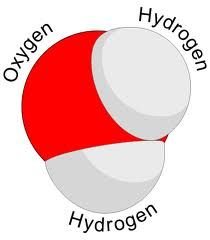
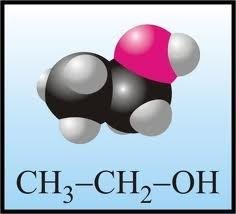
Very small polar molecules (e.g., H2O, ethanol) can also cross, though less efficiently.
Larger, uncharged polar molecules (e.g., glucose) and ions (e.g., Na+, H+) require assistance.
8.2 Simple Diffusion: Unassisted Movement Down the Gradient
Definition and Mechanism
Simple diffusion is the unassisted net movement of a solute from high to low concentration, typically possible for gases, nonpolar molecules, or small polar molecules. Diffusion always moves solutes toward equilibrium.
Exergonic process: Movement down the concentration gradient.
Examples: Oxygen, carbon dioxide, water, glycerol, ethanol.

Osmosis: Diffusion of Water
Osmosis is the diffusion of water across a selectively permeable membrane, driven by differences in solute concentration. Water moves toward regions of higher solute concentration.
Water is uncharged and not affected by membrane potential.
Osmosis is crucial for maintaining cell volume and turgor pressure.
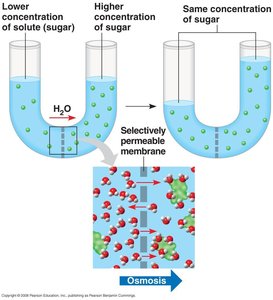

Tonicity and Cell Response
Tonicity describes the ability of a solution to cause a cell to gain or lose water, depending on the relative concentration of solutes:
Isotonic: Equal solute concentration inside and outside the cell.
Hypotonic: Lower solute concentration outside; cell swells.
Hypertonic: Higher solute concentration outside; cell shrinks.

Cell Walls and Osmolarity
Cells with walls (plants, algae, fungi, bacteria) resist bursting in hypotonic solutions due to turgor pressure. Cells without walls (animal cells) regulate osmolarity by pumping out ions.
8.3 Facilitated Diffusion: Protein-Mediated Movement Down the Gradient
Transport Proteins
Most substances are too large or too polar for simple diffusion and require transport proteins for facilitated diffusion. This process is exergonic and does not require energy input.
Carrier proteins: Bind solute, undergo conformational change, release solute.
Channel proteins: Form hydrophilic channels for solute passage.

Types of Carrier Protein Transport
Uniport: Single solute transported (e.g., glucose transporter).
Symport: Two solutes transported in the same direction.
Antiport: Two solutes transported in opposite directions.
Carrier Proteins and Enzyme Analogy
Carrier proteins are analogous to enzymes in specificity and kinetics. They can be competitively inhibited by structurally similar molecules.
Examples: Erythrocyte Transport Proteins
GLUT1: Uniport carrier for glucose.
Anion exchange protein: Antiport carrier for Cl– and HCO3–.
Channel Proteins: Ion Channels, Porins, Aquaporins
Ion channels: Selective for specific ions; often gated (voltage, ligand, mechanosensitive).
Porins: Larger, less specific channels in bacteria, mitochondria, chloroplasts.
Aquaporins: Rapid water transport in erythrocytes, kidney cells, plant cells.
8.4 Active Transport: Protein-Mediated Movement Up the Gradient
Definition and Mechanism
Active transport moves solutes against their concentration gradient, requiring energy (usually from ATP hydrolysis or coupled transport). This process maintains nonequilibrium concentrations of ions and nutrients.
Direct (primary) active transport: Solute accumulation coupled directly to ATP hydrolysis.
Indirect (secondary) active transport: Coupled transport of two solutes; one moves down its gradient, driving the other up its gradient.
Functions of Active Transport
Uptake of essential nutrients
Removal of wastes
Maintenance of ion gradients
Medical Significance: ABC-Type ATPases
ABC transporters can pump drugs out of cells, contributing to multidrug resistance in tumors and antibiotic resistance in bacteria.
8.5 Examples of Active Transport
Na+/K+ ATPase (Pump)
This pump in animal cells is a classic example of direct active transport, maintaining high extracellular Na+ and high intracellular K+ concentrations.
Na+/Glucose Symporter
An example of indirect active transport, where the Na+ gradient (established by the Na+/K+ pump) drives glucose uptake.
Proton Gradients in Plants and Fungi
Proton symport is used for organic solute uptake, with ATP-driven proton pumps maintaining the gradient.
Comparison of Transport Mechanisms
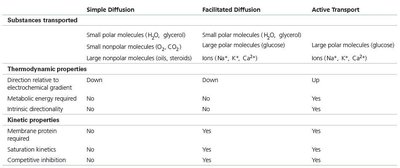
Table: Simple Diffusion, Facilitated Diffusion, and Active Transport
Simple Diffusion | Facilitated Diffusion | Active Transport | |
|---|---|---|---|
Substances transported | Small polar molecules (H2O, glycerol), small nonpolar molecules (O2, CO2), large nonpolar molecules (oils, steroids) | Small polar molecules (H2O, glycerol), large polar molecules (glucose), ions (Na+, K+) | Large polar molecules (glucose), ions (Na+, K+) |
Direction relative to gradient | Down | Down | Up |
Metabolic energy required | No | No | Yes |
Intrinsic directionality | No | No | Yes |
Membrane protein required | No | Yes | Yes |
Saturation kinetics | No | Yes | Yes |
Competitive inhibition | No | Yes | Yes |
Key Equations and Concepts
Concentration Gradient
The driving force for diffusion is the concentration gradient:
Electrochemical Potential
For ions, movement is determined by the electrochemical potential:
Where R is the gas constant, T is temperature, z is ion charge, F is Faraday's constant, and ΔV is membrane potential.
Summary
Cell membranes are selectively permeable, allowing only certain molecules to pass.
Transport mechanisms include simple diffusion, facilitated diffusion, and active transport.
Facilitated diffusion and active transport require membrane proteins.
Active transport is essential for maintaining cellular homeostasis and nonequilibrium conditions.
