 Back
BackCollege Algebra Exam 2 Review: Step-by-Step Guidance
Study Guide - Smart Notes
 Tailored notes based on your materials, expanded with key definitions, examples, and context.
Q1. Solve by factoring:
Background
Topic: Solving Quadratic Equations by Factoring
This question tests your ability to factor quadratic expressions and use the zero-product property to solve for .
Key Terms and Formulas
Quadratic Equation:
Factoring: Expressing the quadratic as a product of two binomials
Zero-Product Property: If , then or
Step-by-Step Guidance
Write the equation in standard form: .
Identify two numbers that multiply to $20-9$.
Rewrite the quadratic as , where and are the numbers found in step 2.
Apply the zero-product property to set each factor equal to zero.
Try solving on your own before revealing the answer!
Q2. Solve by factoring:
Background
Topic: Solving Quadratic Equations by Factoring
This question asks you to rearrange the equation and factor to find the solutions for .
Key Terms and Formulas
Quadratic Equation:
Factoring and Zero-Product Property
Step-by-Step Guidance
Move all terms to one side: .
Factor the quadratic expression.
Set each factor equal to zero and solve for .
Try solving on your own before revealing the answer!
Q3. Solve by the Quadratic Formula:
Background
Topic: Quadratic Formula
This question tests your ability to use the quadratic formula to solve for .
Key Terms and Formulas
Quadratic Formula:
Standard Form:
Step-by-Step Guidance
Rewrite the equation in standard form: .
Identify , , .
Plug these values into the quadratic formula.
Calculate the discriminant: .
Try solving on your own before revealing the answer!
Q4. Solve by Quadratic Formula:
Background
Topic: Quadratic Formula
This question requires you to use the quadratic formula to solve for .
Key Terms and Formulas
Quadratic Formula:
Step-by-Step Guidance
Identify , , .
Plug these values into the quadratic formula.
Calculate the discriminant: .
Try solving on your own before revealing the answer!
Q5. Solve the quadratic equation:
Background
Topic: Solving Quadratic Equations
This question tests your ability to rearrange and solve a quadratic equation.
Key Terms and Formulas
Quadratic Equation:
Factoring or Quadratic Formula
Step-by-Step Guidance
Move all terms to one side: .
Identify , , and .
Decide whether to factor or use the quadratic formula.
Try solving on your own before revealing the answer!
Q6. Given the function
Background
Topic: Polynomial Functions
This question asks you to analyze the structure and properties of a polynomial function.
Key Terms and Formulas
Leading Term: The term with the highest degree
Leading Coefficient: The coefficient of the leading term
Degree: The highest power of
Classification: Constant, quadratic, cubic, quartic
End Behavior: How the function behaves as
Step-by-Step Guidance
Identify the term with the highest power of (leading term).
State the coefficient of the leading term (leading coefficient).
Determine the degree of the polynomial.
Classify the polynomial based on its degree.
Analyze the sign of the leading coefficient to determine end behavior.
Try answering each part before revealing the answer!
Q7. Given the function
Background
Topic: Quadratic Functions and Their Graphs
This question asks you to find key features of a quadratic function, including vertex, axis of symmetry, y-intercept, and intervals of increase/decrease.
Key Terms and Formulas
Vertex: ,
Axis of Symmetry:
Y-intercept:
Maximum/Minimum: Depends on the sign of
Intervals of Increase/Decrease: Based on vertex and direction of parabola
Step-by-Step Guidance
Find the axis of symmetry using .
Calculate the vertex by plugging the axis of symmetry into .
Find the y-intercept by evaluating .
Determine if the parabola opens up or down (sign of ).
Use the vertex to describe intervals of increase and decrease.
Try solving each part before revealing the answer!
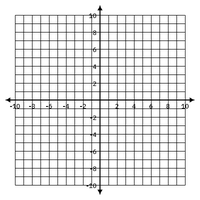
Q8. Given the function
Background
Topic: Polynomial Functions and Their Graphs
This question asks you to analyze zeros, multiplicity, degree, leading coefficient, and end behavior of a polynomial.
Key Terms and Formulas
Zeros: Values of where
Multiplicity: Number of times a zero is repeated
Degree: Highest power of
Leading Coefficient: Coefficient of the highest degree term
End Behavior: Based on degree and leading coefficient
Step-by-Step Guidance
Expand the function to identify all terms.
Set and solve for zeros and their multiplicities.
Determine the degree by finding the highest power of .
Identify the leading coefficient.
Analyze end behavior using degree and leading coefficient.
Try answering each part before revealing the answer!
Q9. Determine the maximum number of zeros, x-intercepts, and turning points for
Background
Topic: Polynomial Function Properties
This question tests your understanding of the relationship between the degree of a polynomial and its zeros and turning points.
Key Terms and Formulas
Degree: Highest power of
Maximum number of zeros: Equal to the degree
Maximum number of turning points: Degree minus one
Step-by-Step Guidance
Identify the degree of the polynomial.
State the maximum possible number of zeros.
State the maximum possible number of turning points.
Try answering before revealing the answer!
Q10. Given the function
Background
Topic: Polynomial Classification and Factoring
This question asks you to name the polynomial and factor it completely to find zeros and their multiplicities.
Key Terms and Formulas
Quartic Polynomial: Degree 4
Factoring: Expressing as a product of polynomials
Zeros and Multiplicity
Step-by-Step Guidance
Identify the degree and name the polynomial.
Factor out common terms.
Factor the remaining quadratic or cubic expression.
List the zeros and their multiplicities.
Try answering before revealing the answer!
Q11. Use Synthetic Division to determine whether the binomial is a factor of ;
Background
Topic: Synthetic Division and Factor Theorem
This question tests your ability to use synthetic division to check if a binomial is a factor of a polynomial.
Key Terms and Formulas
Synthetic Division: Shortcut for dividing polynomials
Factor Theorem: If , then is a factor
Step-by-Step Guidance
Set to find .
Use synthetic division with and the coefficients of .
Check the remainder to determine if is a factor.
Try performing synthetic division before revealing the answer!
Q12. Use synthetic division to find the function value: ; find
Background
Topic: Synthetic Division for Function Evaluation
This question asks you to use synthetic division to evaluate a polynomial at a specific value.
Key Terms and Formulas
Synthetic Division
Function Value:
Step-by-Step Guidance
Set up synthetic division using and the coefficients of .
Perform synthetic division to find the remainder, which is .
Try performing synthetic division before revealing the answer!
Q13. Factor the polynomial completely and list the zeros:
Background
Topic: Factoring Cubic Polynomials
This question tests your ability to factor a cubic polynomial and find its zeros.
Key Terms and Formulas
Factoring by grouping or synthetic division
Zeros: Values of where
Step-by-Step Guidance
Try factoring by grouping or use synthetic division to find one zero.
Factor the remaining quadratic.
List all zeros.
Try factoring before revealing the answer!
Q14. Determine the domain of
Background
Topic: Domain of Polynomial Functions
This question asks you to determine the set of all possible input values for a quadratic function.
Key Terms and Formulas
Domain: Set of all real numbers for polynomials
Step-by-Step Guidance
Recognize that quadratic functions are defined for all real numbers.
Try stating the domain before revealing the answer!
Q15. Given the rational function
Background
Topic: Rational Functions and Asymptotes
This question asks you to analyze vertical and horizontal asymptotes, holes, and intercepts of a rational function.
Key Terms and Formulas
Vertical Asymptote: Set denominator equal to zero
Hole: Common factor in numerator and denominator
Horizontal Asymptote: Compare degrees of numerator and denominator
Intercepts: Set for y-intercept, numerator = 0 for x-intercept
Step-by-Step Guidance
Factor numerator and denominator.
Identify values that make the denominator zero (vertical asymptotes).
Check for common factors (holes).
Determine horizontal asymptote by comparing degrees.
Find x- and y-intercepts.
Try answering each part before revealing the answer!
Q16. Given the rational function
Background
Topic: Rational Functions and Asymptotes
This question asks you to analyze vertical and horizontal asymptotes, holes, and intercepts of a rational function.
Key Terms and Formulas
Vertical Asymptote: Set denominator equal to zero
Hole: Common factor in numerator and denominator
Horizontal Asymptote: Compare degrees of numerator and denominator
Intercepts: Set for y-intercept, numerator = 0 for x-intercept
Step-by-Step Guidance
Factor denominator.
Identify values that make the denominator zero (vertical asymptotes).
Check for common factors (holes).
Determine horizontal asymptote by comparing degrees.
Find x- and y-intercepts.
Try answering each part before revealing the answer!
