Back
BackCollege Algebra Final Exam Study Guide – Key Concepts and Practice Problems
Study Guide - Smart Notes
 Tailored notes based on your materials, expanded with key definitions, examples, and context.
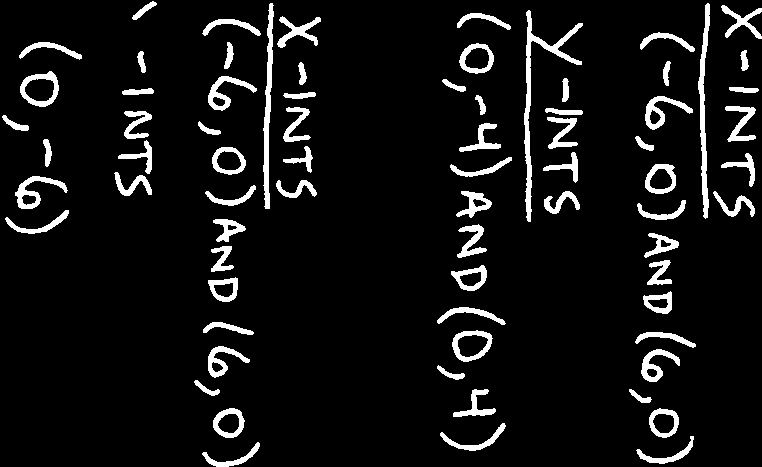
Q1. Identify the x- and y-intercepts of the given graph.
Background
Topic: Intercepts of a Function
This question tests your ability to read a graph and determine where the function crosses the x-axis (x-intercepts) and y-axis (y-intercept).
Key Terms and Formulas:
x-intercept: The point(s) where the graph crosses the x-axis. Set and solve for .
y-intercept: The point where the graph crosses the y-axis. Set and solve for .
Step-by-Step Guidance
Look at the graph and identify all points where the curve crosses the x-axis. These are your x-intercepts.
Identify the point where the curve crosses the y-axis. This is your y-intercept.
Write the intercepts as coordinate points: for x-intercepts and for the y-intercept.
Try solving on your own before revealing the answer!
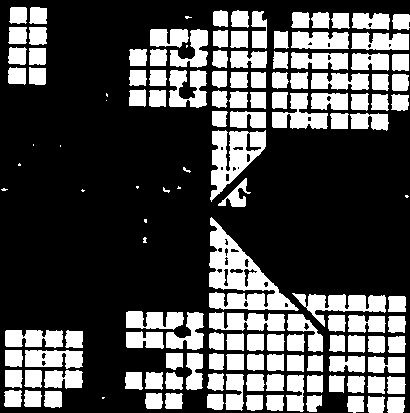
Q2. Determine if the given graph represents a function.
Background
Topic: Functions and the Vertical Line Test
This question tests your understanding of what makes a relation a function, specifically using the vertical line test.
Key Terms and Formulas:
Function: A relation where each input (x-value) has exactly one output (y-value).
Vertical Line Test: If any vertical line crosses the graph more than once, the graph is not a function.
Step-by-Step Guidance
Imagine drawing vertical lines through different parts of the graph.
Check if any vertical line crosses the graph at more than one point.
If all vertical lines cross at most once, the graph is a function. Otherwise, it is not.
Try solving on your own before revealing the answer!

Q3. Describe the transformation: Shift 3 units left and 2 units down.
Background
Topic: Transformations of Functions
This question tests your understanding of how shifting a function horizontally and vertically affects its graph.
Key Terms and Formulas:
Horizontal shift: shifts the graph units left if .
Vertical shift: shifts the graph units up if , down if .
Step-by-Step Guidance
Identify the direction and magnitude of each shift from the description.
Write the new function in terms of , applying the shifts: .
Understand that the graph moves left by 3 units and down by 2 units.
Try solving on your own before revealing the answer!

Q4. Identify intervals where the function is increasing, decreasing, or constant from the graph.
Background
Topic: Increasing/Decreasing/Constant Intervals
This question tests your ability to analyze a graph and describe where the function rises, falls, or stays flat.
Key Terms and Formulas:
Increasing: The function rises as increases.
Decreasing: The function falls as increases.
Constant: The function remains flat as increases.
Step-by-Step Guidance
Look at the graph and identify intervals where the function goes up, down, or stays flat as you move from left to right.
Write the intervals using interval notation, based on the -values where the behavior changes.
Label each interval as increasing, decreasing, or constant.
Try solving on your own before revealing the answer!
Q5. Given and , perform the indicated operations: , , , .
Background
Topic: Operations with Functions
This question tests your ability to add, subtract, multiply, and divide functions.
Key Terms and Formulas:
Addition:
Subtraction:
Multiplication:
Division: ,
Step-by-Step Guidance
Write out and as given in the problem.
For each operation, substitute the expressions for and and perform the indicated operation (combine like terms, multiply, or divide as appropriate).
Simplify each result as much as possible.
Try solving on your own before revealing the answer!

Q6. Find and simplify the difference quotient for the given function.
Background
Topic: Difference Quotient
This question tests your ability to compute and simplify the difference quotient, which is foundational for calculus.
Key Terms and Formulas:
Difference Quotient:
Step-by-Step Guidance
Find by substituting into the function .
Subtract from .
Divide the result by and simplify the expression as much as possible.
Try solving on your own before revealing the answer!

Q7. Determine whether the given function is even, odd, or neither.
Background
Topic: Even and Odd Functions
This question tests your ability to classify functions based on their symmetry.
Key Terms and Formulas:
Even function: for all in the domain (symmetric about the y-axis).
Odd function: for all in the domain (symmetric about the origin).
Step-by-Step Guidance
Substitute into the function and simplify .
Compare to and to determine if the function is even, odd, or neither.
Try solving on your own before revealing the answer!
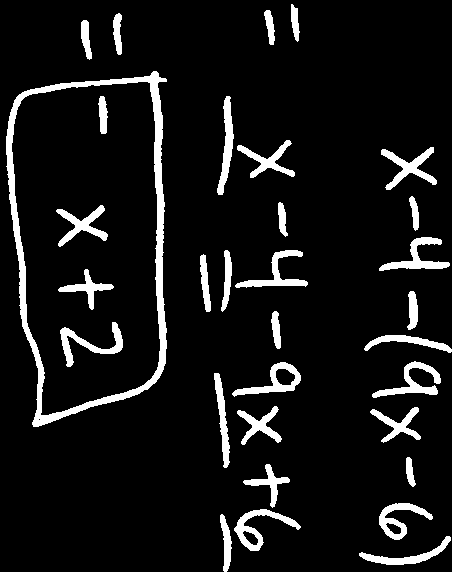
Q8. Find the vertex (maximum or minimum) of the quadratic function .
Background
Topic: Vertex of a Parabola
This question tests your ability to find the vertex of a quadratic function, which is the maximum or minimum point of the parabola.
Key Terms and Formulas:
Vertex formula:
Plug this value into to find the coordinate of the vertex.
Step-by-Step Guidance
Identify the coefficients and from the quadratic function.
Calculate .
Substitute this value back into to find the coordinate of the vertex.
Try solving on your own before revealing the answer!
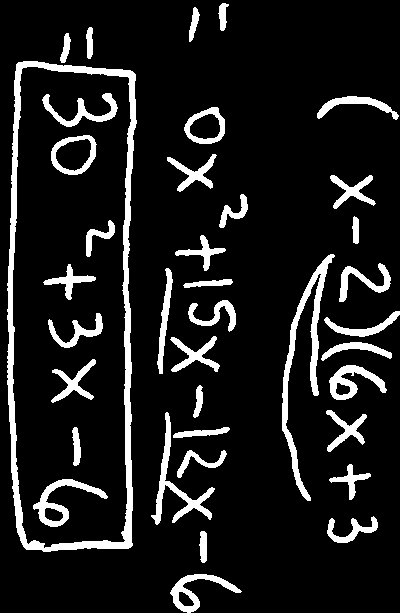
Q9. Find the inverse of the one-to-one function.
Background
Topic: Inverse Functions
This question tests your ability to find the inverse of a function, which "undoes" the original function.
Key Terms and Formulas:
Inverse function: Swap and in the equation, then solve for $y$.
Step-by-Step Guidance
Replace with in the function.
Swap and in the equation.
Solve for to get the inverse function .
Try solving on your own before revealing the answer!
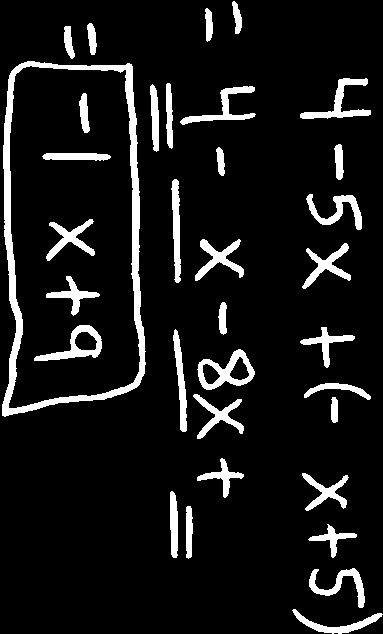
Q10. Find all the zeros of the polynomial function.
Background
Topic: Zeros of Polynomial Functions
This question tests your ability to find the roots (zeros) of a polynomial, which are the -values where .
Key Terms and Formulas:
Zero of a function: A value of for which .
Set the polynomial equal to zero and solve for (factoring, quadratic formula, or synthetic division).
Step-by-Step Guidance
Set the polynomial equal to zero: .
Factor the polynomial if possible, or use the quadratic formula if it is quadratic.
Solve for all possible values that make .
Try solving on your own before revealing the answer!