 Back
BackExponential Functions: Properties, Graphs, and Applications
Study Guide - Smart Notes
 Tailored notes based on your materials, expanded with key definitions, examples, and context.
Exponential Functions
Definition and Basic Properties
An exponential function is a function of the form , where is a positive real number ( and ), is a real number, and is any real number. The domain of is all real numbers, and the base $a$ is called the growth (or decay) factor. The constant is the initial value since .
Domain: (all real numbers)
Range: (all positive real numbers if )
y-intercept:
x-intercept: None
Horizontal asymptote:
Growth vs. Decay:
If , the function models exponential growth.
If , the function models exponential decay.
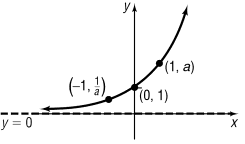
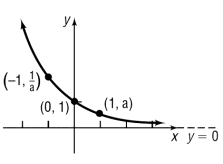
Key Points on the Graph: The graph of always passes through , , and .
Laws of Exponents
The following properties hold for all real numbers with and :
Evaluating Exponential Expressions
To evaluate using a calculator:
Enter the base .
Press the key (or caret ^).
Enter the exponent .
Press = or ENTER.
Example: Evaluate , , , , using a calculator.
Identifying Linear vs. Exponential Functions
Comparing Patterns in Data
To distinguish between linear and exponential functions, examine how the output values change:
Linear function: The difference between consecutive outputs is constant.
Exponential function: The ratio of consecutive outputs is constant.
Example: For and , evaluate at and observe the patterns.
Table: Average Rate of Change vs. Ratio of Consecutive Outputs
x | f(x) = y | Average Rate of Change | Ratio of Consecutive Outputs |
|---|---|---|---|
-1 | -4.5 | ||
0 | -3 | ||
1 | -1.5 | ||
2 | 0 | ||
3 | 1.5 |
Additional info: Similar tables can be constructed for other functions to compare linear and exponential behavior.
Properties of the Exponential Function
Summary of Key Properties
Domain:
Range:
x-intercepts: None
y-intercept:
Horizontal asymptote: (the x-axis)
If , the function is decreasing (decay).
If , the function is increasing (growth).
The graph is smooth and continuous with no corners or gaps.
Contains the points , , .
The Number e and Continuous Growth
Definition of e
The number is a mathematical constant that arises as the limit of as approaches infinity:
As the number of compounding periods increases, the growth factor approaches .
Table: Approximating e
n | |
|---|---|
10 | 2.5937 |
50 | 2.6916 |
100 | 2.7048 |
500 | 2.7169 |
1000 | 2.7169 |
10,000 | 2.7181 |
100,000 | 2.7183 |
1,000,000 | 2.7183 |
Additional info: The value of is approximately 2.7183.
Evaluating Exponential Expressions with Base e
To evaluate on a calculator, use the $e^x$ key.
Examples:
Graphing Exponential Functions and Transformations
To graph functions such as , apply transformations to the basic exponential graph:
Horizontal shift: shifts left by 1 unit.
Vertical stretch: Multiply by 2.
Vertical shift: Subtract 4 (down 4 units).
Domain: Range: Horizontal asymptote:
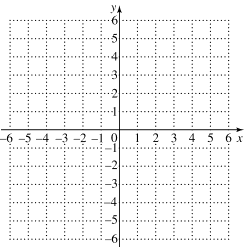
Graph of and Transformations
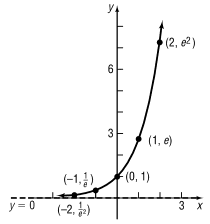
The graph of passes through , , , , etc. Transformations can shift, stretch, or reflect the graph.
Solving Exponential Equations
Equating Bases
To solve equations like , set the exponents equal: (provided , ).
Example: Solve by rewriting $125, then set .
For more complex equations, manipulate both sides to have the same base, then equate exponents.
Solving Graphically
Set equal to the left side and to the right side in a graphing utility. The intersection gives the solution.
Applications of Exponential Functions
Probability Example: Car Arrivals
Suppose cars arrive at a rate of 6 per hour (0.1 per minute). The probability that a car arrives within minutes is:
(a) For ,
(b) For ,
(c) As ,
(d) The graph of is an increasing curve approaching 1 as increases.
(e) To find when , solve ; minutes.
