Skip to main content
Financial Accounting
My Course
Learn
Exam Prep
AI Tutor
Study Guides
Flashcards
Explore
Try the app
My Course
Learn
Exam Prep
AI Tutor
Study Guides
Flashcards
Explore
Try the app
Back
Depreciation: Straight Line definitions
You can tap to flip the card.
Depreciation
You can tap to flip the card.
👆
Depreciation
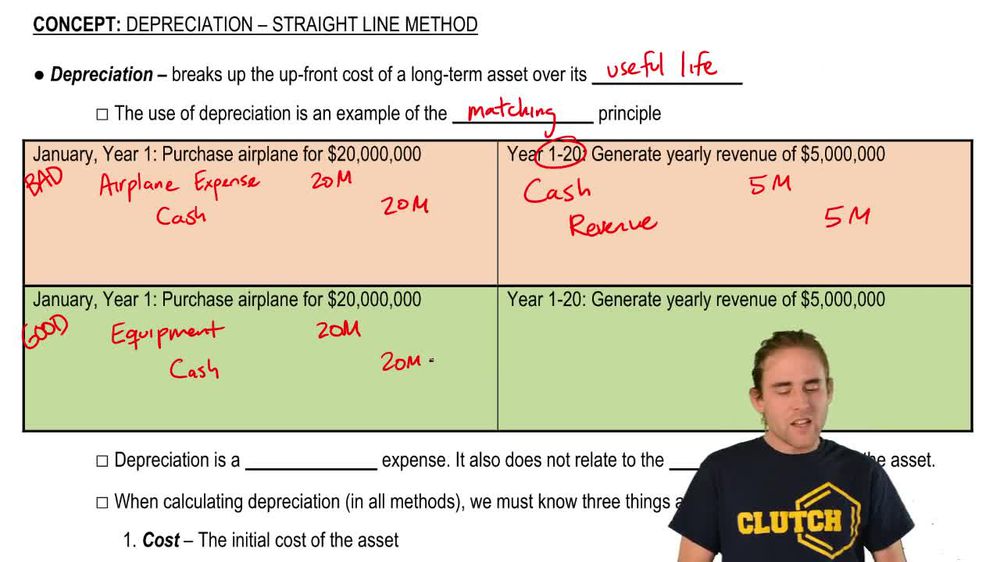
Allocation of a fixed asset's cost over its useful life to match expenses with related revenues, as required by GAAP.
Track progress
Control buttons has been changed to "navigation" mode.
1/15
Related flashcards
Related practice
Recommended videos
Depreciation: Straight Line quiz #1
Depreciation: Straight Line
21 Terms
Depreciation: Straight Line
8. Long Lived Assets
9 problems
Topic
Depreciation: Declining Balance
8. Long Lived Assets
10 problems
Topic
8. Long Lived Assets - Part 1 of 2
12 topics
13 problems
Chapter
8. Long Lived Assets - Part 2 of 2
1 topic
3 problems
Chapter
Guided course
05:42
Straight Line Method Through Life of Asset
1195
views
28
rank
Guided course
11:55
Introduction to Depreciation
1897
views
26
rank
Guided course
06:30
Straight Line Depreciation
1580
views
33
rank
Terms in this set (15)
Hide definitions
Depreciation
Allocation of a fixed asset's cost over its useful life to match expenses with related revenues, as required by GAAP.
Straight-Line Method
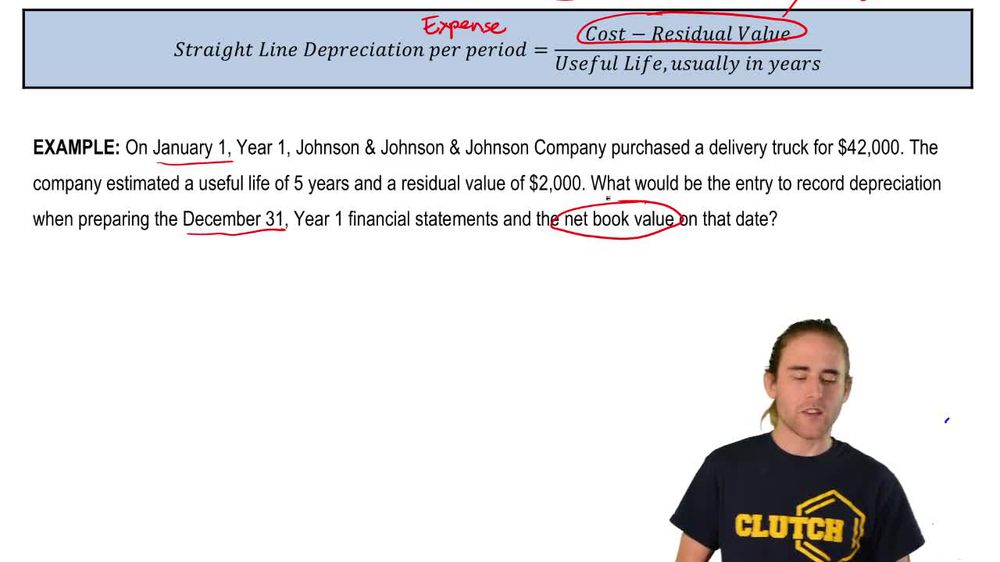
Technique that spreads the depreciable base evenly over the asset's useful life, resulting in equal annual expense amounts.
Fixed Asset
Long-term tangible resource used in operations, such as equipment or vehicles, expected to provide benefits for multiple years.
Matching Principle
Accounting guideline requiring expenses to be recognized in the same period as the revenues they help generate.
GAAP
Set of standardized accounting rules in the U.S. that govern financial reporting and require systematic expense allocation.
Depreciation Expense
Annual charge reflecting the portion of an asset's cost allocated to the current period under a chosen depreciation method.
Accumulated Depreciation
Total depreciation recorded against an asset since acquisition, shown as a contra asset account on the balance sheet.
Contra Asset Account
Account that offsets a related asset account, reducing its book value on the balance sheet.
Net Book Value
Amount reported for an asset on the balance sheet, calculated as historical cost minus accumulated depreciation.
Residual Value
Estimated amount expected to be recovered at the end of an asset's useful life, also known as salvage value.
Useful Life
Estimated period over which an asset is expected to contribute to revenue generation for a business.
Depreciable Base
Difference between an asset's cost and its residual value, representing the total amount to be depreciated.
Historical Cost
Original purchase price of an asset, used as the basis for calculating depreciation and reported on the balance sheet.
Non-Cash Expense
Expense recognized in the accounting records that does not involve an actual cash outflow during the period.
Journal Entry
Formal accounting record documenting the debit to depreciation expense and credit to accumulated depreciation for each period.
 BackBack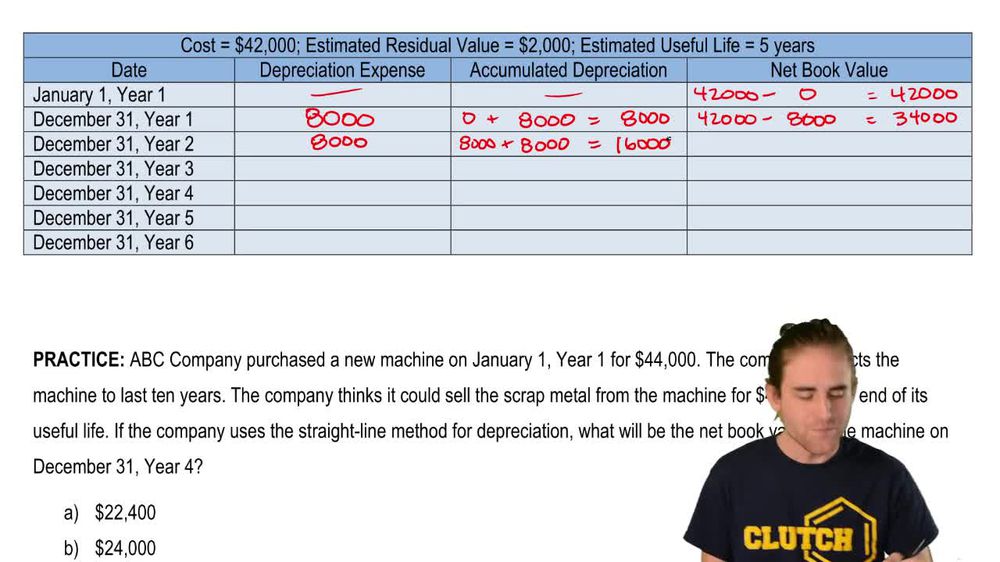
 05:42
05:42