Skip to main content
Financial Accounting
My Course
Learn
Exam Prep
AI Tutor
Study Guides
Flashcards
Explore
Try the app
My Course
Learn
Exam Prep
AI Tutor
Study Guides
Flashcards
Explore
Try the app
Back
Notes Receivable definitions
You can tap to flip the card.
Notes Receivable
You can tap to flip the card.
👆
Notes Receivable
Formal written promises for amounts to be received, typically including principal, interest rate, and maturity date, and classified as assets.
Track progress
Control buttons has been changed to "navigation" mode.
1/15
Related flashcards
Related practice
Recommended videos
Notes Receivable quiz #1
Notes Receivable
10 Terms
Notes Receivable
7. Receivables and Investments
10 problems
Topic
Introduction to Investments in Securities
7. Receivables and Investments
9 problems
Topic
7. Receivables and Investments - Part 1 of 2
10 topics
15 problems
Chapter
7. Receivables and Investments - Part 2 of 2
1 topic
3 problems
Chapter
Guided course
06:44
Notes Receivable:Interest Receivable Adjusting Entry
1320
views
25
rank
Guided course
02:32
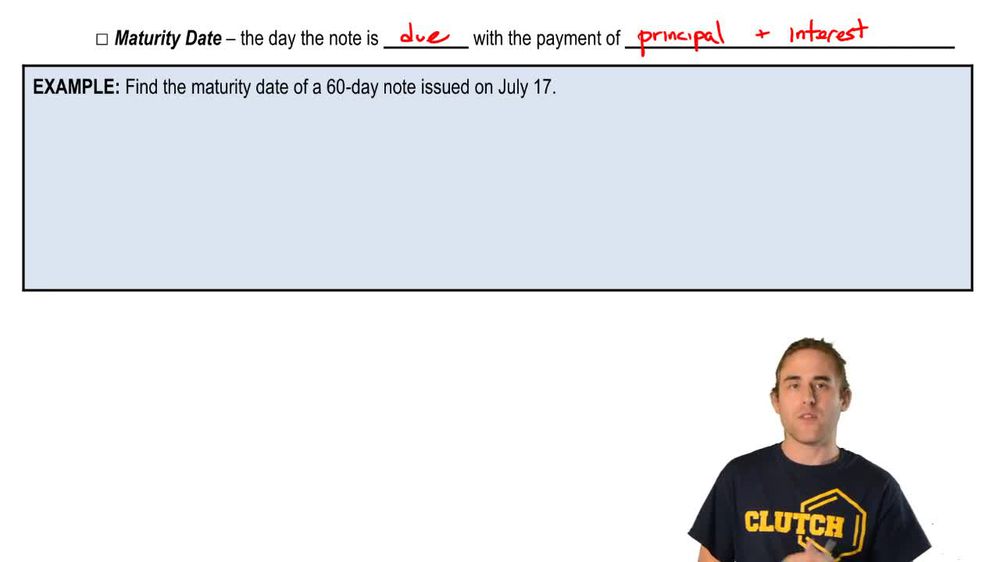
Notes Receivable:Calculating the Maturity Date
1410
views
28
rank
Guided course
07:12
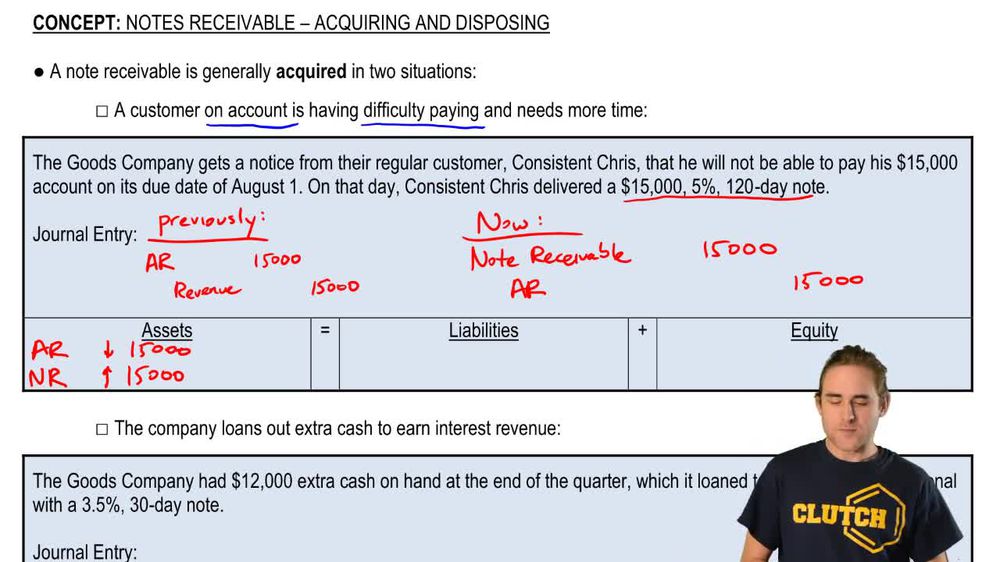
Notes Receivable:Acquiring and Disposing
1255
views
28
rank
Terms in this set (15)
Hide definitions
Notes Receivable
Formal written promises for amounts to be received, typically including principal, interest rate, and maturity date, and classified as assets.
Principal
Original amount of money loaned or owed, upon which interest is calculated and repaid at maturity.
Interest Rate
Annual percentage used to determine the cost of borrowing or the return on lending the principal amount.
Maturity Date
Specific calendar day when the total principal and accrued interest must be paid in full to the lender.
Time Factor
Proportion of a year for which interest is calculated, often expressed as days over 360 or months over 12.
Face Value
Stated value of a note, representing the principal amount to be repaid at maturity.
Interest Revenue
Income earned by a lender from charging interest on notes receivable over time.
Accounts Receivable
Amounts owed by customers from credit sales, typically less formal and non-interest bearing compared to notes receivable.
Accrued Interest
Interest that has been earned but not yet received or recorded in cash by the end of a reporting period.
Interest Receivable
Asset account representing interest earned but not yet collected on outstanding notes receivable.
Adjusting Entry
Accounting record made at period end to recognize earned interest revenue or accrued interest not yet received.
Disposal
Process of removing a note receivable from the books upon collection of principal and interest at maturity.
Current Asset
Resource expected to be converted to cash or used within one year, including most notes receivable.
Journal Entry
Formal accounting record documenting the acquisition, adjustment, or settlement of notes receivable.
Annualization
Adjustment of interest calculations to reflect the actual period a note is outstanding, based on a yearly rate.
 BackBack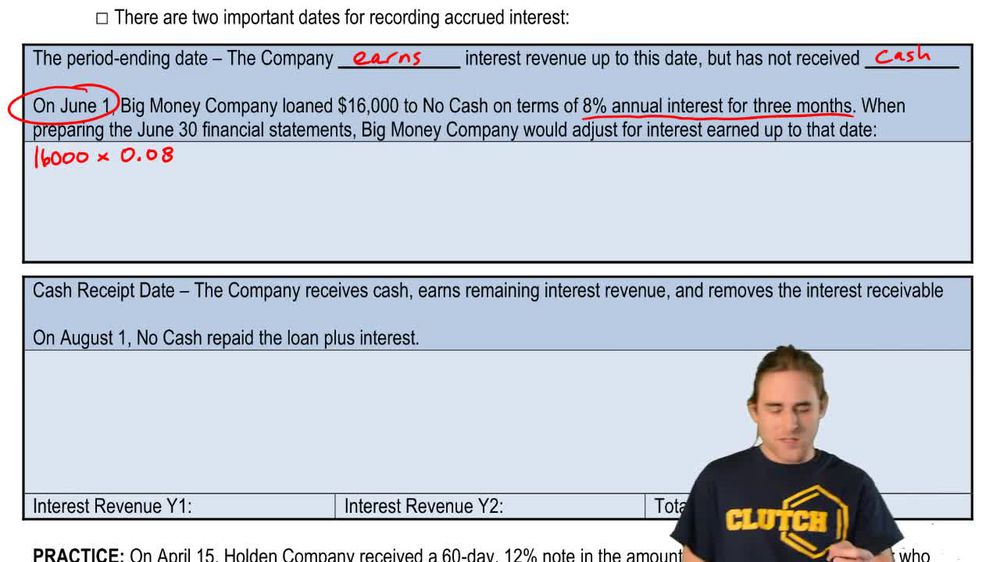
 06:44
06:44