 Back
BackChapter 1: The Financial Statements – Foundations of Financial Accounting
Study Guide - Smart Notes
 Tailored notes based on your materials, expanded with key definitions, examples, and context.
Chapter 1: The Financial Statements
Introduction to Accounting
Accounting is a critical information system for businesses, enabling the measurement, processing, and communication of financial data. It provides essential information for decision makers both inside and outside the organization.
Definition: Accounting is the process of recording, classifying, and summarizing financial transactions to provide useful information for decision making.
Purpose: To prepare financial statements that reflect the financial position and performance of a business.
Accounting Cycle: The sequence of steps followed to prepare financial statements.
Users of Accounting Information
Various stakeholders rely on accounting information for decision making:
Individuals: Use financial data for personal investment and credit decisions.
Investors and Creditors: Assess profitability and risk before investing or lending.
Regulatory Bodies: Ensure compliance with laws and regulations.
Nonprofit Organizations: Monitor financial stewardship and accountability.
Types of Accounting
Accounting is divided into two main branches, each serving different users:
Financial Accounting: Focuses on providing information to external users such as investors, creditors, and government agencies.
Managerial Accounting: Provides internal reports for managers to aid in planning, budgeting, and decision making.
Forms of Business Organization
Businesses can be structured in several ways, each with distinct legal and financial implications:
Proprietorship: Owned by a single individual; owner is personally liable for debts.
Partnership: Owned by two or more individuals; income and losses flow through to partners. General partnerships have unlimited liability, while limited partnerships restrict liability to the amount invested.
Limited Liability Company (LLC): Owners (members) have limited liability; the business is liable for debts.
Corporation: Owned by shareholders; can raise large amounts of capital; shareholders have limited liability. Subject to double taxation (corporate income tax and tax on dividends).
Professional Frameworks in Accounting
Accounting standards ensure consistency and reliability in financial reporting:
Generally Accepted Accounting Principles (GAAP): Developed by the Financial Accounting Standards Board (FASB) for use in the United States.
International Financial Reporting Standards (IFRS): Developed by the International Accounting Standards Board (IASB) for global use.
Key Accounting Assumptions and Principles
Accounting relies on foundational concepts to ensure meaningful financial information:
Entity Assumption: Each business is a separate economic unit.
Continuity (Going-Concern) Assumption: The business will continue to operate in the foreseeable future.
Historical Cost Principle: Assets are recorded at their actual cost at the time of purchase.
Stable-Monetary-Unit Assumption: The currency’s purchasing power is assumed to be stable over time.
The Accounting Equation
Definition and Application
The accounting equation is the foundation of the double-entry accounting system, showing the relationship among assets, liabilities, and equity.
Assets: Economic resources expected to provide future benefits (e.g., cash, inventory, property).
Liabilities: Debts owed to external parties (e.g., accounts payable, loans).
Equity: Owners’ claims on the business (e.g., paid-in capital, retained earnings).
Equation:
Components of Equity
Paid-in Capital: Investments made by shareholders, primarily through common stock.
Retained Earnings: Accumulated net income kept in the business after dividends are paid.
Components of Retained Earnings
Revenues: Inflows from delivering goods or services; increase retained earnings.
Expenses: Outflows due to operational costs; decrease retained earnings.
Dividends: Distributions to shareholders; decrease retained earnings.
Financial Statements
Overview and Relationships
Financial statements provide a comprehensive view of a company’s financial health. Data flows from one statement to the next, capturing both performance over time and position at a specific date.

Income Statement
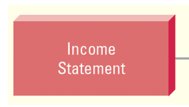
The income statement reports revenues and expenses for a specific period, resulting in net income or net loss.
Net Income Formula:

Statement of Retained Earnings
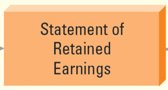
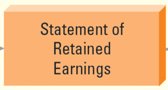
This statement shows changes in retained earnings over a period, including net income and dividends.
Structure:

Balance Sheet
The balance sheet (statement of financial position) reports assets, liabilities, and stockholders’ equity at a specific point in time.
Current Assets: Expected to be used or converted to cash within one business cycle (e.g., cash, receivables, inventory).
Long-term Assets: Provide benefits beyond the next fiscal year (e.g., property, equipment, intangible assets).
Current Liabilities: Debts due within one year (e.g., accounts payable, salaries payable).
Long-term Liabilities: Debts payable after one year (e.g., bonds payable).
Equity: Stockholders’ ownership (e.g., common stock, retained earnings).

Statement of Cash Flows
This statement reports cash inflows and outflows from operating, investing, and financing activities.
Operating Activities: Cash flows from core business operations.
Investing Activities: Cash flows from buying and selling long-term assets.
Financing Activities: Cash flows from borrowing, repaying, or equity transactions.

Relationships Among Financial Statements
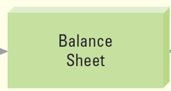
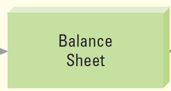
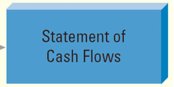
Each financial statement is interconnected. For example, net income from the income statement flows into retained earnings, which appears on both the statement of retained earnings and the balance sheet. The balance sheet’s cash balance is explained in detail by the statement of cash flows.
Tools and Technologies in Accounting
Modern Tools and Their Impact
Advancements in technology have transformed accounting, enabling more accurate, timely, and visual data analysis.
Spreadsheets: Excel, Google Sheets for calculations and data organization.
Data Analytics: Python, data warehouses for large-scale analysis.
Artificial Intelligence and Machine Learning: Automate data processing and enhance decision making.
Risks: Technology introduces new risks, such as data security and system reliability.
Summary Table: Key Financial Statements
Statement | Main Purpose | Key Components | Time Frame |
|---|---|---|---|
Income Statement | Reports profitability | Revenues, Expenses, Net Income | Period (e.g., year, quarter) |
Statement of Retained Earnings | Shows changes in retained earnings | Beginning RE, Net Income, Dividends, Ending RE | Period |
Balance Sheet | Reports financial position | Assets, Liabilities, Equity | Specific date |
Statement of Cash Flows | Reports cash movements | Operating, Investing, Financing Activities | Period |
Conclusion
Understanding the foundational concepts, principles, and statements in financial accounting is essential for analyzing and interpreting business performance. Mastery of these topics enables effective decision making and lays the groundwork for advanced study in accounting.
