 Back
BackChapter 2: Recording Business Transactions – Transaction Analysis and the Accounting Cycle
Study Guide - Smart Notes
 Tailored notes based on your materials, expanded with key definitions, examples, and context.
Transaction Analysis and the Accounting Cycle
Introduction to Transaction Analysis
Transaction analysis is a foundational process in financial accounting, involving the identification, measurement, and recording of business transactions. This process ensures that all financial events are accurately reflected in the accounting records, maintaining the integrity of the financial statements.
Business Transaction: An event with a financial impact on the business, measurable in monetary terms (e.g., US dollars).
Non-transaction Event: An event that does not have a direct financial impact or cannot be measured in monetary terms (e.g., hiring a new CEO, employee satisfaction).
Double-entry Principle: Every transaction affects at least two accounts, ensuring the accounting equation remains balanced.
Accounting Equation: Assets = Liabilities + Equity
Types of Accounts and Their Classification
Accounts are records of all changes in a particular asset, liability, or equity item during a period. Each account must be classified as one of the ten elements of financial statements:
Assets: Cash, Accounts Receivable, Inventory, Prepaid Expenses, Property, Plant & Equipment (PP&E), Investments, Notes Receivable
Liabilities: Accounts Payable, Accrued Liabilities, Taxes Payable, Interest Payable, Rent Payable, Notes Payable, Bonds Payable
Equity: Common Stock, Retained Earnings (affected by Revenues/Gains, Expenses/Losses, Dividends Declared)
Examples of Account Usage
Cash: Records all cash received and paid.
Accounts Receivable: Records sales on account (credit sales) and collections of cash for those sales.
Inventory: Records purchases and sales of goods held for sale.
PP&E: Records purchases and disposals of long-term assets used in operations.
Accounts Payable: Records purchases made on account and payments made on those accounts.
Notes Payable: Records borrowings and repayments involving formal notes.
The Accounting Cycle: Steps and Activities
Overview of the 12-Step Accounting Cycle
The accounting cycle is a systematic process for recording and processing all financial transactions of a company. The main steps include:
Event/Transaction Identification
Journalize Events (Journal Entries)
Post to Ledger
Unadjusted Trial Balance
End of Period
Adjusting Journal Entries
Post to Ledger
Adjusted Trial Balance
Prepare Financial Statements
Closing Entries
Post to Ledger
Post-Closing Trial Balance
Analyzing Transactions with the Accounting Equation
Each transaction must be analyzed to determine its effect on the accounting equation. For example:
Issuing common stock for cash increases both assets and equity.
Purchasing land for cash increases one asset (land) and decreases another (cash).
Buying supplies on account increases assets (supplies) and liabilities (accounts payable).
Paying wages decreases assets (cash) and equity (expense).
Recording Transactions: Journal Entries and Posting
Journal Entries
Journal entries are the first formal record of a transaction. Each entry must include:
Date of the transaction
Accounts to be debited and credited
Amounts for each debit and credit
Total debits must equal total credits
Journal Entry Format:
Debit account(s) listed first with amounts in the debit column
Credit account(s) indented with amounts in the credit column
Posting to the General Ledger
After journalizing, amounts are posted to the general ledger, which groups all T-accounts and their balances. The ledger consists of:
Real (Permanent) Accounts: Balance sheet accounts that remain open at period end.
Nominal (Temporary) Accounts: Income statement accounts and dividends declared, closed at period end.
T-Accounts and the Rules of Debit and Credit
T-Accounts
A T-account is a visual tool used to represent the increases and decreases in an account. The left side is the debit side, and the right side is the credit side. The normal balance of an account determines which side increases the account.
Assets, Expenses, Dividends: Normal debit balance (increase with debits, decrease with credits)
Liabilities, Revenues, Stockholders’ Equity: Normal credit balance (increase with credits, decrease with debits)
Mnemonic: DEAD CURLS
Debits increase: Expenses, Assets, Dividends
Credits increase: Unearned Revenue, Revenue, Liabilities, Stockholders’ Equity
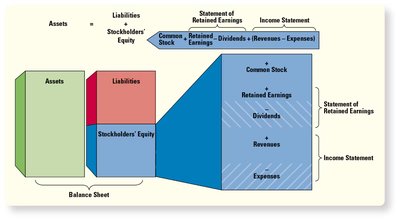
The Expanded Accounting Equation
The expanded accounting equation provides more detail on the components of equity:
Trial Balance Preparation
Unadjusted Trial Balance
A trial balance is a list of all open accounts in the general ledger and their balances at a specific point in time. Its main purpose is to check the equality of debits and credits. Accounts are listed in the following order:
Assets (in order of liquidity: Cash, Accounts Receivable, Inventory, Prepaids, Investments, PP&E, Intangibles)
Liabilities (current first, long-term last)
Equity (Common Stock, Retained Earnings)
Dividends Declared
Revenues/Gains
Expenses/Losses
Finding Missing Information Using T-Accounts and Trial Balance
Using T-Accounts
T-accounts can be used to reconstruct missing information, such as the amount of inventory purchased, equipment sold, new borrowings, or sales on account, by analyzing beginning and ending balances and additional transaction data.
Using the Trial Balance
The trial balance can help determine missing account balances (e.g., equipment) and total assets by ensuring that total debits equal total credits after all transactions have been posted.
Summary Table: Normal Balances and Effects of Debits/Credits
Account Type | Normal Balance | Debit Effect | Credit Effect |
|---|---|---|---|
Assets | Debit | Increase | Decrease |
Liabilities | Credit | Decrease | Increase |
Common Stock | Credit | Decrease | Increase |
Retained Earnings | Credit | Decrease | Increase |
Revenues/Gains | Credit | Decrease | Increase |
Expenses/Losses | Debit | Increase | Decrease |
Dividends Declared | Debit | Increase | Decrease |
Key Formulas
Basic Accounting Equation:
Expanded Equity:
Retained Earnings:
Net Income:
