 Back
BackChapter 3: The Adjusting Process – Financial Accounting Study Notes
Study Guide - Smart Notes
 Tailored notes based on your materials, expanded with key definitions, examples, and context.
Chapter 3: The Adjusting Process
Overview
This chapter covers the essential concepts and procedures for adjusting entries in financial accounting. Adjusting entries are necessary to ensure that financial statements accurately reflect a company's financial position and performance according to generally accepted accounting principles (GAAP).
Cash Basis vs. Accrual Basis Accounting
Definitions and Differences
Accounting methods determine when revenues and expenses are recognized:
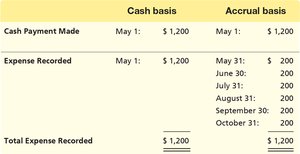
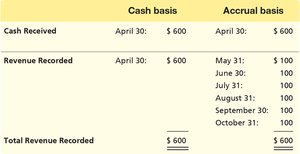
Cash Basis Accounting: Revenues and expenses are recorded only when cash is received or paid. Not allowed under GAAP.
Accrual Basis Accounting: Revenues are recorded when earned, and expenses when incurred, regardless of cash flow. Required by GAAP and provides a more accurate financial picture.
Example: Insurance payment and revenue recognition over several months.
The Time Period Concept, Revenue Recognition, and Matching Principles
The Time Period Concept
Business activities are divided into discrete time periods (month, quarter, year) for reporting purposes. A fiscal year is any 12 consecutive months.
Revenue Recognition Principle
Revenue is recognized when it is earned, following a five-step process:
Identify the contract with the customer.
Identify performance obligations.
Determine the transaction price.
Allocate the transaction price to performance obligations.
Recognize revenue when each obligation is satisfied.
Matching Principle
Expenses are recorded in the same period as the revenues they help generate, ensuring accurate net income calculation.
Adjusting Entries: Purpose and Process
Purpose of Adjusting Entries
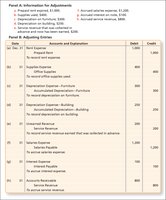
Adjusting entries are made at the end of the accounting period to update accounts for revenues earned and expenses incurred that have not yet been recorded. They ensure asset and liability accounts are accurate.
Types of Adjusting Entries
Deferrals: Recognition of revenue or expense is postponed until after cash is received or paid.
Accruals: Revenue or expense is recorded before cash is received or paid.
Deferrals
Deferred Expenses (Prepaid Expenses)
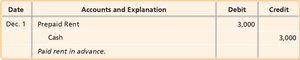
Advance payments for future expenses are initially recorded as assets and expensed as used.
Examples: Prepaid rent, office supplies, depreciation.
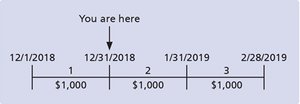


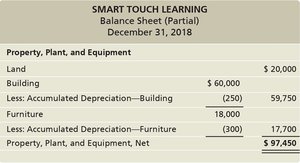
Depreciation
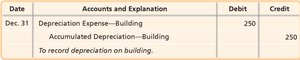
Depreciation allocates the cost of long-lived assets over their useful lives. The straight-line method is commonly used:

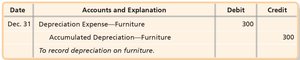
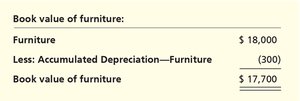
Accumulated Depreciation is a contra asset account, reducing the asset's book value.
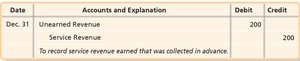
Deferred Revenues (Unearned Revenue)
Cash received before services are performed is recorded as a liability. When earned, it is transferred to revenue.


Accruals
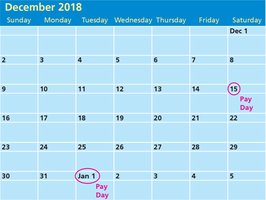
Accrued Expenses
Expenses incurred but not yet paid are recorded as liabilities.
Examples: Salaries, interest, utilities.




Interest Expense Formula:

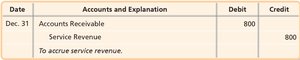
Accrued Revenues
Revenues earned but not yet received are recorded as assets (accounts receivable).
Summary of Adjusting Entries
Deferral and Accrual Adjustments
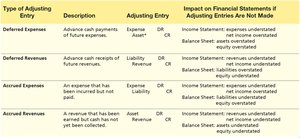
Exhibit 3-4 summarizes the types of adjusting entries:
Type | Description | Adjusting Entry | Impact if Not Made |
|---|---|---|---|
Deferred Expenses | Advance cash payments of future expenses | Expense Asset* | Income Statement: expenses understated; Balance Sheet: assets overstated |
Deferred Revenues | Advance cash receipts of future revenues | Liability Revenue | Income Statement: revenues understated; Balance Sheet: liabilities overstated |
Accrued Expenses | Expense incurred but not yet paid | Expense Liability | Income Statement: expenses understated; Balance Sheet: liabilities understated |
Accrued Revenues | Revenue earned but not yet collected | Asset Revenue | Income Statement: revenues understated; Balance Sheet: assets understated |
Adjusted Trial Balance
Purpose and Preparation
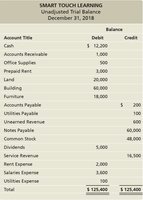
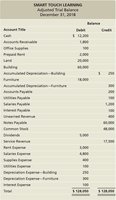
An adjusted trial balance lists all accounts with their adjusted balances after posting adjusting entries. It ensures total debits equal total credits and is used to prepare financial statements.
Impact of Adjusting Entries on Financial Statements
Effects and Importance
Adjusting entries ensure that financial statements are accurate. Omitting them results in misstated income, assets, liabilities, and equity.
Worksheets in the Adjusting Process
Purpose and Structure
A worksheet is an internal tool used to organize and summarize data for preparing financial statements. It includes account names, unadjusted trial balance, adjustments, and adjusted trial balance.
Alternative Treatments for Deferred Expenses and Revenues (Appendix 3A)
Deferred Expenses Recorded Initially as Expense
Sometimes, prepayments are recorded directly as expenses if they expire within the current period. Adjusting entries may transfer unused amounts to asset accounts.


Deferred Revenues Recorded Initially as Revenue
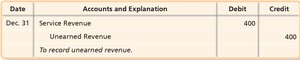
Early cash receipts may be recorded as revenue. If only part is earned, an adjusting entry transfers the unearned portion to a liability account.


Key Formulas
Straight-Line Depreciation:
Interest Calculation:
Summary Table: Types of Adjusting Entries
Type | Description | Adjusting Entry | Impact if Not Made |
|---|---|---|---|
Deferred Expenses | Advance cash payments of future expenses | Expense Asset | Expenses understated; assets overstated |
Deferred Revenues | Advance cash receipts of future revenues | Liability Revenue | Revenues understated; liabilities overstated |
Accrued Expenses | Expense incurred but not yet paid | Expense Liability | Expenses understated; liabilities understated |
Accrued Revenues | Revenue earned but not yet collected | Asset Revenue | Revenues understated; assets understated |
