 Back
Merchandising Operations in Financial Accounting: Chapter 5 Study Guide
Study Guide - Smart Notes
 Tailored notes based on your materials, expanded with key definitions, examples, and context.
Merchandising Operations
Introduction to Merchandising Operations
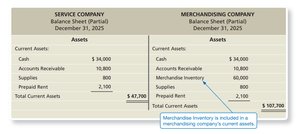
Merchandising operations involve businesses that purchase goods for resale to customers. These businesses are classified as either wholesalers or retailers. The merchandise held for sale is referred to as merchandise inventory.
Wholesaler: Buys goods from manufacturers and sells to retailers.
Retailer: Buys goods from manufacturers or wholesalers and sells to consumers.
Merchandise Inventory: Goods held for resale.
The Operating Cycle of a Merchandising Business
The operating cycle for a merchandising company is typically longer than that of a service company. It starts with purchasing inventory, followed by selling the inventory, and finally collecting cash from customers.
Begins with purchase of inventory from a vendor.
Inventory is sold to customers.
Cash is collected from customers.
Income Statement Features
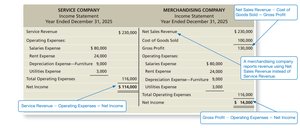
Merchandisers report Sales Revenue instead of Service Revenue. The cost of goods sold (COGS) is subtracted from Net Sales Revenue to determine Gross Profit. Operating expenses are then deducted to arrive at Net Income.
Net Sales Revenue = Sales Revenue - Sales Returns and Allowances - Sales Discounts
Gross Profit = Net Sales Revenue - Cost of Goods Sold
Net Income = Gross Profit - Operating Expenses
Flow of Costs in Merchandising Companies
The flow of costs in a merchandising company is summarized as follows:
Beginning Inventory + Purchases = Goods Available for Sale
Ending Inventory = Goods not sold by period end
Cost of Goods Sold = Goods sold during the period

Formula:
Merchandise Inventory Systems
Perpetual vs. Periodic Inventory Systems
Businesses use inventory systems to track the value of merchandise inventory on hand and sold. The two main systems are:
Periodic Inventory System: Requires a physical count at period end to determine inventory and COGS.
Perpetual Inventory System: Maintains a continuous, computerized record of inventory and COGS.
Advantages of Perpetual System:
Used for high-value merchandise.
Provides real-time inventory and cost information.
Improves inventory control.
Purchasing Merchandise Inventory (Perpetual System)
Recording Purchases
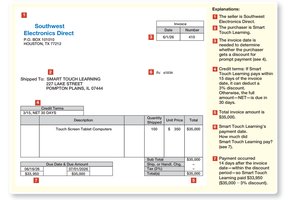
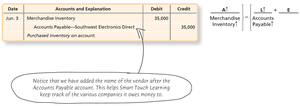
Purchases are recorded using invoices, which are requests for payment. Purchasers use purchase invoices, while sellers use sales invoices.
Journal Entries for Purchases
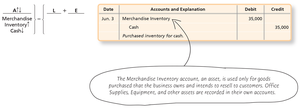
Purchases can be made with cash or on account. The following entries illustrate both scenarios:
Purchase Returns and Allowances
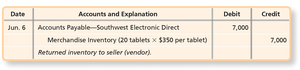
Purchase returns occur when merchandise is returned to the seller. Purchase allowances are reductions in price for goods not as ordered.

Purchase Discounts
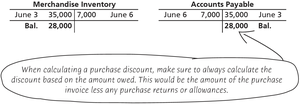
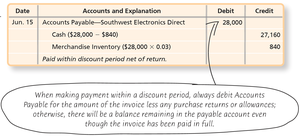
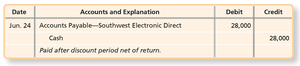
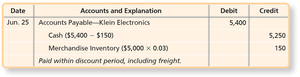
Purchase discounts are incentives for early payment. Credit terms specify the discount, period, and due date (e.g., 2/10, n/30).
2 = Discount percentage
10 = Days to pay to receive discount
n/30 = Days to pay full amount if discount not taken


Transportation Costs
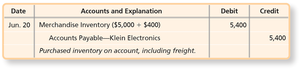
Shipping terms determine when ownership transfers and who pays freight. FOB shipping point means buyer pays freight; FOB destination means seller pays freight.
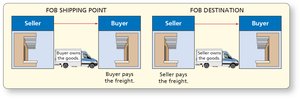
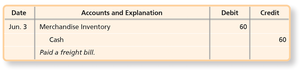
Freight in is the cost to bring goods into the purchaser's warehouse; freight out is the cost to deliver goods to customers.
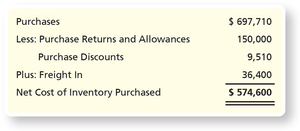
Net Cost of Inventory Purchased
The net cost of inventory purchased is calculated by adjusting purchases for returns, allowances, discounts, and adding freight in.
Sales of Merchandise Inventory (Perpetual System)
Recording Sales
Sales revenue is recorded when merchandise is sold. Two entries are required: one for sales revenue and one for COGS and inventory reduction.
Entry 1: Sales Revenue and Cash/Accounts Receivable
Entry 2: Cost of Goods Sold and Merchandise Inventory
Cash and Credit Card Sales
Sales can be made for cash or via credit card. Credit card sales are recorded similarly to cash sales, with an additional expense for processing fees.
Sales on Account
Sales may be made on account, with or without discounts. Sales discounts are incentives for customers to pay early.
Sales Returns and Allowances
Sales Returns and Allowances is a contra account that reduces receivables when customers return goods or receive allowances.
Sales Returns: Customer returns merchandise.
Sales Allowances: Seller reduces amount owed without merchandise return.
Transportation Costs—Freight Out
Freight out is a delivery expense for the seller when shipping goods to customers.
Adjusting and Closing Accounts
Adjusting Entries for Inventory Shrinkage
Inventory shrinkage is the loss of inventory due to theft, damage, or errors. Physical counts are used to adjust inventory balances.
Closing Entries for Merchandisers
The four-step closing process includes:
Zeroing revenue accounts via Income Summary.
Zeroing expense accounts via Income Summary.
Zeroing Income Summary via Retained Earnings.
Zeroing Dividends via Retained Earnings.
Financial Statements for Merchandisers
Preparing Financial Statements
Merchandisers prepare financial statements similar to service businesses, with additional items for sales returns, allowances, and discounts.
Net Sales Revenue: Sales Revenue less Sales Returns and Allowances and Sales Discounts.
Income Statement Formats
There are two main formats:
Single-Step Income Statement: Groups all revenues and expenses together.
Multi-Step Income Statement: Reports subtotals such as gross profit and operating income.
Evaluating Business Performance
Gross Profit Percentage
The gross profit percentage measures profitability above the cost of goods sold. A higher percentage indicates better performance.
Formula:
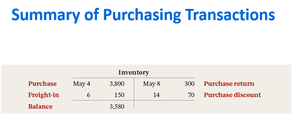
Summary Table: Key Purchasing Transactions
Date | Transaction | Amount |
|---|---|---|
May 4 | Purchase | 3,800 |
May 6 | Freight-in | 150 |
May 8 | Purchase return | 300 |
May 14 | Freight-in | 20 |
May 14 | Purchase discount | 70 |
Balance | 3,580 |
Additional info: Academic context and formulas have been expanded for clarity and completeness. Only images directly relevant to the explanation have been included.
