- Download the worksheet to save time writing
- Start solving the practice problems
- If you're stuck, watch the video solutions
- See your summary to get more insights

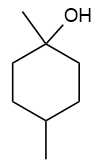
Which of the following is true about the alcohol shown below?

Provide the name of the following molecules:
i.

ii.

iii.

Identify the structure of the alcohol that would react via dehydration and produce the alkene below as the major product.

Consider the structure of the alcohol shown below. Draw all the possible alkenes that can be formed from the dehydration of the alcohol. Identify the major and minor products. There can be more than one of each type of product.

Draw the major product for the dehydration of the following alcohol:
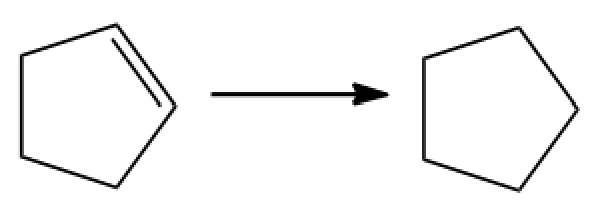
For the organic reaction shown below, determine whether it is an oxidation or a reduction reaction. Note that inorganic reactants and products are not displayed.
Predict the product that will form from the complete oxidation of the alcohols shown below.
i. 
ii. CH3CH(CH3)CH2CH2OH
iii. 
Identify the substance that can react with an oxidizing agent. Provide the line structure of the expected product that will form for those that can. Assume complete oxidation.
i.

ii.

iii.

Provide the alcohol that can be oxidized to yield the carbonyl-containing compounds shown below.
i.

ii.

iii.
