Skip to main content
GOB Chemistry
My Course
Learn
Exam Prep
AI Tutor
Study Guides
Textbook Solutions
Flashcards
Explore
Try the app
My Course
Learn
Exam Prep
AI Tutor
Study Guides
Textbook Solutions
Flashcards
Explore
Try the app
Back
GOB Chemistry: Carbohydrate Metabolism and Glycolysis
You can tap to flip the card.
What is the first stage in carbohydrate catabolism?
You can tap to flip the card.
👆
What is the first stage in carbohydrate catabolism?
Digestion, which involves physical grinding and enzyme-catalyzed hydrolysis of carbohydrates into smaller molecules.
Track progress
Control buttons has been changed to "navigation" mode.
1/31
Recommended videos
Guided course
1:16
Reduction of Monosaccharides Concept 2
2463
views
5
rank
Guided course
1:12
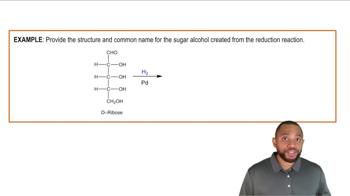
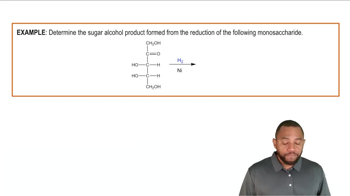
Reduction of Monosaccharides Example 2
1975
views
2
rank
Guided course
0:55
Reduction of Monosaccharides Example 1
2729
views
4
rank
Terms in this set (31)
Hide definitions
What is the first stage in carbohydrate catabolism?
Digestion, which involves physical grinding and enzyme-catalyzed hydrolysis of carbohydrates into smaller molecules.
Which enzyme initiates carbohydrate digestion in the mouth?
Salivary α-amylase
catalyzes hydrolysis of glycosidic bonds in carbohydrates.
What happens to salivary α-amylase in the stomach?
It continues to act for about an hour but is then inactivated by stomach acid; no further carbohydrate digestion occurs in the stomach.
Which enzyme continues carbohydrate digestion in the small intestine?
Pancreatic α-amylase
converts polysaccharides to maltose in the small intestine.
How are disaccharides hydrolyzed in the small intestine?
Enzymes hydrolyze maltose to glucose, sucrose to glucose and fructose, and lactose to glucose and galactose.
What happens to glucose once it enters a cell from the bloodstream?
It is immediately converted to
glucose 6-phosphate
, trapping it inside the cell and committing it to metabolism.
What are the main metabolic fates of glucose 6-phosphate?
It can undergo glycolysis, enter the pentose phosphate pathway, be stored as glycogen, or be converted to acetyl-SCoA for energy or fat synthesis.
What are the two key products of the pentose phosphate pathway?
NADPH
for biochemical reactions and
ribose 5-phosphate
for nucleic acid synthesis.
What are the two stages of the pentose phosphate pathway?
The oxidative stage produces ribulose 5-phosphate and NADPH; the nonoxidative stage produces ribose-5-phosphate and glycolytic intermediates.
What is the net result of glycolysis?
Production of two pyruvate molecules, two ATP molecules (net), and two NADH/H+ molecules per glucose.
How many ATP molecules are invested and produced in glycolysis?
Two ATP molecules are invested in early steps; four ATP molecules are produced later, yielding a net gain of two ATP.
Name the enzyme that catalyzes the phosphorylation of glucose to glucose 6-phosphate.
Hexokinase
or
glucokinase
transfers a phosphoryl group from ATP to glucose.
What enzyme converts glucose 6-phosphate to fructose 6-phosphate?
Glucose 6-phosphate isomerase
catalyzes this reversible isomerization.
Which enzyme catalyzes the phosphorylation of fructose 6-phosphate to fructose 1,6-bisphosphate?
Phosphofructokinase-1 (PFK-1)
uses ATP to add a second phosphoryl group.
What is the role of aldolase in glycolysis?
It cleaves fructose 1,6-bisphosphate into two triose phosphates: dihydroxyacetone phosphate and glyceraldehyde 3-phosphate.
How are the triose phosphates interconverted?
Triose phosphate isomerase
rapidly interconverts dihydroxyacetone phosphate and glyceraldehyde 3-phosphate.
Which enzyme catalyzes the oxidation and phosphorylation of glyceraldehyde 3-phosphate?
Glyceraldehyde 3-phosphate dehydrogenase
produces 1,3-bisphosphoglycerate and NADH.
What enzyme transfers a high-energy phosphoryl group from 1,3-bisphosphoglycerate to ADP?
Phosphoglycerate kinase
generates ATP and 3-phosphoglycerate.
What enzyme catalyzes the dehydration of 2-phosphoglycerate to phosphoenolpyruvate?
Enolase
forms a high-energy enol phosphate intermediate.
What is the final step of glycolysis?
Pyruvate kinase
transfers a phosphoryl group from phosphoenolpyruvate to ADP, producing ATP and pyruvate.
How is fructose metabolized in glycolysis?
In muscle, fructose is phosphorylated to fructose 6-phosphate; in liver, it is converted to glyceraldehyde 3-phosphate.
How is mannose metabolized in glycolysis?
Mannose is phosphorylated to mannose 6-phosphate, then converted to fructose 6-phosphate to enter glycolysis.
How is galactose metabolized in glycolysis?
Galactose is converted to glucose 6-phosphate via a five-step pathway.
What happens to pyruvate under aerobic conditions?
It is converted to acetyl-SCoA by the pyruvate dehydrogenase complex and enters the citric acid cycle.
What happens to pyruvate under anaerobic conditions?
It is reduced to lactate to regenerate NAD+ for glycolysis continuation.
What is alcoholic fermentation?
In yeast, pyruvate is converted to ethanol and CO2 under anaerobic conditions.
What is the maximum theoretical ATP yield from one glucose molecule in humans?
Approximately 30–32 ATP molecules, considering NADH and FADH2 contributions.
Which hormones regulate blood glucose levels?
Insulin
lowers blood glucose;
glucagon
raises blood glucose.
What is glycogenesis?
The synthesis of glycogen from glucose when glucose levels are high.
What is glycogenolysis?
The breakdown of glycogen to free glucose during energy demand or low blood glucose.
What is gluconeogenesis?
The synthesis of glucose from noncarbohydrate sources like lactate, amino acids, and glycerol.
 BackBack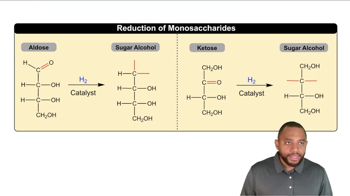
 1:16
1:16