Skip to main content
GOB Chemistry
My Course
Learn
Exam Prep
AI Tutor
Study Guides
Textbook Solutions
Flashcards
Explore
Try the app
My Course
Learn
Exam Prep
AI Tutor
Study Guides
Textbook Solutions
Flashcards
Explore
Try the app
Back
GOB Chemistry: DNA Mutations, Recombinant DNA, and PCR
You can tap to flip the card.
What is a mutation in DNA replication?
You can tap to flip the card.
👆
What is a mutation in DNA replication?
A mutation
is an error in the base sequence of DNA that is passed on during replication.
Track progress
Control buttons has been changed to "navigation" mode.
1/23
Recommended videos
Guided course
1:58
Introduction to GOB Chemistry Channel
9470
views
171
rank
Guided course
00:38
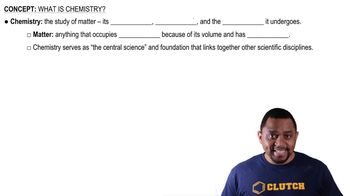
What is Chemistry? Concept 1
10492
views
317
rank
Guided course
00:36
What is Chemistry? Example 1
7542
views
137
rank
Terms in this set (23)
Hide definitions
What is a mutation in DNA replication?
A mutation
is an error in the base sequence of DNA that is passed on during replication.
Define mutagen.
A
mutagen
is a substance that causes mutations, such as viruses, chemicals, or ionizing radiation.
What is a point mutation?
A
point mutation
is a substitution of one base for another in DNA, changing a codon in mRNA and possibly the amino acid in a protein.
What is a silent mutation?
A
silent mutation
changes a base but results in the same amino acid, causing no effect on the organism.
What is a missense mutation?
A
missense mutation
changes a base and results in a different amino acid, which may moderately affect the protein.
What is a nonsense mutation?
A
nonsense mutation
changes a base to produce a stop codon, prematurely ending protein synthesis.
Describe a frameshift mutation.
A
frameshift mutation
involves insertion or deletion of bases, altering the reading frame and changing all downstream amino acids.
What are recombinant DNA molecules?
Recombinant DNA
contains DNA segments from two or more sources combined artificially.
What are the three key elements needed to form recombinant DNA?
1. A DNA molecule (usually a plasmid), 2. A restriction enzyme to cut DNA, 3. A gene from another organism to insert.
What is the role of EcoRI in recombinant DNA technology?
EcoRI
is a restriction enzyme that cuts DNA at specific sequences, creating sticky ends for gene insertion.
What are sticky ends in DNA?
Sticky ends
are unpaired bases at the ends of DNA fragments after cutting with restriction enzymes, allowing complementary base pairing.
How is a recombinant plasmid formed?
A gene fragment and plasmid with complementary sticky ends are joined by
DNA ligase
, forming a recombinant plasmid.
What is the purpose of inserting recombinant plasmids into bacteria?
Inserted plasmids allow bacteria to produce proteins encoded by the foreign gene, useful for producing human insulin and other proteins.
What is genomics?
Genomics
is the study of whole sets of genes and their functions in organisms.
Give an example of genetically modified crops.
Bt corn contains a bacterial gene producing a toxin that kills pests like the European corn borer.
What is gene therapy?
Gene therapy replaces a disease-causing gene with a healthy one to cure or prevent genetic diseases.
What is the polymerase chain reaction (PCR)?
PCR
is a technique that amplifies a specific DNA segment, producing millions of copies.
What are the four elements needed for PCR?
1. DNA segment to copy, 2. Two primers, 3. DNA polymerase enzyme, 4. Nucleoside triphosphates (A, T, C, G).
What are the main steps of PCR?
1. Heat to separate DNA strands, 2. Add primers, 3. DNA polymerase extends primers to copy DNA.
How is DNA fingerprinting performed?
DNA is amplified by PCR, cut by restriction enzymes, and fragments separated by gel electrophoresis to create a unique pattern.
What is a virus?
A virus is an infectious agent with DNA or RNA inside a protein coat that requires a host to replicate.
What is a retrovirus?
A
retrovirus
has an RNA core and uses reverse transcription to make DNA from RNA inside a host cell.
What disease is caused by the retrovirus HIV?
Acquired immune deficiency syndrome (AIDS)
is caused by the human immunodeficiency virus (HIV).
 BackBack
 1:58
1:58