Skip to main content
GOB Chemistry
My Course
Learn
Exam Prep
AI Tutor
Study Guides
Textbook Solutions
Flashcards
Explore
Try the app
My Course
Learn
Exam Prep
AI Tutor
Study Guides
Textbook Solutions
Flashcards
Explore
Try the app
Back
GOB Chemistry Practice Final Exam Flashcards
You can tap to flip the card.
Characteristic NOT true for Group 1A (alkali metals)
You can tap to flip the card.
👆
Characteristic NOT true for Group 1A (alkali metals)
Most of them are
liquids at room temperature
is NOT true; they are solids.
Track progress
Control buttons has been changed to "navigation" mode.
1/38
Recommended videos
Guided course
00:42
SI Units (Simplified) Example 1
6879
views
110
rank
Guided course
02:19
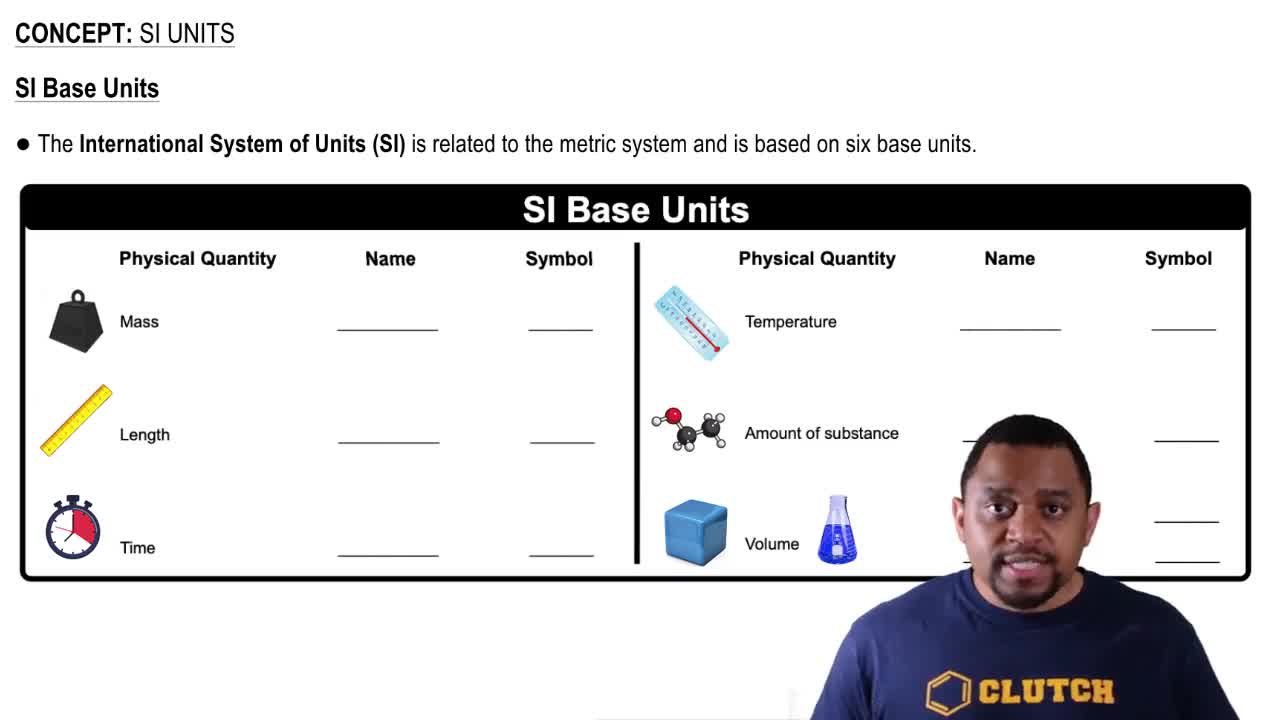
SI Units (Simplified) Concept 1
8400
views
157
rank
1
comments
Terms in this set (38)
Hide definitions
Characteristic NOT true for Group 1A (alkali metals)
Most of them are
liquids at room temperature
is NOT true; they are solids.
Significance of significant figures
They indicate the
certain and estimated digits
in a measurement.
Mass equivalent of 9.31 g
9.31 g =
9310 mg
.
Mass of 2.00 L glucose solution with density 1.15 g/mL
Mass =
2.30 kg
.
Electron configuration 1s2 2s2 2p6 3s2 3p5 corresponds to
Element is
chlorine (Cl)
.
Number of valence electrons in Group A element
Equal to its
group number
.
Radiation type with highest energy
Gamma rays
have the highest energy.
Effect on mass number when a positron is emitted
Mass number
remains the same
.
Half-life of a radioisotope
Time it takes for
one-half of the sample to decay
.
Process in the Sun combining hydrogen nuclei
Known as
fusion
.
Valence electrons location
Located in the
outermost energy level
of an atom.
Number of valence electrons in carbon
Carbon has
four
valence electrons.
Ion formation for sodium atom
Sodium atom
loses one electron
to form an ion.
Number of electrons in ion with 20 protons and 2+ charge
Ion has
18 electrons
.
Correct formula for compound from Al and O
Formula is \(Al_2O_3\).
Correct formula for iron(III) sulfide
Formula is \(Fe_2S_3\).
Name of HSO4- ion
Called
hydrogen sulfate
.
Polyatomic ion with 3- charge
Phosphate
ion has a 3- charge.
Element that does NOT exist as diatomic molecule
Carbon
does not exist as diatomic molecule.
Shape of carbon tetrachloride (CCl4) molecule
CCl4 has a
tetrahedral
shape.
Ability of atom to attract shared electrons in covalent bond
Called
electronegativity
.
Type of bond in HCl
HCl contains a
polar covalent bond
.
Dipole direction in water molecule
Negative portion points toward the
oxygen atom
.
Reason O-H bond in water is polar
Because
oxygen is more electronegative than hydrogen
.
Overall polarity of molecule with symmetrical polar bonds
Molecule is
nonpolar
.
Number of atoms on both sides of balanced chemical equation
Number is
the same
on both sides.
Coefficient of H2 when balancing Al + H2SO4 → Al2(SO4)3 + H2
Coefficient of H2 is
3
.
Oxidized and reduced substances in Ba + Cl2 → BaCl2
Ba is
oxidized
and Cl2 is
reduced
.
Substance reduced in redox reaction
Substance reduced
gains electrons
.
Type of reaction: H2O2 → H2O + O2
This is a
decomposition
reaction.
Avogadro's number represents
Number of
particles in 1 mole
of a substance.
Molar mass of sodium phosphate (K3PO4)
Molar mass is
164 g/mol
.
Definition of molarity (M)
Molarity is
moles of solute per liter of solution
.
Effect of increasing temperature on solubility of solid solute
Usually
increases solubility
.
Henry's law states solubility of gas in liquid
Increases as
gas pressure above liquid increases
.
Brønsted-Lowry definition of a base
A base is a
proton acceptor
.
pH of solution with [H3O+] = 0.01 M
pH =
2.0
.
pH scale order from most basic to most acidic
Order is
14, 10, 7, 4, 3, 1
.
 BackBack
 00:42
00:42