Back

Multiplying Polynomials definitions

Control buttons has been changed to "navigation" mode.
1/15
  • Polynomial

    An expression made up of terms, each consisting of a coefficient and variable(s) raised to whole number exponents.
  • Monomial

    A single term expression with a coefficient and variable(s) raised to whole number exponents.
  • Binomial

    An expression containing exactly two terms, each with its own coefficient and variable(s).
  • Distributive Property

    A rule allowing multiplication of an outside term with each term inside parentheses, ensuring all terms are included.
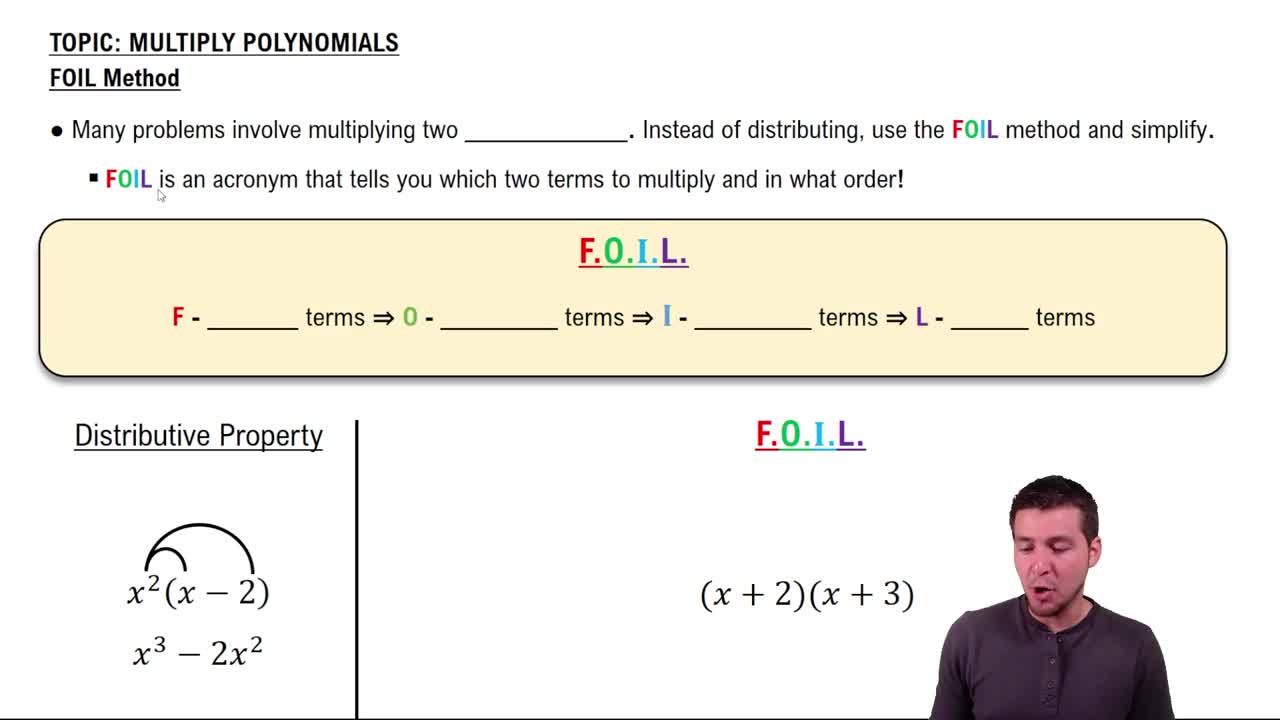
  • FOIL Method

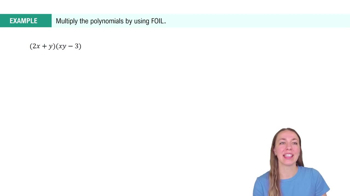
    A systematic process for multiplying two binomials by combining first, outer, inner, and last terms.
  • Term

    A part of an expression separated by plus or minus signs, consisting of a coefficient and variable(s).
  • Coefficient

    A numerical factor attached to a variable in a term, determining its magnitude.
  • Exponent

    A value indicating how many times a variable is multiplied by itself within a term.
  • Like Terms

    Terms with identical variable parts and exponents, allowing them to be combined during simplification.
  • Simplification

    The process of combining like terms and reducing an expression to its most concise form.
  • Expression

    A mathematical phrase containing numbers, variables, and operations, but no equals sign.
  • Parentheses

    Symbols used to group terms, indicating which parts of an expression should be treated together.
  • Product

    The result of multiplying two or more terms or expressions together.
  • Sum

    The result of adding two or more terms or expressions together.
  • Acronym

    A word formed from the initial letters of a series of terms, such as FOIL for multiplication steps.