 Back
BackChapter 6: Rational Expressions – Simplifying, Domains, and Operations
Study Guide - Smart Notes
 Tailored notes based on your materials, expanded with key definitions, examples, and context.
Rational Expressions and Functions
Definition and Structure
A rational expression is a fraction in which both the numerator and the denominator are polynomials. A rational function is a function defined by a rational expression. The general form is:
Rational Expression: , where
Rational Number: A special case where both and are integers and
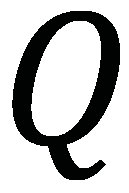
Key Point: The denominator of a rational expression or function cannot be zero, as division by zero is undefined.
Domain of Rational Expressions
The domain of a rational expression or function is the set of all real numbers except those that make the denominator zero. To find the domain:
Set the denominator equal to zero and solve for the variable.
Exclude these values from the domain.
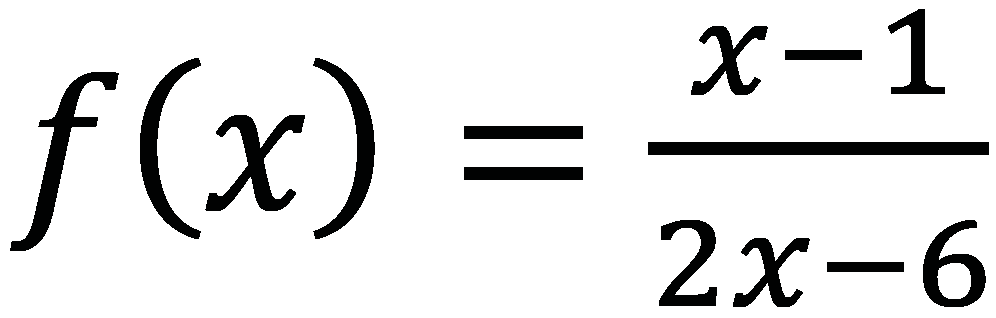
Example: For , set to find is excluded from the domain.
Simplifying Rational Expressions
Process of Simplification
To simplify a rational expression:
Factor the numerator and denominator completely.
Cancel any common factors that appear in both the numerator and denominator.
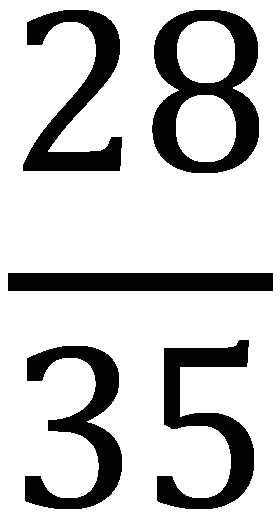
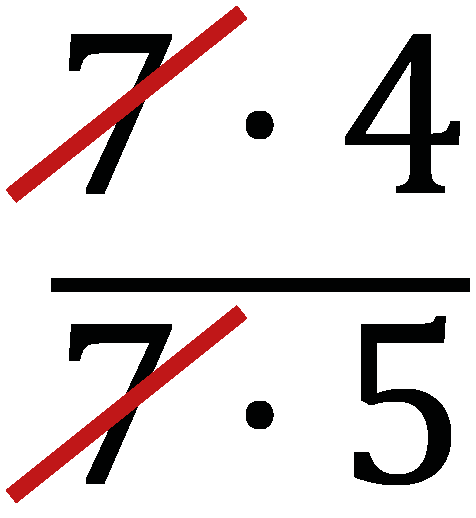
Example: Simplify :
Cancel the common factor of 7:
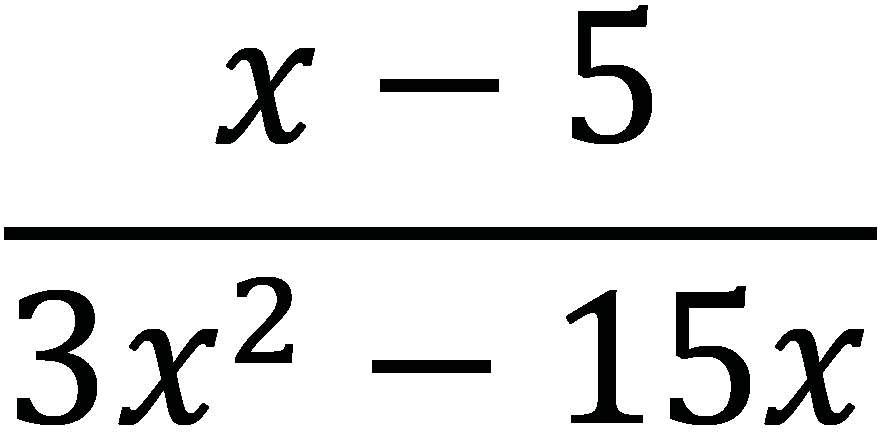
Least Common Denominator (LCD)
Finding the LCD
The Least Common Denominator (LCD) of two or more rational expressions is the smallest expression that each denominator divides into. To find the LCD:
Factor each denominator completely.
Identify all unique prime factors.
Multiply each factor the greatest number of times it occurs in any denominator.
Example: For denominators and :
Factor: ,
LCD:
Writing Equivalent Expressions with Common Denominators
To add or subtract rational expressions, first rewrite each with the LCD as the denominator:
Multiply the numerator and denominator of each expression by any missing factors of the LCD.
Example: Rewrite and with LCD :
Adding and Subtracting Rational Expressions
With Unlike Denominators
To add or subtract rational expressions with different denominators:
Find the LCD.
Rewrite each expression with the LCD as the denominator.
Add or subtract the numerators, keeping the common denominator.
Simplify the result if possible.
Example:
Rational Equations
Definition and Solution Process
A rational equation is an equation that contains one or more rational expressions. To solve a rational equation:
Determine restrictions by setting each denominator equal to zero and solving for the variable.
Multiply both sides by the LCD to clear denominators.
Solve the resulting linear or quadratic equation.
Check all solutions against the original restrictions; discard any that make a denominator zero.
Example: Solve :
Restriction:
Multiply both sides by :
Solve:
Check: does not violate the restriction.
Special Cases
If a solution equals a restriction (i.e., makes any denominator zero), it is not a valid solution and should be excluded from the solution set.
Summary Table: Key Concepts in Rational Expressions
Concept | Definition/Process | Example |
|---|---|---|
Rational Expression | Fraction with polynomials in numerator and denominator | |
Domain | All real numbers except those making denominator zero | excluded |
Simplification | Factor and cancel common factors | |
LCD | Product of all unique prime factors in denominators | |
Adding/Subtracting | Rewrite with LCD, combine numerators | |
Rational Equation | Equation with rational expressions |
