 Back
BackIntermediate Algebra: Quadratics, Graphing, and Optimization Review
Study Guide - Smart Notes
 Tailored notes based on your materials, expanded with key definitions, examples, and context.
Q1. Solve using the square root property:
Background
Topic: Solving Quadratic Equations by Square Root Property
This question tests your ability to solve a quadratic equation by isolating the squared term and then applying the square root property.
Key Terms and Formulas:
Square Root Property: If , then .
Step-by-Step Guidance
Start by isolating the squared term: is already isolated.
Take the square root of both sides: .
Simplify the square root: , so .
Set up two equations: and .
Try solving on your own before revealing the answer!
Q2. Determine the number and type of solutions:
Background
Topic: Discriminant and Nature of Solutions for Quadratic Equations
This question asks you to determine how many real or complex solutions a quadratic equation has by using the discriminant.
Key Terms and Formulas:
Standard form:
Discriminant:
Interpretation:
If , two real solutions
If , one real solution
If , no real solutions (two complex)
Step-by-Step Guidance
Rewrite the equation in standard form: .
Identify , , .
Calculate the discriminant: .
Try solving on your own before revealing the answer!
Q3. Solve the equation using the quadratic formula:
Background
Topic: Solving Quadratic Equations Using the Quadratic Formula
This question tests your ability to use the quadratic formula to solve a quadratic equation and express the answer in simplified radical form.
Key Terms and Formulas:
Quadratic Formula:
Step-by-Step Guidance
Rewrite the equation in standard form: .
Identify , , .
Plug these values into the quadratic formula.
Simplify under the square root: .
Try solving on your own before revealing the answer!
Q4. Rationalize the denominator:
Background
Topic: Rationalizing Denominators
This question tests your ability to rewrite a fraction so that the denominator is a rational number.
Key Terms and Formulas:
To rationalize , multiply numerator and denominator by .
Step-by-Step Guidance
Multiply numerator and denominator by : .
Simplify the denominator: .
Write the new numerator: .
Try solving on your own before revealing the answer!
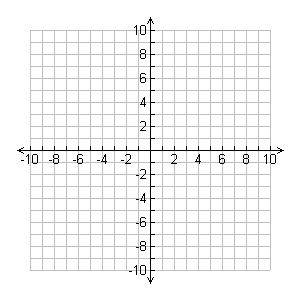
Q5. Sketch the graph of and find the following:
Domain
Range
-intercept (if any)
-intercept (if any)
Background
Topic: Graphing Quadratic Functions and Identifying Key Features
This question tests your understanding of the vertex form of a quadratic function and how to determine its domain, range, and intercepts.
Key Terms and Formulas:
Vertex form:
Domain of any quadratic: all real numbers
Range: depends on the vertex and direction of opening
Intercepts: Set for -intercept, for -intercepts
Step-by-Step Guidance
Identify the vertex: .
Determine the direction the parabola opens (since , it opens upward).
State the domain: all real numbers.
State the range: .
Find the -intercept by plugging into .
Find the -intercepts by setting and solving for .
Try solving on your own before revealing the answer!
Q6. Find the value of for which is a perfect-square trinomial. Then factor the perfect-square trinomial.
Background
Topic: Completing the Square and Factoring Perfect-Square Trinomials
This question tests your ability to recognize and create a perfect-square trinomial, then factor it.
Key Terms and Formulas:
Perfect-square trinomial:
To find :
Step-by-Step Guidance
Identify in ; here, .
Calculate .
Write the trinomial as .
Factor as .
Try solving on your own before revealing the answer!
Q7. For the function :
a) Find the vertex.
b) Find the -intercept(s) (if any).
c) Find the -intercept(s) (if any).
Background
Topic: Analyzing Quadratic Functions
This question tests your ability to find the vertex and intercepts of a quadratic function in standard form.
Key Terms and Formulas:
Vertex: ,
-intercepts: Set and solve for
-intercept: Set and solve for
Step-by-Step Guidance
Identify , , .
Find the vertex: .
Plug into to find the -coordinate of the vertex.
Find -intercepts by solving .
Find -intercept by evaluating .
Try solving on your own before revealing the answer!
Q8. Simplify: (Leave your answer in simplified radical form.)
Background
Topic: Simplifying Radicals
This question tests your ability to simplify square roots by factoring out perfect squares.
Key Terms and Formulas:
Factor $54
Step-by-Step Guidance
Factor $54.
Write .
Simplify , so .
Try solving on your own before revealing the answer!
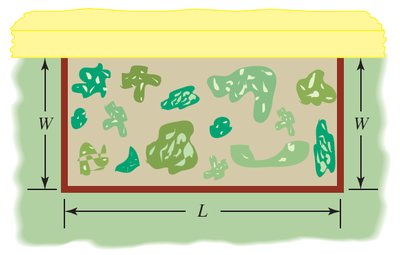
Q9. You have 180 feet of fencing to enclose a rectangular plot that borders on a river. If you do not fence the side along the river, find the length and width of the plot that will maximize the area. What will the maximum area be? Include units in your answers.
Background
Topic: Optimization with Quadratic Functions
This question tests your ability to set up and solve an optimization problem involving area and perimeter constraints.
Key Terms and Formulas:
Let = length (side parallel to river), = width (sides perpendicular to river)
Perimeter constraint:
Area:
Step-by-Step Guidance
Express in terms of : .
Write the area function: .
Expand: .
Find the value of that maximizes by finding the vertex of the parabola: for .
Plug this value of back into to find .
Calculate the maximum area using these values.
Try solving on your own before revealing the answer!
