 Back
BackIntermediate Algebra Study Guide: Real Numbers and Algebraic Expressions
Study Guide - Smart Notes
 Tailored notes based on your materials, expanded with key definitions, examples, and context.
Ch. 1 - Real Numbers and Algebraic Expressions
Simplifying Fractions
Fractions are fundamental in algebra, representing parts of a whole. Understanding their structure and types is essential for simplifying and manipulating algebraic expressions.
Definition: A fraction consists of a numerator (top number), denominator (bottom number), and a fraction bar. It can be interpreted as division: , where .
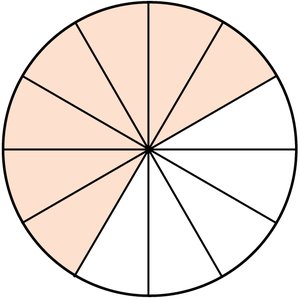
Equivalent Fractions: Fractions are equivalent if both the numerator and denominator are multiplied or divided by the same nonzero constant.
Types of Fractions:
Proper Fraction: Numerator < Denominator (value < 1)
Improper Fraction: Numerator >= Denominator (value >= 1)
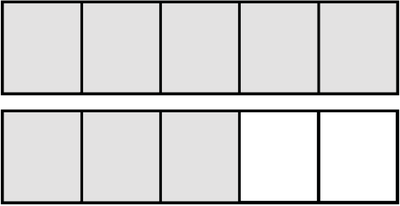
Mixed Number: Whole number and a proper fraction combined
Simplifying Fractions: To write a fraction in lowest terms, factor both numerator and denominator and divide by their greatest common factor (GCF).
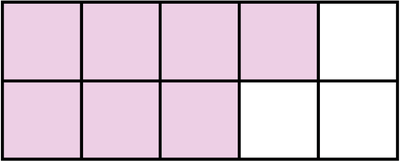
Example: can be simplified by dividing both by their GCF, 3: .
Evaluating Exponents
Exponents are used to represent repeated multiplication of a number. Understanding exponent notation is crucial for simplifying algebraic expressions.
Exponent Notation: means the base is multiplied by itself times.
Base: The number being multiplied.
Exponent: Indicates how many times the base is used as a factor.
Special Cases: Any number to the power of 1 is itself; to the power of 0 is 1 (except 0).
Example: ; .



Exponential Expressions with Negative Bases
When negative numbers are raised to powers, the sign of the result depends on whether the exponent is even or odd.
Even Exponent: Negative base raised to an even exponent yields a positive result.
Odd Exponent: Negative base raised to an odd exponent yields a negative result.
Notation: means the negative of , not .
Example: (positive); (negative).



Evaluating Algebraic Expressions
Algebraic expressions combine numbers and variables using operations. To evaluate, substitute the given values for the variables.
Variable: A letter representing an unknown value.
Coefficient: Number multiplied by a variable.
Constant: Number without a variable.
Example: Evaluate for : .



Translating Word Phrases to Expressions
Translating verbal phrases into algebraic expressions is a key skill in algebra. Recognize keywords for operations and variables.
Add: Sum, increased by, more than, plus
Subtract: Difference, decreased by, less than, minus
Multiply: Product, times, of, twice/double/triple
Divide: Quotient, divided by, per, out of
Example: "Five more than a number" translates to .
Translating Sentences to Equations
To translate sentences to equations, identify keywords for equality and operations. An equation states that two expressions are equal.
Equals: is, equals, gives, yields, equal to, represents, is the same as
Example: "The sum of a number and 12 is the same as three times the number" translates to .
The Distributive Property
The distributive property allows multiplication to be distributed over addition or subtraction inside parentheses.
Formula:
Example:
Simplifying Expressions
Simplifying expressions involves combining like terms and removing parentheses using the distributive property.
Like Terms: Terms with the same variable and exponent can be combined.
Steps to Simplify:
Distribute constants/variables in parentheses
Identify like terms
Group like terms
Combine like terms
Example:
Term | Like Terms? | Reason |
|---|---|---|
and | Yes | Same variable and exponent |
and | No | Different variable |
and | No | Different exponent |
Additional info: These notes cover foundational concepts in intermediate algebra, including fractions, exponents, algebraic expressions, translation of phrases and sentences, distributive property, and simplification techniques. Mastery of these topics is essential for success in subsequent chapters and problem-solving in algebra.
