 Back
BackIntersections, Unions, and Compound Inequalities: Study Notes for Intermediate Algebra
Study Guide - Smart Notes
 Tailored notes based on your materials, expanded with key definitions, examples, and context.
Section 4.2: Intersections, Unions, and Compound Inequalities
Introduction
This section explores compound inequalities, focusing on conjunctions (intersections) and disjunctions (unions), and their graphical representations. It also covers the domain of functions using set-builder and interval notation. These concepts are fundamental in Intermediate Algebra for understanding how solution sets interact and how to describe them precisely.
Conjunctions (Intersections)
Definition and Properties
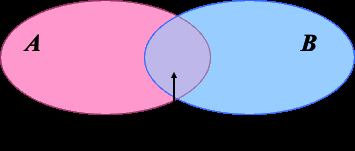
A conjunction is a compound sentence formed by joining two or more inequalities or statements with the word and. The solution set of a conjunction is the intersection of the solution sets of the individual statements, meaning only values that satisfy all conditions are included.
Intersection of Sets: The intersection of sets A and B, written as , is the set of all elements common to both A and B.
Conjunction of Inequalities: For two inequalities joined by "and," the solution set is the overlap (intersection) of their individual solution sets.
Set-builder Notation: Used to describe the set of solutions, e.g., .
Interval Notation: Used to describe the range of solutions, e.g., .
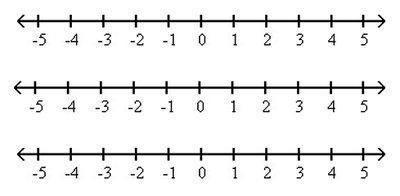
Example: Solve and graph and .
Set-builder notation:
Interval notation:
Solving Compound Inequalities
To solve compound inequalities joined by "and," solve each inequality separately and find the overlap.
Example:
Break into two inequalities: and
Solve each:
Combined solution:
Set-builder notation:
Interval notation:
Disjunctions (Unions)
Definition and Properties
A disjunction is a compound sentence formed by joining two or more inequalities or statements with the word or. The solution set of a disjunction is the union of the solution sets of the individual statements, meaning any value that satisfies at least one condition is included.
Union of Sets: The union of sets A and B, written as , is the set of all elements that belong to A or B (or both).
Disjunction of Inequalities: For two inequalities joined by "or," the solution set is the combined (union) of their individual solution sets.
Set-builder Notation: Used to describe the set of solutions, e.g., .
Interval Notation: Used to describe the range of solutions, e.g., .
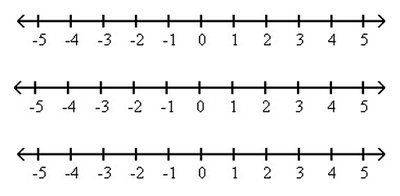
Example: Solve and graph or .
Set-builder notation:
Interval notation:
Solving Compound Inequalities with "Or"
To solve compound inequalities joined by "or," solve each inequality separately and combine their solution sets.
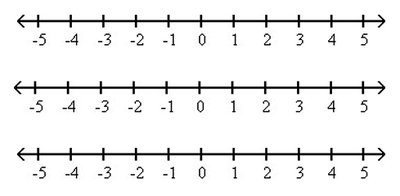
Example: or
Solution: All (since is included in $x > -4$)
Set-builder notation:
Interval notation:
Set-builder and Interval Notation
Definitions
Set-builder notation: Describes a set by stating the property that its members must satisfy, e.g., .
Interval notation: Describes a set as a range of values, e.g., .
Both notations are used to express solution sets for inequalities and domains of functions.
Domains of Functions
Definition and Determining Domains
The domain of a function is the set of all possible input values (x-values) for which the function is defined. To find the domain, identify values that make the function undefined (such as division by zero or taking the square root of a negative number).
Example 1: Domain: All real numbers ()
Example 2: Domain: Set-builder notation: Interval notation:
Example 3: Domain: Set-builder notation: Interval notation:
Summary Table: Conjunctions vs. Disjunctions
Type | Word Used | Set Operation | Solution Set |
|---|---|---|---|
Conjunction | and | Intersection () | Values satisfying both conditions |
Disjunction | or | Union () | Values satisfying at least one condition |
Things to Remember and Mistakes to Avoid
For conjunctions, only values that satisfy all conditions are included.
For disjunctions, values that satisfy at least one condition are included.
Always check for values that make a function undefined when finding domains.
Use set-builder and interval notation to clearly describe solution sets.
