 Back
Solving Linear Equations: Properties of Equality and Applications
Study Guide - Smart Notes
 Tailored notes based on your materials, expanded with key definitions, examples, and context.
Equations, Inequalities, and Problem Solving
Linear Equations in One Variable
Linear equations in one variable are equations that can be written in the form ax + b = c, where a, b, and c are real numbers and x is the variable. The solution to a linear equation is the value of the variable that makes the equation true.
Equation: A statement that two algebraic expressions are equal.
Expression: A mathematical phrase that does not include an equality sign.
Solution Set: The set of all values that satisfy the equation, written in set brackets { }.
Example: Determine whether the given value is a solution to the equation 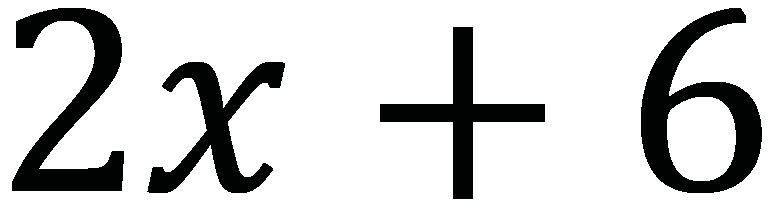 =
 . Substitute x = -3:
Since the statement is true, x = -3 is a solution.

Identifying Linear Equations
Not all equations are linear. A linear equation in one variable has the variable raised only to the first power and does not involve products of variables or higher powers.
Linear:
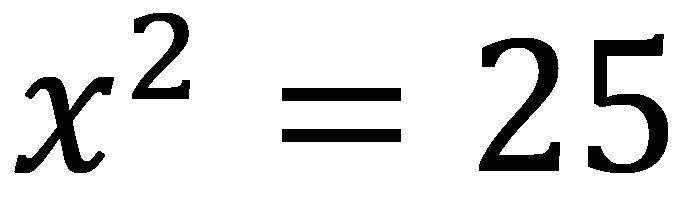
Nonlinear: or
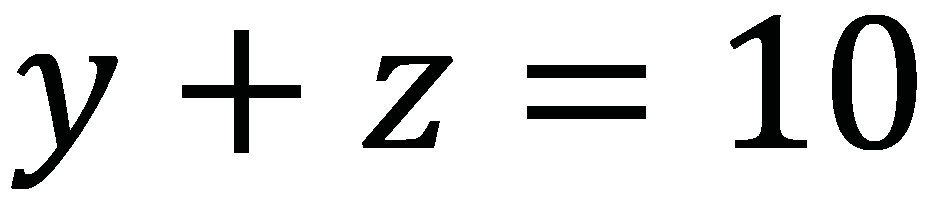
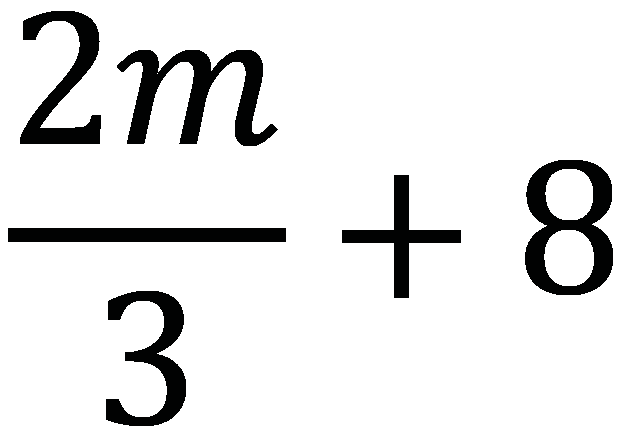
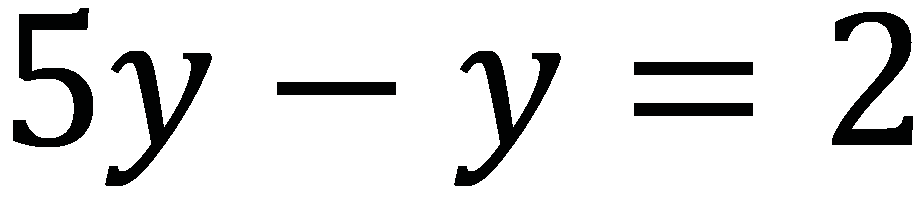
Example: Which of the following is a linear equation in one variable?




Addition and Subtraction Properties of Equality
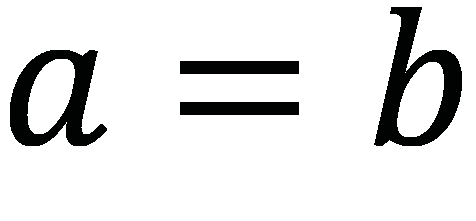
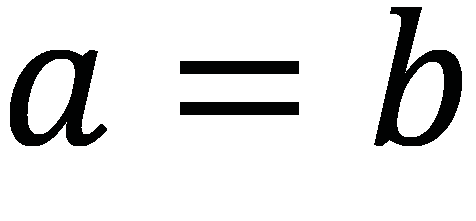
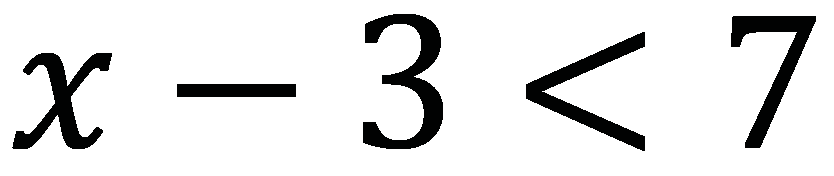
To solve linear equations, we use the properties of equality. These properties state that the same operation can be performed on both sides of an equation without changing the solution set.
Addition Property: If , then
Subtraction Property: If , then
These properties are used to isolate the variable on one side of the equation.

























Solving Linear Equations: Step-by-Step
To solve a linear equation, follow these steps:
Simplify both sides of the equation (distribute, combine like terms).
Use addition or subtraction to collect all variable terms on one side and constants on the other.
Use multiplication or division to isolate the variable.
Check your solution by substituting it back into the original equation.
Example: Solve
Visualizing Equations
Equations can be represented visually using a balance scale, where each side of the equation is balanced.
Practice Problems
Solve
Solve
Solve
Solve
Solve
These problems reinforce the use of addition and subtraction properties to isolate the variable and solve for its value.
Summary Table: Linear vs. Nonlinear Equations
Type | Example | Degree |
|---|---|---|
Linear | 1 | |
Nonlinear | 2 |
Additional info: The images included above are directly relevant to the explanation of linear equations, properties of equality, and the process of solving equations. They visually reinforce the algebraic steps and concepts discussed in the text.
