What is a metalloid, and how does its position on the periodic table relate to metallic character?
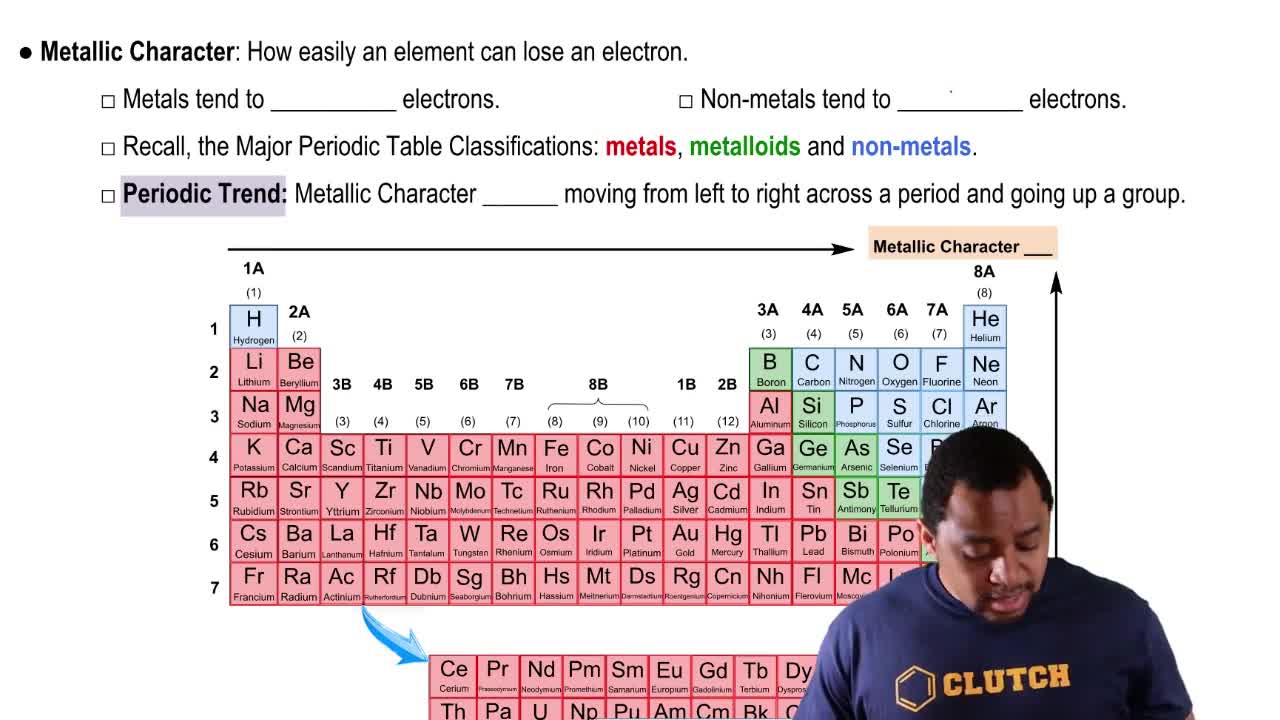
A metalloid is an element with properties intermediate between metals and nonmetals. Metalloids are typically found between metals (on the left and bottom of the periodic table) and nonmetals (on the right and top), and their metallic character is less than metals but more than nonmetals.
How does metallic character change as you move across a period and up a group in the periodic table?
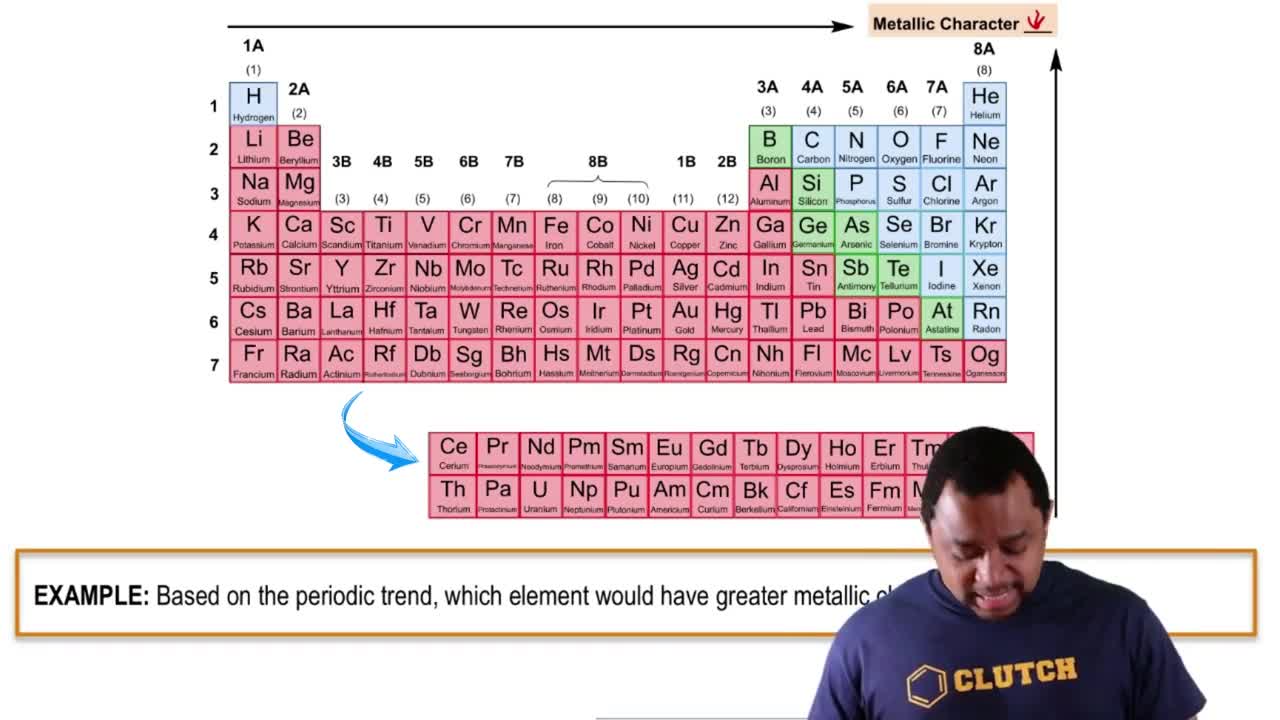
Metallic character decreases as you move from left to right across a period and as you move up a group in the periodic table.
Which element on the periodic table has the highest electronegativity, and how does this relate to its position?
Fluorine has the highest electronegativity, and it is located at the top right corner of the periodic table, which is farthest from the metals and where metallic character is lowest.
What does metallic character indicate about an element's ability to lose electrons?
Metallic character indicates how easily an element can lose an electron. Elements with higher metallic character lose electrons more easily.
In which direction on the periodic table do periodic trends generally move when being discussed?
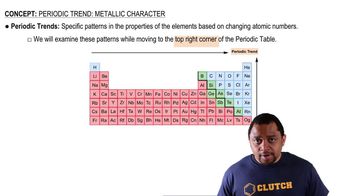
Periodic trends are generally discussed as moving toward the top right corner of the periodic table. This direction is important for understanding changes in element properties.
What are the three major classifications of elements on the periodic table?
The three major classifications are metals, metalloids, and nonmetals. Each group has distinct properties related to metallic character.
Where are metals primarily located on the periodic table?
Metals are primarily located on the left and bottom regions of the periodic table. These areas exhibit higher metallic character.
How does the position of an element relative to metals affect its metallic character?
The closer an element is to the metals on the periodic table, the greater its metallic character. Elements farther from metals have less metallic character.
What general property do nonmetals exhibit regarding electrons?
Nonmetals tend to gain electrons rather than lose them. This behavior is opposite to that of metals and relates to their lower metallic character.
Why is understanding periodic trends important when studying element properties?
Understanding periodic trends helps explain patterns in element properties as atomic numbers change. It allows prediction of behaviors such as metallic character across the table.