The electron configuration for chlorine (atomic number 17) is 1s² 2s² 2p⁶ 3s² 3p⁵.
What is the electron configuration for silicon?
The electron configuration for silicon is 1s² 2s² 2p⁶ 3s² 3p².
What is the electron configuration for krypton?
The electron configuration for krypton is 1s² 2s² 2p⁶ 3s² 3p⁶ 4s² 3d¹⁰ 4p⁶.
What is the electron configuration for magnesium?
The electron configuration for magnesium (atomic number 12) is 1s² 2s² 2p⁶ 3s².
What is the electron configuration for Sc³⁺ ion?
The electron configuration for Sc³⁺ (scandium ion) is 1s² 2s² 2p⁶ 3s² 3p⁶, as three electrons are removed from the 4s and 3d orbitals of neutral scandium.
What is the electron configuration for germanium?
The electron configuration for germanium (atomic number 32) is 1s² 2s² 2p⁶ 3s² 3p⁶ 4s² 3d¹⁰ 4p².
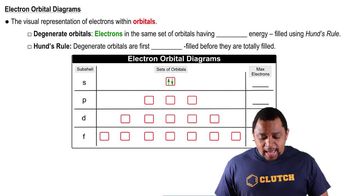
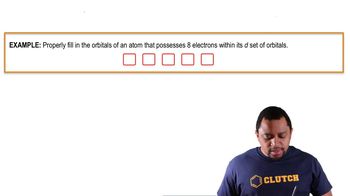
What does Hund's rule state about filling degenerate orbitals?
Hund's rule states that degenerate orbitals are first half-filled with one electron each before any are fully filled. This minimizes electron repulsion and stabilizes the atom.
How does the d block in the periodic table differ in numbering from the s block when assigning electron configurations?
The d block drops down by one principal quantum number compared to the s block when assigning electron configurations. For example, after 4s comes 3d, not 4d.
What is the maximum number of electrons that the f sublevel can hold, and how many orbitals does it have?
The f sublevel can hold a maximum of 14 electrons and contains 7 orbitals. Each orbital can hold up to 2 electrons.
How can you use the periodic table layout to deduce the electron configuration of an element?
You can use the periodic table's blocks (s, p, d, f) and their positions to determine the sequence of sublevels filled for an element's electron configuration. Each block corresponds to specific sublevels and the number of electrons they can hold.
 Back
Back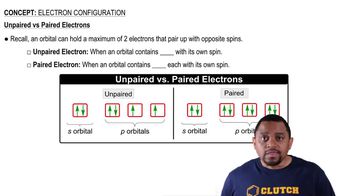
 01:23
01:23