 Indietro
Quadratic Equations and Graphs: Algebra & Trigonometry Study Guide
Guida di studio - Note intelligenti
 Appunti personalizzati basati sui tuoi materiali, ampliati con definizioni chiave, esempi e contesto.
Q1. Solve each quadratic equation by isolation.
Background
Topic: Solving Quadratic Equations by Isolation
This question tests your ability to solve quadratic equations by isolating the variable . This method is useful when the equation can be rearranged to express $x$ in terms of other constants, often using square roots.
Key Terms and Formulas:
Quadratic Equation: An equation of the form
Isolation: Rearranging the equation to solve for
Square Root Property: If , then
Step-by-Step Guidance
For each equation, start by moving all terms involving to one side and constants to the other.
Divide or multiply as needed to isolate the squared term.
Take the square root of both sides, remembering to consider both positive and negative roots.
Express in terms of the resulting values, but do not compute the final numeric answer yet.
Try solving on your own before revealing the answer!
Final Answers:
a.
b.
c.
Each equation was rearranged to isolate and solved using the square root property.
Q2. Solve each quadratic equation by factoring.
Background
Topic: Solving Quadratic Equations by Factoring
This question tests your ability to solve quadratic equations by factoring. Factoring is useful when the equation can be written as a product of binomials set equal to zero.
Key Terms and Formulas:
Factoring: Expressing a quadratic as
Zero Product Property: If , then or
Step-by-Step Guidance
Move all terms to one side to set the equation equal to zero.
Factor the quadratic expression into two binomials.
Set each binomial equal to zero to solve for .
Write the solutions for , but do not compute the final numeric answer yet.
Try solving on your own before revealing the answer!
Final Answers:
a.
b.
c. (Use quadratic formula for exact values)
Factoring and applying the zero product property yields the solutions for .
Q3. Find the x-intercepts of each function.
Background
Topic: Finding x-intercepts of Quadratic Functions
This question tests your ability to find the x-intercepts (zeros) of quadratic functions, which are the values of where .
Key Terms and Formulas:
x-intercept: The value(s) of where
Quadratic Function: or
Step-by-Step Guidance
Set in each function.
Solve the resulting equation for using factoring or the quadratic formula.
Write the solutions for , but do not compute the final numeric answer yet.
Try solving on your own before revealing the answer!
Final Answers:
a. or
b. or
c. (use quadratic formula)
d.
Setting and solving for gives the x-intercepts.
Q4. Solve each of the following quadratic equations.
Background
Topic: Solving Quadratic Equations (Various Methods)
This question tests your ability to solve quadratic equations using different methods, including isolation, factoring, and the quadratic formula.
Key Terms and Formulas:
Quadratic Formula:
Factoring and Isolation methods
Step-by-Step Guidance
Rearrange each equation to standard form .
Choose the appropriate method (factoring, isolation, or quadratic formula).
Set up the equation for solving, but do not compute the final numeric answer yet.
Try solving on your own before revealing the answer!
Final Answers:
a.
b.
c. (double root)
d. (use quadratic formula)
Each equation was solved using the appropriate method for quadratics.
Q5. An object is launched directly upward at 64 feet per second from a platform 80 feet high. Use the equation to find:
Background
Topic: Quadratic Applications (Projectile Motion)
This question tests your ability to apply quadratic equations to real-world scenarios, specifically projectile motion.
Key Terms and Formulas:
Vertex of a parabola:
Maximum height: Substitute at vertex into
Time to hit ground: Set and solve for
Step-by-Step Guidance
Identify , , in the equation.
Find the time to reach maximum height using .
Substitute this value into to find the maximum height.
Set and solve for to find when the object hits the ground.
Try solving on your own before revealing the answer!
Final Answers:
a. seconds to reach maximum height
b. Maximum height is feet
c. Time to hit the ground is seconds
Used the vertex formula and solved for when .
Q6. After the semester is over, you throw your book straight up from the roof. Use to find:
Background
Topic: Quadratic Applications (Projectile Motion)
This question tests your ability to analyze quadratic equations in the context of vertical motion.
Key Terms and Formulas:
Vertex form:
Maximum height: in vertex form
Time to hit ground: Set and solve for
Step-by-Step Guidance
Identify the vertex form and parameters: , , .
Maximum height is at seconds.
Substitute into to find the maximum height.
Set and solve for to find when the book hits the ground.
Try solving on your own before revealing the answer!
Final Answers:
a. Time to hit the ground: seconds
b. Time to reach maximum height: seconds
c. Maximum height: $144$ feet
Used the vertex form and solved for when .
Q7. Given the following quadratic functions, find the zeros by graphing. Show at least 5 coordinates on each graph (the vertex and four others).
Background
Topic: Graphing Quadratic Functions and Finding Zeros
This question tests your ability to graph quadratic functions and identify their zeros (x-intercepts) visually.
Key Terms and Formulas:
Vertex: The highest or lowest point on the parabola
Zero(s): The x-values where the graph crosses the x-axis
Standard, vertex, and factored forms
Step-by-Step Guidance
For each function, identify the vertex using the appropriate formula.
Calculate four additional points by substituting values near the vertex.
Plot these points on a graph and sketch the parabola.
Identify the zeros (x-intercepts) from the graph, but do not state the final values yet.
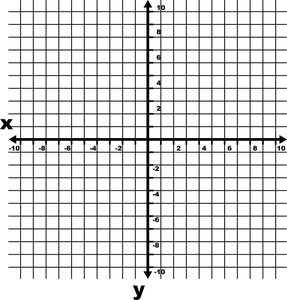
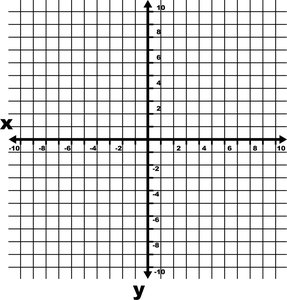
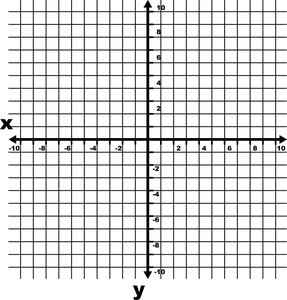
Try solving on your own before revealing the answer!
Final Answers:
a. zeros:
b. zeros:
c. zeros:
Graphing and identifying where the parabola crosses the x-axis gives the zeros.
Q8. Find the equivalent form of each quadratic equation below.
Background
Topic: Converting Between Forms of Quadratic Equations
This question tests your ability to convert quadratic equations between standard, vertex, and factored forms.
Key Terms and Formulas:
Standard form:
Vertex form:
Factored form:
Step-by-Step Guidance
Expand or factor each equation as needed to convert between forms.
Identify the coefficients and constants for each form.
Write the equivalent forms, but do not state the final expanded or factored expressions yet.
Try solving on your own before revealing the answer!
Final Answers:
Vertex:
Factored:
Standard:
Each form was converted using expansion or factoring techniques.
