 Indietro
Sampling and Extraction Methods in Analytical Chemistry
Guida di studio - Note intelligenti
 Appunti personalizzati basati sui tuoi materiali, ampliati con definizioni chiave, esempi e contesto.
Sampling and Extraction Methods
Introduction
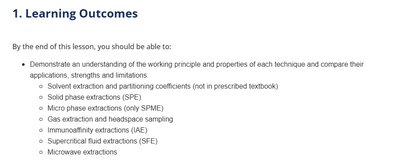
Sampling and extraction methods are fundamental in analytical chemistry for isolating analytes from complex matrices. These techniques ensure that the sample analyzed is representative and that interfering substances are minimized, thereby increasing the accuracy and reliability of analytical results. This section covers the principles, properties, applications, strengths, and limitations of seven major extraction methods.
Solvent Extraction and Partitioning Coefficients
Principle and Description
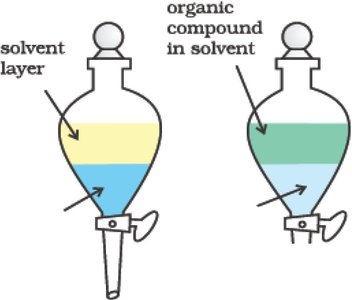
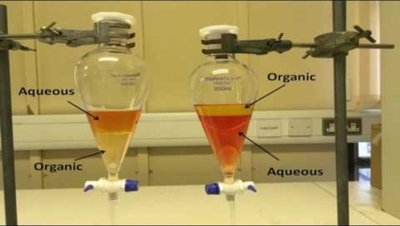
Solvent extraction (also known as liquid-liquid extraction, LLE) separates analytes from a matrix using immiscible solvents, typically water and an organic solvent. The analyte partitions between the two phases based on its solubility.
Partition coefficient (P): Ratio of analyte concentration in organic phase to aqueous phase. where = concentration in organic phase, = concentration in water.
Key properties: Selectivity depends on solvent choice and analyte polarity.
Applications: Used for separating organic compounds, pharmaceuticals, and environmental samples.
Strengths: Simple, cost-effective, widely applicable.
Limitations: Limited selectivity, large solvent volumes required, potential for emulsion formation.
Example: If a compound has a partition coefficient of 4 between ether and water, more of the compound will be found in the ether layer after extraction.
Partitioning Calculations
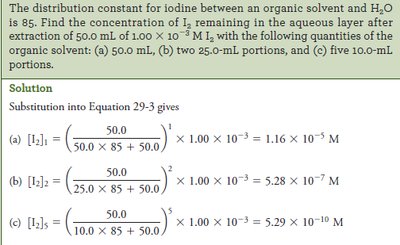
Partitioning calculations determine how much analyte is extracted into the organic phase after one or multiple extractions.
Formula: For sequential extractions, the concentration remaining in aqueous phase is calculated using: where = volume of aqueous phase, = volume of organic solvent, = partition coefficient, = number of extractions, = initial concentration.
Example: Multiple extractions with smaller volumes are often more efficient than a single extraction with a large volume.
Solid Phase Extraction (SPE)
Principle and Description
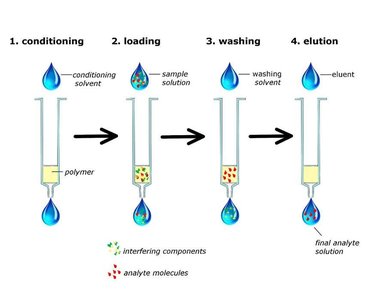
Solid phase extraction uses a cartridge packed with a solid sorbent to selectively retain analytes or impurities. The sorbent is often hydrophobic (e.g., C-18).
Key properties: Sorbent choice depends on analyte nature; allows selective retention and elution.
Applications: Bioanalytical measurements, environmental monitoring, concentration of trace analytes.
Strengths: Selective, avoids emulsions, allows pre-concentration, uses small solvent volumes.
Limitations: Cost, instability under strong alkaline conditions, column overuse issues.
Solid Phase Micro-Extraction (SPME)
Principle and Description
SPME is a solvent-free method where a fiber coated with adsorbent polymer absorbs analytes from a sample or its headspace. The fiber is then introduced into an analytical instrument.
Key properties: Integrates sampling, extraction, concentration, and sample introduction in one step.
Applications: Environmental, food, forensic, pharmaceutical samples; especially for semi-volatile and volatile analytes.
Strengths: Simple, cost-effective, environmentally friendly, direct integration with instruments.
Limitations: Poor recovery, reproducibility issues, insufficiently clean extracts.
Immunoaffinity Extraction (IAE)
Principle and Description
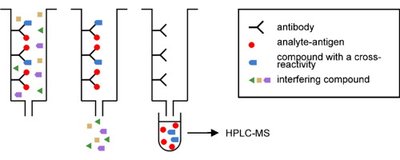
Immunoaffinity extraction uses a sorbent with immobilized antibodies to selectively bind antigens (analytes) from complex samples. Molecular recognition is based on antigen-antibody interaction.
Key properties: Highly selective for target analytes, suitable for complex matrices.
Applications: Pharmaceutical, biotechnology, environmental samples.
Strengths: Separates high-concentration impurities, extracts small organic molecules.
Limitations: Cost, limited to analytes with available antibodies.
Headspace Extraction (HSE)
Principle and Description
Headspace extraction isolates volatile analytes from the gas phase above a sample. A sorbent tube captures analytes, which are then desorbed for analysis.
Key properties: Solvent-free, rapid, reproducible, suitable for volatile/semi-volatile compounds.
Applications: Food, perfumes, biological fluids, environmental pollutants.
Strengths: Reduced pretreatment, increased fiber lifespan.
Limitations: Limited analyte range, high fiber cost, low sensitivity for some compounds.
Supercritical Fluid Extraction (SFE)
Principle and Description
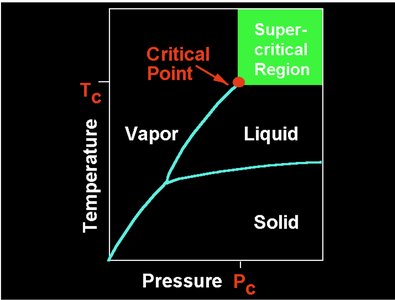
SFE uses supercritical fluids (most commonly CO2) above their critical temperature and pressure to extract analytes. Supercritical fluids combine properties of gases and liquids, allowing rapid and selective extraction.
Key properties: Solvent strength can be tuned by adjusting pressure; non-toxic, non-flammable.
Applications: Chiral separations, decaffeination, essential oil extraction, sample preparation.
Strengths: Fast extraction, suitable for unstable compounds, environmentally friendly.
Limitations: Equipment cost, limited to analytes soluble in supercritical fluids.
Microwave-Assisted Extraction (MAE)
Principle and Description
MAE uses microwave energy to heat and extract compounds from plant or biomass samples. Microwaves directly heat target components inside cells, causing cell walls to burst and release constituents.
Key properties: Efficient, rapid, suitable for polar compounds with permanent dipole moments.
Applications: Extraction of natural products, environmental samples.
Strengths: Faster and potentially higher yield than conventional methods.
Limitations: Limited to compounds absorbing microwave energy.
Summary Table: Extraction Methods
Method | Principle | Properties | Applications | Strengths | Limitations |
|---|---|---|---|---|---|
Solvent Extraction | Partitioning between immiscible liquids | Depends on analyte polarity | Organic, pharmaceutical, environmental | Simple, cheap | Limited selectivity, large solvent volumes |
SPE | Selective retention on solid sorbent | Sorbent choice critical | Bioanalytical, environmental | Selective, pre-concentration | Cost, instability |
SPME | Adsorption on fiber | Solvent-free, integrates steps | Volatile/semi-volatile analytes | Simple, cost-effective | Poor recovery, reproducibility |
IAE | Antigen-antibody binding | Highly selective | Pharmaceutical, environmental | Separates impurities | Cost, antibody availability |
HSE | Adsorption from headspace | Solvent-free, rapid | Food, perfumes, biological fluids | Reduced pretreatment | Limited range, fiber cost |
SFE | Extraction with supercritical fluid | Tunable solvent strength | Chiral, decaffeination, oils | Fast, environmentally friendly | Equipment cost |
MAE | Microwave heating | Efficient for polar compounds | Natural products, environmental | Rapid, high yield | Limited to microwave-absorbing compounds |
Conclusion
Understanding the principles, properties, applications, strengths, and limitations of sampling and extraction methods is essential for accurate and reliable chemical analysis. These techniques are foundational in analytical chemistry, enabling the isolation and quantification of analytes from complex matrices.
