 Indietro
Acid-Base Balance and Buffer Systems in Human Physiology
Guida di studio - Note intelligenti
 Appunti personalizzati basati sui tuoi materiali, ampliati con definizioni chiave, esempi e contesto.
Acid-Base Balance in Human Physiology
Acids and Bases: Definitions and Properties
Acids and bases are fundamental chemical entities that play a crucial role in maintaining physiological balance within the human body. Understanding their properties is essential for grasping acid-base homeostasis.
Acid: A substance that releases hydrogen ions (H+) in solution, increasing the concentration of H+ and lowering pH. Example: Hydrochloric acid (HCl) dissociates into H+ and Cl-.
Base: A substance that accepts H+ ions or releases hydroxide ions (OH-), decreasing the concentration of H+ and raising pH. Example: Sodium hydroxide (NaOH) dissociates into Na+ and OH-.
OH- ions react with H+ ions to form water (H2O).
Bicarbonate (HCO3-) acts as a base by taking up H+ ions to form carbonic acid (H2CO3).
Measuring Acidity: The pH Scale
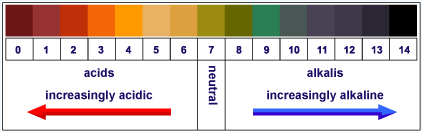
The pH scale is a logarithmic measure of hydrogen ion concentration, ranging from 0 (most acidic) to 14 (most alkaline). It is central to understanding acid-base balance in biological systems.
Inverse relationship: As [H+] increases, pH decreases.
Logarithmic relationship: Each decrease of 1 pH unit represents a 10-fold increase in [H+].
Formula:
Normal human blood pH: 7.35–7.45 (narrow range).
Strong vs. Weak Acids and Bases
Acids and bases are classified as strong or weak based on their degree of dissociation in water.
Strong acids/bases: Fully dissociate in water, releasing all their H+ or OH- ions. Examples: HCl, H2SO4 (acids); NaOH, KOH (bases).
Weak acids/bases: Partially dissociate, establishing a reversible equilibrium. Example: Carbonic acid (H2CO3) dissociates into bicarbonate (HCO3-) and H+.
Conjugate acid-base pairs: Formed when an acid loses a proton (H+), becoming its conjugate base, and vice versa.
Buffer Systems
Buffers are mixtures of weak acids and their conjugate bases that resist changes in pH when acids or bases are added. They are vital for maintaining stable pH in body fluids.
Mechanism: Buffers neutralize added H+ or OH- ions, preventing significant pH changes.
Example: The carbonic acid-bicarbonate buffer system in blood:
Buffer capacity: The ability of a buffer to maintain pH depends on the concentration of acid and base components.
Optimal pH range: Determined by the acid dissociation constant (pKa). At pH = pKa, concentrations of conjugate acid and base are equal.
Buffer Capacity and pH Regulation
The effectiveness of a buffer system is determined by its capacity and the ratio of acid to base.
Greater starting concentration: Higher buffer capacity; more acid/base to neutralize added ions.
pH below pKa: Depletes base (excess H+).
pH above pKa: Depletes acid (excess OH-).
Acid-Base Homeostasis in the Human Body
The body maintains acid-base balance through both chemical and physiological mechanisms.
Normal blood pH: 7.35–7.45.
Acidemia: pH < 7.35 (too acidic).
Alkalemia: pH > 7.45 (too alkaline).
Short-term regulation: Buffer systems in body fluids.
Long-term regulation: Urinary system (slow, handles large changes) and respiratory system (fast, limited capacity).
Role of Carbon Dioxide in Acid-Base Balance
Carbon dioxide (CO2) is a key regulator of blood pH, as it forms carbonic acid when dissolved in water.
Reaction:
Increase in CO2: More carbonic acid, lower pH (acidosis).
Decrease in CO2: Less carbonic acid, higher pH (alkalosis).
Acid-Base Imbalances: Causes and Compensation
Imbalances in acid-base homeostasis can arise from respiratory or metabolic disturbances. The body compensates through renal and respiratory mechanisms.
Respiratory alkalosis: Caused by hyperventilation (low CO2); kidneys retain H+ and excrete HCO3-.
Respiratory acidosis: Caused by rebreathing (high CO2); kidneys excrete H+ and retain HCO3-.
Metabolic alkalosis: Caused by loss of H+ or excess HCO3- (e.g., antacid overdose, vomiting); lungs decrease breathing rate to retain CO2.
Metabolic acidosis: Caused by excess H+ or loss of HCO3- (e.g., strenuous exercise, ketoacidosis); lungs increase breathing rate to expel CO2.
Summary Table: Metabolic Acidosis and Alkalosis
The following table summarizes the characteristics and causes of metabolic acid-base imbalances:
Condition | Blood pH | Blood CO2 | Possible Causes |
|---|---|---|---|
Metabolic Acidosis | Decrease | Increase | Strenuous Exercise, Ketoacidosis, Alcohol Intake, Diarrhea, Aspirin Overdose, Increased Metabolic Activity |
Metabolic Alkalosis | Increase | Decrease | Antacid Overdose, Vomiting, Constipation, Decreased Metabolic Activity |
Key Equations and Concepts
pH calculation:
Buffer equilibrium:
CO2 equilibrium:
Example: Buffer Action in Blood
When excess acid enters the bloodstream, the bicarbonate buffer system neutralizes it, preventing dangerous drops in pH. Conversely, when excess base is present, carbonic acid neutralizes it, maintaining homeostasis.
Additional info: The kidneys and lungs work together to regulate acid-base balance, with the kidneys adjusting excretion of H+ and HCO3-, and the lungs controlling CO2 levels through respiration.
