 Indietro
Anatomy & Physiology Study Guide: Biomolecules, Cell Structure, and Genetic Processes
Guida di studio - Note intelligenti
 Appunti personalizzati basati sui tuoi materiali, ampliati con definizioni chiave, esempi e contesto.
Q1. Define the following terms and give examples with their corresponding hydrolysis reactions:
Background
Topic: Biomolecules and Hydrolysis
This question tests your understanding of major biological macromolecules (polypeptides, polysaccharides, triglycerides), their structure, and how hydrolysis breaks them down into smaller units.
Key Terms:
Polypeptide: A chain of amino acids linked by peptide bonds.
Polysaccharide: A carbohydrate made of many monosaccharide units.
Triglyceride: A lipid made of one glycerol and three fatty acids.
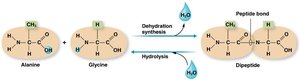
Hydrolysis: A reaction where water breaks a bond, splitting a molecule into smaller parts.
Key Formulas:
Step-by-Step Guidance
Identify the structure of each macromolecule (polypeptide, polysaccharide, triglyceride).
Describe the type of bond that links the subunits (peptide bond for polypeptides, glycosidic bond for polysaccharides, ester bond for triglycerides).
Explain how hydrolysis uses water to break these bonds, resulting in smaller molecules.
Provide an example for each (e.g., insulin for polypeptides, starch for polysaccharides, butter for triglycerides).
Set up the hydrolysis reaction for each, showing reactants and products, but stop before writing the full balanced equation or naming all products.
Try solving on your own before revealing the answer!
Final Answer:
Polypeptides are broken down by hydrolysis into smaller peptides or amino acids (e.g., pepsin cleaves insulin in the stomach). Polysaccharides are hydrolyzed into monosaccharides (e.g., starch is broken down into glucose). Triglycerides are hydrolyzed into glycerol and three fatty acids (e.g., butter is digested into its components). The hydrolysis reaction always involves water breaking the specific bond (peptide, glycosidic, or ester).
Q2. What are the differences between glucose, fructose, and galactose? Explain with example.
Background
Topic: Monosaccharide Isomers
This question tests your knowledge of carbohydrate chemistry, specifically the structural differences and biological roles of glucose, fructose, and galactose.
Key Terms:
Monosaccharide: Simple sugar molecule.
Isomer: Molecules with the same formula but different structures.
Aldohexose: Six-carbon sugar with an aldehyde group (glucose, galactose).
Ketohexose: Six-carbon sugar with a ketone group (fructose).
Epimer: Isomers differing at one carbon (galactose vs. glucose).
Step-by-Step Guidance
Write the molecular formula for all three sugars ().
Describe the functional group present in each (aldehyde for glucose and galactose, ketone for fructose).
Explain the ring structure differences (six-membered for glucose and galactose, five-membered for fructose).
Identify the specific carbon where galactose differs from glucose (carbon-4).
Set up a comparison table or diagram, but stop before fully labeling all structural features.
Try solving on your own before revealing the answer!
Final Answer:
Glucose is an aldohexose with a six-membered ring; galactose is also an aldohexose but differs at carbon-4 (epimer of glucose); fructose is a ketohexose with a five-membered ring. All are isomers with the formula , but their structural differences lead to distinct biological functions.
Q9. Define the primary, secondary, tertiary, and quaternary structure of protein.
Background
Topic: Protein Structure
This question tests your understanding of the hierarchical levels of protein structure and how each contributes to protein function.
Key Terms:
Primary structure: Sequence of amino acids.
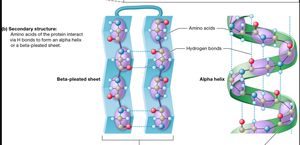
Secondary structure: Local folding (alpha helix, beta sheet) stabilized by hydrogen bonds.
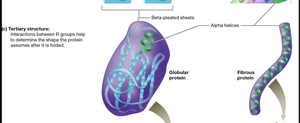
Tertiary structure: Overall 3D shape due to interactions between R-groups.
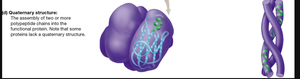
Quaternary structure: Assembly of multiple polypeptide chains.
Step-by-Step Guidance
Describe the primary structure as the linear sequence of amino acids joined by peptide bonds.
Explain how secondary structure forms through hydrogen bonding, resulting in alpha helices and beta sheets.
Discuss how tertiary structure arises from interactions between side chains (R-groups), including hydrophobic, ionic, and disulfide bonds.
Introduce quaternary structure as the combination of multiple polypeptide chains, but stop before giving specific examples or diagrams.
Try solving on your own before revealing the answer!
Final Answer:
Primary structure is the amino acid sequence; secondary structure is local folding (alpha helix, beta sheet); tertiary structure is the overall 3D shape from R-group interactions; quaternary structure is the assembly of multiple polypeptide chains into a functional protein complex (e.g., hemoglobin).
Q10. What is a nucleotide? Explain.
Background
Topic: Nucleic Acids
This question tests your knowledge of the basic building blocks of DNA and RNA and their structural components.
Key Terms:
Nucleotide: Building block of nucleic acids.
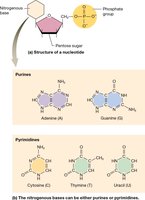
Nitrogenous base: Purine (A, G) or pyrimidine (C, T, U).
Pentose sugar: Ribose (RNA) or deoxyribose (DNA).
Phosphate group: Links nucleotides together.
Step-by-Step Guidance
Identify the three main components of a nucleotide: nitrogenous base, pentose sugar, phosphate group.
Distinguish between purines and pyrimidines, and between ribose and deoxyribose sugars.
Explain how nucleotides join to form nucleic acid chains via phosphodiester bonds.
Set up a diagram or formula for a nucleotide, but stop before labeling all parts or giving full examples.
Try solving on your own before revealing the answer!
Final Answer:
A nucleotide consists of a nitrogenous base (A, G, C, T, or U), a pentose sugar (ribose or deoxyribose), and a phosphate group. Nucleotides are the monomers of DNA and RNA, forming the genetic code and enabling information storage and transmission.
Q11. Hydrogen bond holds together the two strands of DNA.
Background
Topic: DNA Structure
This question tests your understanding of the forces that stabilize the double helix of DNA.
Key Terms:
Hydrogen bond: Weak attraction between polar molecules, crucial for DNA base pairing.
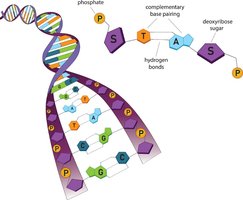
Complementary base pairing: A-T and G-C pairs held by hydrogen bonds.
Step-by-Step Guidance
Identify the base pairs in DNA (A-T, G-C).
Describe how hydrogen bonds form between complementary bases.
Explain the importance of hydrogen bonds for DNA stability and replication.
Set up a diagram showing base pairing, but stop before labeling all bonds or giving the full explanation.
Try solving on your own before revealing the answer!
Final Answer:
Hydrogen bonds hold together the two strands of DNA by connecting complementary bases (A-T with two bonds, G-C with three bonds). This allows the double helix to be stable yet able to separate for replication and transcription.
Q13. Explain transcription and translation.
Background
Topic: Gene Expression
This question tests your understanding of how genetic information is converted from DNA to RNA (transcription) and then to protein (translation).
Key Terms:
Transcription: DNA is copied into mRNA.
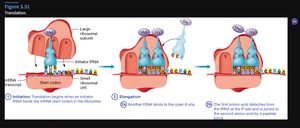
Translation: mRNA is decoded to synthesize a polypeptide.
RNA polymerase: Enzyme for transcription.
Ribosome: Site of translation.
tRNA: Transfers amino acids during translation.
Step-by-Step Guidance
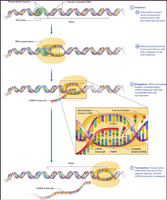
Describe the process of transcription: DNA is used as a template to synthesize mRNA in the nucleus.
Explain the role of RNA polymerase and the steps of initiation, elongation, and termination.
Outline translation: mRNA is read by ribosomes in the cytoplasm, and tRNA brings amino acids to build the polypeptide chain.
Set up the sequence of events for both processes, but stop before giving the full details or naming all enzymes involved.
Try solving on your own before revealing the answer!
Final Answer:
Transcription is the process where DNA is copied into mRNA by RNA polymerase in the nucleus. Translation is the process where ribosomes read the mRNA sequence and synthesize a polypeptide chain using tRNA in the cytoplasm. These steps are essential for gene expression and protein synthesis.
Q15. What is genetic code?
Background
Topic: Genetic Information
This question tests your understanding of how nucleotide sequences specify amino acids in proteins.
Key Terms:
Genetic code: The set of rules by which DNA and RNA sequences are translated into proteins.
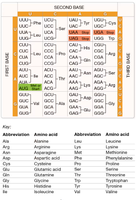
Codon: Three-nucleotide sequence in mRNA specifying an amino acid.
Step-by-Step Guidance
Define the genetic code as the correspondence between nucleotide triplets and amino acids.
Explain how codons in mRNA specify which amino acid is added during translation.
Set up a codon table or chart, but stop before labeling all codons or giving the full list.
Try solving on your own before revealing the answer!
Final Answer:
The genetic code is a list of all possible mRNA codons and the amino acids they specify. It is universal and allows cells to translate nucleotide sequences into proteins.
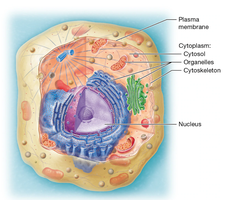
Q18. Put an image of the cell structures and their functions.
Background
Topic: Cell Structure
This question tests your knowledge of the main components of a eukaryotic cell and their functions.
Key Terms:
Plasma membrane: Boundary and regulator.
Cytoplasm: Includes cytosol, organelles, cytoskeleton.
Nucleus: Contains DNA, site of RNA synthesis.
Step-by-Step Guidance
Identify the main cell structures: plasma membrane, cytoplasm, nucleus.
Describe the function of each component.
Set up a diagram labeling these parts, but stop before describing all organelles or their detailed functions.
Try solving on your own before revealing the answer!
Final Answer:
The cell has a plasma membrane (boundary and regulator), cytoplasm (site of metabolic activity, contains organelles and cytoskeleton), and nucleus (stores genetic material and directs cell functions). Each part plays a crucial role in cell survival and function.
