 Indietro
Anatomy & Physiology Study Notes: Endocrine and Cardiovascular Systems (Chapters 16–18)
Guida di studio - Note intelligenti
 Appunti personalizzati basati sui tuoi materiali, ampliati con definizioni chiave, esempi e contesto.
Endocrine System Overview
Introduction to the Endocrine System
The endocrine system is one of the two major regulatory systems of the body, alongside the nervous system. It consists of glands that synthesize and secrete hormones into the bloodstream, which then interact with target cells possessing specific receptors. The tissues containing these target cells are called target tissues.
Hormones: Chemical messengers secreted into the blood, affecting distant organs.
Target Cells: Cells with receptors for specific hormones, leading to changes in cellular function.
Endocrine Glands: Ductless glands that release hormones directly into the interstitial fluid and blood.
Exocrine Glands: Secrete products into ducts leading to body surfaces or cavities.
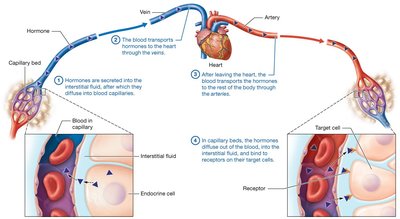
Signaling Pathways
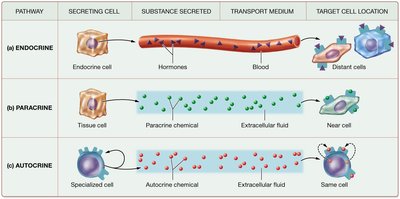
There are three main types of chemical signaling in the body:
Pathway | Secreting Cell | Substance Secreted | Transport Medium | Target Cell Location |
|---|---|---|---|---|
Endocrine | Endocrine cell | Hormones | Blood | Distant cells |
Paracrine | Tissue cell | Paracrine chemical | Extracellular fluid | Nearby cells |
Autocrine | Specialized cell | Autocrine chemical | Extracellular fluid | Same cell |
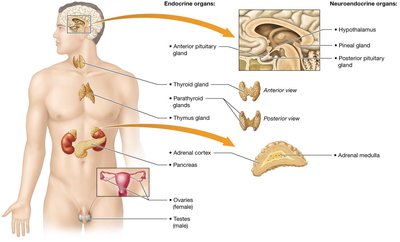
Major Endocrine Organs
The primary endocrine organs include the anterior pituitary, thyroid, parathyroid, adrenal cortices, pancreas, thymus, and gonads (ovaries/testes). Secondary endocrine organs include the heart, kidneys, small intestine, adipose tissue, and neuroendocrine organs such as the hypothalamus, pineal gland, and adrenal medulla.
Hormone Classes and Mechanisms
Hormone Classes
Amino Acid-Based Hormones: Derived from amino acids; generally hydrophilic (except thyroid hormone, which is hydrophobic).
Peptide/Protein Hormones: Chains of amino acids; hydrophilic.
Steroid Hormones: Derived from cholesterol; hydrophobic and lipid-soluble.
Hormone Transport
Free Hormones: Hydrophilic, travel freely in plasma.
Bound Hormones: Hydrophobic, transported bound to plasma proteins, providing a reservoir and extending hormone lifespan.
Hormone Receptors and Target Cells
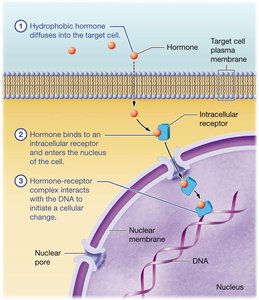
Receptor Location: Hydrophilic hormones bind to membrane receptors; hydrophobic hormones bind to intracellular receptors (cytosol or nucleus).
Receptor Regulation: Upregulation increases receptor number when hormone levels are low; downregulation decreases receptor number after prolonged high hormone exposure.
Mechanisms of Hormone Action
Hydrophilic Hormones: Bind to cell surface receptors, activating second-messenger systems (e.g., cAMP pathway).
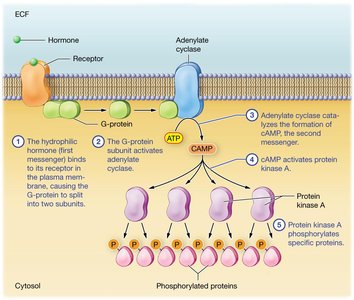
Hydrophobic Hormones: Diffuse through the plasma membrane, bind to intracellular receptors, and directly influence gene expression.
Regulation of Hormone Secretion
Types of Stimuli
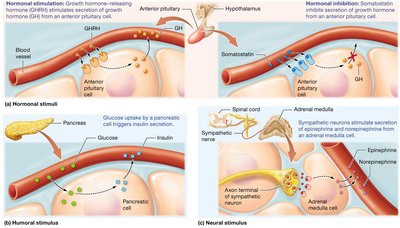
Hormonal Stimuli: Hormone release in response to other hormones.
Humoral Stimuli: Release in response to changes in blood levels of ions or nutrients.
Neural Stimuli: Release in response to neural input.
Negative Feedback Loops
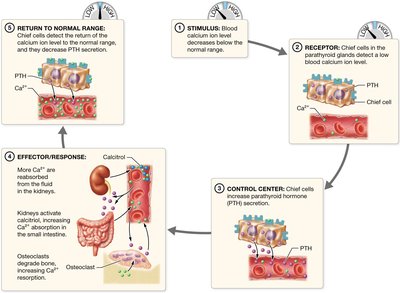
Most hormone secretion is regulated by negative feedback loops, maintaining homeostasis by adjusting hormone levels in response to physiological changes.
Calcium Homeostasis
Parathyroid Hormone (PTH) Regulation
PTH is secreted by the parathyroid glands in response to low blood calcium levels. It acts to increase blood calcium by stimulating bone resorption, increasing calcium reabsorption in the kidneys, and activating vitamin D to enhance intestinal absorption of calcium.
Endocrine System: Additional Key Concepts
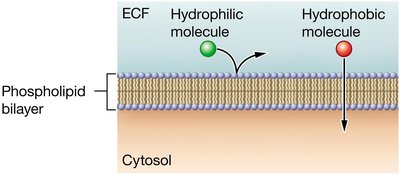
Hydrophilic vs. Hydrophobic Molecules: Hydrophilic molecules cannot cross the plasma membrane easily, while hydrophobic molecules can diffuse through the lipid bilayer.
Summary Table: Endocrine Signaling Pathways
Pathway | Secreting Cell | Substance | Transport | Target |
|---|---|---|---|---|
Endocrine | Endocrine cell | Hormone | Blood | Distant cell |
Paracrine | Tissue cell | Paracrine chemical | Extracellular fluid | Nearby cell |
Autocrine | Specialized cell | Autocrine chemical | Extracellular fluid | Same cell |
Additional info:
Hormone action can stimulate secretion, activate/inhibit enzymes, stimulate/inhibit mitosis, open/close ion channels, and regulate gene expression.
Hormone half-life varies: hydrophobic hormones generally have longer half-lives than hydrophilic hormones.
Paraneoplastic syndrome: Some cancers secrete hormones, causing systemic effects.
