 Indietro
Anatomy & Physiology Unit 1 Exam Study Guide – Step-by-Step Guidance
Guida di studio - Note intelligenti
 Appunti personalizzati basati sui tuoi materiali, ampliati con definizioni chiave, esempi e contesto.
Q1. What are the hormones of the adrenal gland and their functions?
Background
Topic: Endocrine System – Adrenal Gland
This question tests your knowledge of the hormones produced by the adrenal gland and their physiological roles in the body.
Key Terms:
Adrenal cortex
Adrenal medulla
Cortisol, aldosterone, androgens, epinephrine, norepinephrine
Step-by-Step Guidance
Identify the two main regions of the adrenal gland: cortex and medulla.
List the hormones produced by the adrenal cortex and their functions (e.g., cortisol for metabolism, aldosterone for sodium regulation).
List the hormones produced by the adrenal medulla and their functions (e.g., epinephrine and norepinephrine for fight-or-flight response).
Explain how these hormones affect target organs and contribute to homeostasis.
Try solving on your own before revealing the answer!
Final Answer:
The adrenal cortex produces cortisol (regulates metabolism and stress response), aldosterone (controls sodium and potassium balance), and androgens (sex hormones). The adrenal medulla produces epinephrine and norepinephrine, which mediate the body's fight-or-flight response.
Q2. What are the anatomical and physiological connections between the hypothalamus and pituitary glands?
Background
Topic: Endocrine System – Hypothalamic-Pituitary Axis
This question tests your understanding of how the hypothalamus and pituitary glands interact structurally and functionally to regulate hormone secretion.
Key Terms:
Infundibulum
Anterior pituitary (adenohypophysis)
Posterior pituitary (neurohypophysis)
Releasing and inhibiting hormones
Step-by-Step Guidance
Describe the physical connection (infundibulum) between the hypothalamus and pituitary gland.
Explain how the hypothalamus communicates with the anterior pituitary via blood vessels (hypophyseal portal system).
Explain how the hypothalamus communicates with the posterior pituitary via neuronal connections.
Discuss the types of hormones released by the hypothalamus and their effects on the pituitary.
Try solving on your own before revealing the answer!
Final Answer:
The hypothalamus connects to the pituitary gland via the infundibulum. It regulates the anterior pituitary through releasing/inhibiting hormones sent via the hypophyseal portal system, and the posterior pituitary through direct neuronal connections, controlling hormone release.
Q11. What are the four phases of the cardiac cycle?
Background
Topic: Cardiovascular System – Cardiac Cycle
This question tests your understanding of the sequence of events in one heartbeat, including electrical and mechanical phases.
Key Terms:
Systole
Diastole
Isovolumetric contraction
Ventricular ejection
Isovolumetric relaxation
Ventricular filling
Step-by-Step Guidance
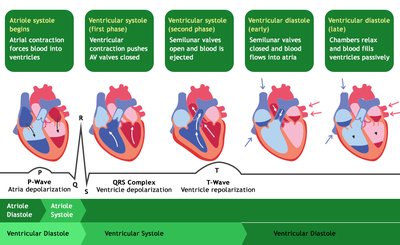
Identify the four main phases: atrial systole, ventricular systole (first and second phases), ventricular diastole (early and late).
Describe what happens during atrial systole (atria contract, blood moves to ventricles).
Explain ventricular systole: first phase (isovolumetric contraction, AV valves closed), second phase (semilunar valves open, blood ejected).
Describe ventricular diastole: early (semilunar valves close, blood flows into atria), late (chambers relax, blood fills passively).
Try solving on your own before revealing the answer!
Final Answer:
The four phases are: 1) atrial systole, 2) ventricular systole (isovolumetric contraction and ejection), 3) early ventricular diastole (isovolumetric relaxation), and 4) late ventricular diastole (ventricular filling). Each phase corresponds to specific electrical and mechanical events in the heart.
Q12. What is the difference between pulmonary and systemic blood circulation?
Background
Topic: Cardiovascular System – Circulatory Pathways
This question tests your understanding of how blood flows through the heart, lungs, and body, and the distinction between pulmonary and systemic circuits.
Key Terms:
Pulmonary circulation
Systemic circulation
Oxygenated vs. deoxygenated blood
Right and left sides of the heart
Step-by-Step Guidance
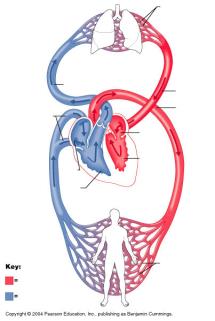
Define pulmonary circulation: blood flow from the right ventricle to the lungs and back to the left atrium.
Define systemic circulation: blood flow from the left ventricle to the body and back to the right atrium.
Explain the purpose of each circuit (pulmonary for gas exchange, systemic for nutrient/waste transport).
Describe the oxygenation status of blood in each circuit.
Try solving on your own before revealing the answer!
Final Answer:
Pulmonary circulation carries deoxygenated blood from the right ventricle to the lungs for oxygenation, then returns oxygenated blood to the left atrium. Systemic circulation carries oxygenated blood from the left ventricle to the body, then returns deoxygenated blood to the right atrium.
