 Indietro
Autonomic Nervous System: Physiology, Drugs, and Disorders
Guida di studio - Note intelligenti
 Appunti personalizzati basati sui tuoi materiali, ampliati con definizioni chiave, esempi e contesto.
Addiction, Depression, & the Autonomic Nervous System
Physiology of Addiction
Addiction is a chronic condition characterized by compulsive engagement in rewarding stimuli, despite adverse consequences. It can be psychological (mental dependence) or physiological (physical dependence). Common types include substance addictions (nicotine, alcohol, drugs) and behavioral addictions (gambling, internet use).
Nicotine Addiction: Nicotine mimics acetylcholine (ACh), stimulating the release of hormones like epinephrine (Epi) and norepinephrine (NE), and later cortisol, dopamine, and glutamate. This cycle leads to increased receptor numbers and decreased ACh, reinforcing addiction.
Example: A person addicted to nicotine experiences hormonal and neurotransmitter changes with each cigarette, perpetuating dependence.
Physiology of Depression
Depression is a mood disorder with psychological and physiological components. It is often caused by environmental factors and neurotransmitter imbalances, particularly decreased norepinephrine (NE) and serotonin.
Treatments: Dual approaches include monoamine oxidase (MAO) inhibitors, tricyclic antidepressants, and selective serotonin reuptake inhibitors (SSRIs).
Example: SSRIs increase serotonin levels, alleviating depressive symptoms.
Anxiety and Its Treatment
Anxiety is primarily created by the autonomic nervous system. Treatments include benzodiazepines (Valium, Ativan, Xanax), barbiturates (phenobarbital), and drugs that bind to GABA receptors, causing hyperpolarization and reducing anxiety.
Example: Barbiturates open chloride channels, leading to inhibitory effects on neurons.
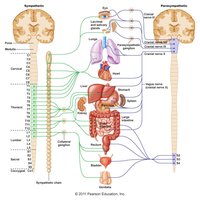
The Autonomic Nervous System (ANS)
Overview and Structural Organization
The ANS consists of motor neurons that innervate smooth muscle, cardiac muscle, and glands. It operates via subconscious control and is also known as the involuntary nervous system.
Divisions: The ANS is divided into the sympathetic and parasympathetic divisions, each with distinct functions and anatomical features.
ANS vs. Somatic Nervous System
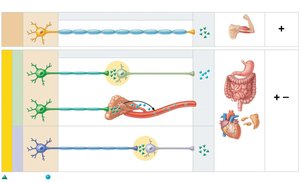
Both systems have motor fibers but differ in effectors, pathways, ganglia, and responses to neurotransmitters.
Somatic Nervous System: Controls skeletal muscle with a single, heavily myelinated neuron.
Autonomic Nervous System: Controls smooth muscle, cardiac muscle, and glands with a two-neuron chain (preganglionic and postganglionic neurons).
Neurotransmitters: Somatic uses ACh; ANS uses ACh and NE.
Parasympathetic Division: 'Rest-and-Digest'
The parasympathetic division conserves energy and directs maintenance activities such as digestion, diuresis, and defecation. It keeps heart rate, blood pressure, and respiratory rates low, and increases gastrointestinal activity.
Example: After a meal, the parasympathetic system is active, promoting digestion and relaxation.
Sympathetic Division: 'Fight-or-Flight'
The sympathetic division mobilizes the body during activity, increasing heart rate, dilating pupils, and shunting blood to muscles. It is activated by exercise, excitement, emergency, and embarrassment.
Example: During vigorous activity, the sympathetic system increases glucose release and bronchiole dilation.
Anatomical Differences Between ANS Divisions
Parasympathetic fibers originate in the brainstem or sacral spinal cord, with long preganglionic and short postganglionic fibers. Sympathetic fibers originate in the thoracic and lumbar spinal cord, with short preganglionic and long postganglionic fibers.
Neurotransmitters of the ANS
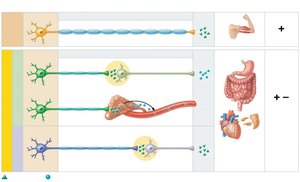
The major neurotransmitters are acetylcholine (ACh) and norepinephrine (NE).
Cholinergic fibers: Release ACh at all preganglionic axons and all parasympathetic postganglionic axons.
Adrenergic fibers: Release NE at most sympathetic postganglionic axons (except sweat glands).
Effect: Depends on receptor type (cholinergic or adrenergic).
Cholinergic and Adrenergic Receptors
Cholinergic receptors bind ACh and are classified as:
Nicotinic receptors: Found at all ANS ganglia and neuromuscular junctions.
Muscarinic receptors: Found on all parasympathetic target organs.
Adrenergic receptors bind NE or epinephrine and are classified as:
Alpha (α) receptors: Subtypes α1, α2.
Beta (β) receptors: Subtypes β1, β2, β3.
Effects of Drugs on the ANS
Epinephrine (Adrenaline)
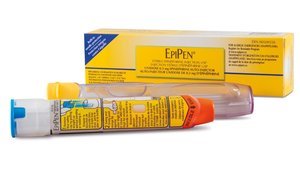
Epinephrine is a hormone and drug with sympathomimetic effects, mimicking NE. It is used during heart attacks and anaphylactic shock to improve blood pressure and circulation by binding to all adrenergic receptors.
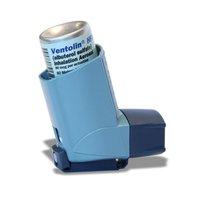
Albuterol (Proventil/Ventolin)
Albuterol is a selective β2 agonist used to dilate bronchioles in asthma patients, relieving bronchospasms.
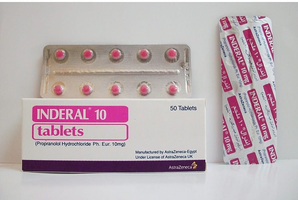
Propranolol (Inderal)
Propranolol is a beta blocker with sympatholytic effects, used to control hypertension by blocking NE receptors in the heart and reducing cardiac output and blood pressure.
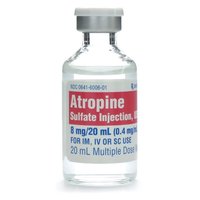
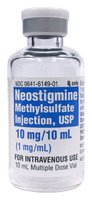
Atropine and Neostigmine
Atropine: Anticholinergic drug that blocks muscarinic ACh receptors, used to prevent salivation during surgery and to dilate pupils.
Neostigmine: Inhibits acetylcholinesterase, used to treat myasthenia gravis by increasing ACh levels.
Over-the-Counter Drugs and Beta-Blockers
Drugs for colds, allergies, and nasal congestion stimulate α-adrenergic receptors. Beta-blockers attach to β2 receptors to dilate lung bronchioles in asthmatics.
ANS Tone and Control
Sympathetic Tone
Sympathetic tone refers to the continual partial constriction of blood vessels by sympathetic fibers, allowing regulation of blood pressure.
Increase in tone: Raises blood pressure.
Decrease in tone: Lowers blood pressure.
Parasympathetic Tone
The parasympathetic division dominates the heart and smooth muscle of digestive and urinary tracts, maintaining normal activity levels. The sympathetic division can override these effects during stress.
Control of ANS Function
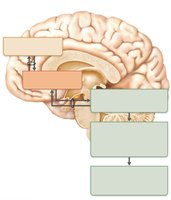
The ANS is controlled by CNS centers in the brain stem, spinal cord, hypothalamus, and cerebral cortex. The hypothalamus is the main integrative center, with cerebral input modifying ANS subconsciously via the limbic system.
Disorders of the ANS
Hypertension
Hypertension is caused by overactive sympathetic vasoconstrictor responses, leading to increased blood pressure and arterial damage. It can be treated with adrenergic receptor-blocking drugs.
Raynaud’s Disease
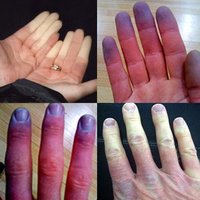
Raynaud’s disease involves exaggerated vasoconstriction in fingers and toes, causing pain and cyanosis. Treatment includes vasodilators.
Autonomic Dysreflexia
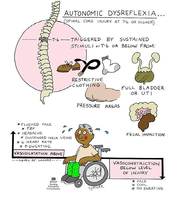
Autonomic dysreflexia is a life-threatening condition in individuals with spinal cord injuries above T6, characterized by uncontrolled activation of autonomic neurons and dangerously high blood pressure.
Autonomic Neuropathy
Autonomic neuropathy is nerve damage commonly seen in diabetes mellitus, leading to symptoms such as sexual dysfunction, dizziness, urinary incontinence, sluggish pupil reactions, and impaired sweating. Prevention involves maintaining near-normal blood glucose levels.
Developmental Aspects of the ANS
Effects of Aging
ANS efficiency declines with age due to structural changes at preganglionic axon terminals. Common effects include constipation, dry eyes, frequent eye infections, and orthostatic hypotension (low blood pressure after position change).
Pressure receptors: Become less responsive, and cardiovascular centers fail to maintain healthy blood pressure.
