 Indietro
Axial Skeleton, Skull, and Connective Tissue: Study Guidance for ANP1111
Guida di studio - Note intelligenti
 Appunti personalizzati basati sui tuoi materiali, ampliati con definizioni chiave, esempi e contesto.
Q1. The number of bones in the human body is:
Background
Topic: Skeletal System Overview
This question tests your knowledge of the total number of bones in the adult human body, a foundational fact in anatomy.
Key Terms:
Axial skeleton: Includes skull, vertebral column, and rib cage.
Appendicular skeleton: Includes limbs and girdles.
Step-by-Step Guidance
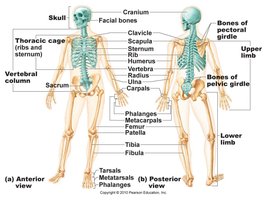
Recall that the human skeleton is divided into two main parts: axial and appendicular.
Think about the typical number of bones in each section and add them together.
Remember that some bones fuse as we age, so the adult count is different from infants.
Review your lecture notes or textbook for the standard adult bone count.
Try solving on your own before revealing the answer!
Final Answer: 206
The adult human skeleton consists of 206 bones. This includes both the axial and appendicular skeleton.
Q2. The number of openings in the skull is:
Background
Topic: Skull Anatomy
This question tests your knowledge of the anatomical features of the skull, specifically the number of named openings (foramina, canals, etc.).
Key Terms:
Foramen: An opening or hole in bone for nerves and blood vessels.
Skull: Composed of cranial and facial bones.
Step-by-Step Guidance
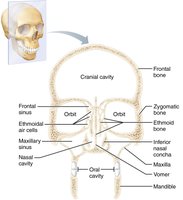
Recall that the skull has many openings to allow passage of nerves and blood vessels.
Review the lecture or textbook for the specific number of named openings.
Compare the options given and select the one that matches your notes.
Try solving on your own before revealing the answer!
Final Answer: 85
There are 85 named openings in the skull, including foramina, canals, and fissures for nerves and blood vessels.
Q3. What is the false statement about the skull?
Background
Topic: Skull Anatomy and Bone Identification
This question tests your ability to distinguish true and false statements about the skull's structure and features.
Key Terms:
Cranial sutures: Joints between skull bones.
Facial bones: Bones forming the face.
Ethmoid bone: A bone located between the eyes.
Step-by-Step Guidance
Review each statement and compare it to your lecture notes or textbook.
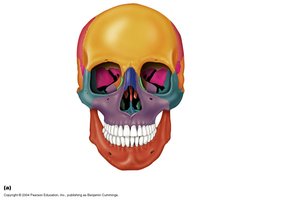
Recall the number of facial bones and cranial sutures.
Think about the shape and description of the ethmoid bone.
Identify which statement does not match the facts you have learned.
Try solving on your own before revealing the answer!
Final Answer: Ethmoid bone is said to be bat shaped
This statement is false. The sphenoid bone is described as bat-shaped, not the ethmoid bone.
Q4. Strangulation may be expected to result in fracturing of the:
Background
Topic: Special Bones of the Neck
This question tests your knowledge of the hyoid bone and its clinical significance.
Key Terms:
Hyoid bone: A unique bone in the neck that does not articulate with other bones.
Strangulation: Physical trauma to the neck.
Step-by-Step Guidance
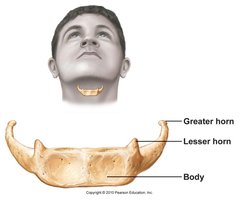
Recall the location and function of the hyoid bone.
Think about why the hyoid bone is vulnerable during strangulation.
Review the other bones listed and their anatomical positions.
Identify which bone is most likely to fracture in this scenario.
Try solving on your own before revealing the answer!
Final Answer: Hyoid bone
The hyoid bone is the only bone in the body not directly attached to other bones and is susceptible to fracture during strangulation.
Q5. What are the three main components of connective tissue?
Background
Topic: Connective Tissue Structure
This question tests your understanding of the basic components that make up connective tissue.
Key Terms:
Ground substance: The material in which cells and fibers are embedded.
Fibers: Includes collagen, elastin, and reticular fibers.
Cells: The living component, such as fibroblasts.
Step-by-Step Guidance
Recall the three main structural elements of connective tissue.
Think about the function of each component: support, binding, and matrix formation.
Review the options and match them to the textbook definitions.
Try solving on your own before revealing the answer!
Final Answer: ground substance, fibers, and cells
Connective tissue is composed of ground substance, fibers, and cells. These three components provide structure and function.
Q6. Which of these is found in bone but not cartilage:
Background
Topic: Bone vs. Cartilage Anatomy
This question tests your knowledge of the differences between bone and cartilage, especially regarding vascularization.
Key Terms:
Blood vessels: Present in bone, absent in cartilage.
Cartilage: Avascular tissue.
Step-by-Step Guidance
Recall the structural differences between bone and cartilage.
Think about which components are present in both tissues.
Identify the unique feature of bone that is not found in cartilage.
Try solving on your own before revealing the answer!
Final Answer: Blood vessels
Bone contains blood vessels, which are absent in cartilage. This is a key difference in their structure and function.
Q7. Which of these glands secrete directly into the blood:
Background
Topic: Glandular Structure and Function
This question tests your understanding of endocrine vs. exocrine glands.
Key Terms:
Endocrine gland: Secretes hormones directly into the bloodstream.
Exocrine gland: Secretes products into ducts.
Step-by-Step Guidance
Recall the difference between endocrine and exocrine glands.
Review which glands release their products into the blood versus onto surfaces or into ducts.
Match the correct gland type to the description.
Try solving on your own before revealing the answer!
Final Answer: Endocrine gland
Endocrine glands secrete hormones directly into the bloodstream, unlike exocrine glands.
Q8. Vitamin D is made from which compound on the skin:
Background
Topic: Skin Physiology and Metabolism
This question tests your knowledge of the metabolic function of the skin, specifically the precursor for vitamin D synthesis.
Key Terms:
Cholesterol: Precursor for vitamin D synthesis.
Vitamin D: Essential for calcium absorption.
Step-by-Step Guidance
Recall the process of vitamin D synthesis in the skin.
Identify the compound that is converted to vitamin D upon exposure to sunlight.
Review the options and select the correct precursor.
Try solving on your own before revealing the answer!
Final Answer: Cholesterol
Vitamin D is synthesized from cholesterol in the skin when exposed to UV light.
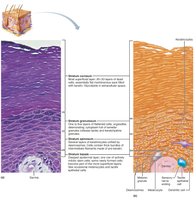
Q9. Cleavage lines are:
Background
Topic: Skin Structure
This question tests your knowledge of the structural organization of the dermis and its clinical significance.
Key Terms:
Cleavage lines: Regions where collagen fibers are arranged in parallel.
Dermis: The layer of skin beneath the epidermis.
Step-by-Step Guidance
Recall the arrangement of collagen fibers in the dermis.
Think about the clinical importance of cleavage lines in surgery.
Review the options and select the one that matches the definition.
Try solving on your own before revealing the answer!
Final Answer: Due to collagen fibres in parallel in dermal layer
Cleavage lines are formed by the arrangement of collagen fibers in the dermis, which is important for surgical incisions.
