 Indietro
Basic Principles of Chemistry for Anatomy & Physiology
Guida di studio - Note intelligenti
 Appunti personalizzati basati sui tuoi materiali, ampliati con definizioni chiave, esempi e contesto.
Basic Principles of Chemistry as They Apply to Body Processes
Introduction
Chemistry forms the foundation of all physiological reactions in the human body, including movement, digestion, heart function, and nervous system activity. Understanding basic chemistry is essential for comprehending the molecular and cellular processes that sustain life.
Key Terms Related to Basic Chemistry
Elements and Atoms
All matter is composed of elements, which are substances that cannot be broken down into simpler substances by ordinary chemical methods. The human body is primarily made up of four elements: carbon, oxygen, hydrogen, and nitrogen. Elements are made up of atoms, the smallest particles of an element that retain its properties.
Atoms: Unique building blocks for each element; give elements their physical and chemical properties.
Molecules: Two or more atoms bonded together (e.g., O2).
Compounds: Molecules with two or more different kinds of atoms bonded together (e.g., H2O).
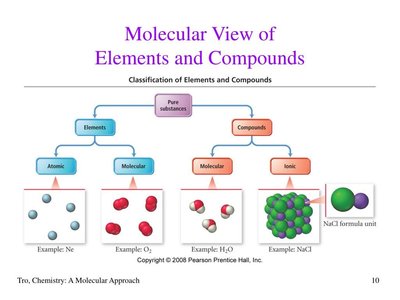
Molecules and Compounds
Most atoms combine to form molecules and compounds. Molecules may consist of one type of atom (e.g., O2) or different types (e.g., C6H12O6).
Mixtures
Most matter exists as mixtures, which are physical combinations of two or more components. There are three basic types of mixtures:
Solutions: Homogeneous mixtures with evenly distributed particles.
Colloids: Heterogeneous mixtures with larger particles that do not settle out.
Suspensions: Heterogeneous mixtures with large, visible solutes that settle out.
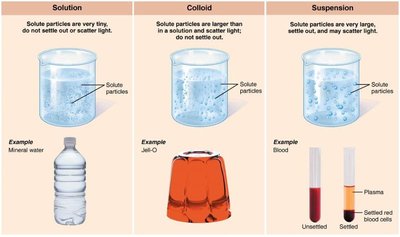
Differences Between Mixtures and Compounds
Mixtures do not involve chemical bonding; compounds do.
Mixtures can be separated by physical means; compounds require breaking chemical bonds.
Mixtures can be heterogeneous or homogeneous; compounds are always homogeneous.
Chemical Reactions
Types of Chemical Reactions
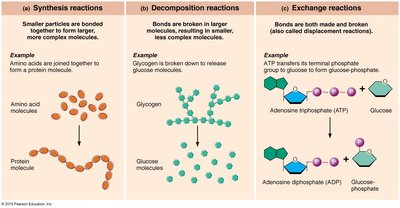
Chemical reactions occur when chemical bonds are formed, rearranged, or broken. The main types are:
Synthesis (Combination) Reactions: Atoms or molecules combine to form larger, more complex molecules.
Decomposition Reactions: Molecules are broken down into smaller molecules or atoms.
Exchange (Displacement) Reactions: Bonds are both made and broken; parts of reactants are exchanged.
Oxygen is required for decomposition reactions that release energy; carbon dioxide is produced as a waste product and helps maintain acid-base balance.
Energy in Chemical Reactions
Exergonic Reactions: Release energy.
Endergonic Reactions: Absorb energy.
Reaction speed is affected by temperature, concentration, particle size, and catalysts (enzymes).
Organic and Inorganic Chemistry
Biochemistry Overview
Biochemistry studies the chemical composition and reactions of living matter. Body chemicals are classified as organic (contain carbon, made by living things) or inorganic (do not contain carbon, e.g., water, salts, acids, bases).
Inorganic Compounds
Water
Most abundant inorganic compound in living material (60–80% of cell volume).
High heat capacity and heat of vaporization; helps regulate body temperature.
Excellent solvent; major transport medium for nutrients, gases, and wastes.
Important reactant and provides cushioning for organs.
Salts
Ionic compounds that dissociate in water to form ions.
Vital for nerve impulse transmission, muscle contraction, and enzyme activity.
Acids and Bases
Acids: Release hydrogen ions (H+); increase solution acidity.
Bases: Accept hydrogen ions; increase solution alkalinity.
Measured in pH units: pH 7 is neutral, below 7 is acidic, above 7 is alkaline.
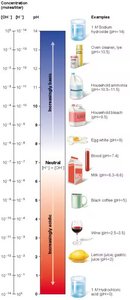
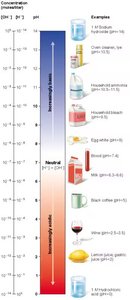
Homeostasis of acid-base balance is regulated by kidneys, lungs, and chemical buffers.
Organic Compounds
Carbohydrates
Carbohydrates are sugars and starches that provide a ready source of cellular fuel. They are classified by size and solubility:
Monosaccharides: Simple sugars (glucose, fructose, galactose, deoxyribose, ribose).
Disaccharides: Two linked monosaccharides (sucrose, maltose, lactose).
Polysaccharides: Polymers of simple sugars (starch, glycogen, cellulose).
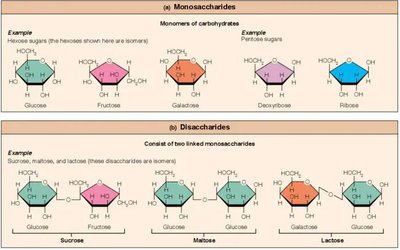
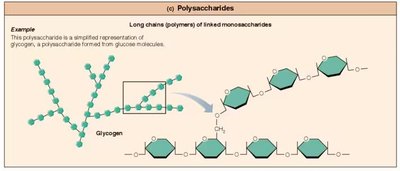
Starch is the storage carbohydrate in plants; glycogen is the storage carbohydrate in animals, mainly in skeletal muscle and liver.
Lipids
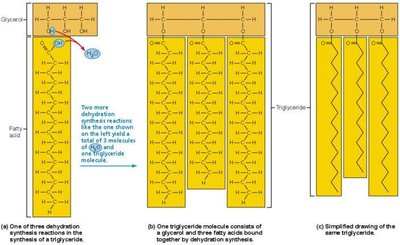
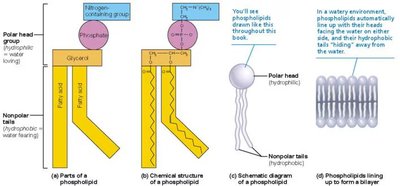
Lipids are insoluble in water and include triglycerides, phospholipids, steroids, and other substances. They are important for energy storage, insulation, and protection.
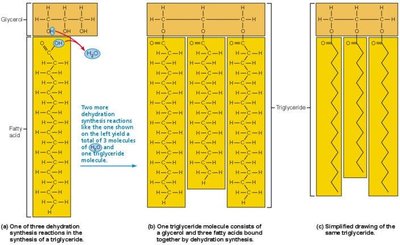
Triglycerides: Fats and oils; composed of fatty acids and glycerol in a 3:1 ratio.
Phospholipids: Modified triglycerides with two fatty acid tails (hydrophobic) and a polar head (hydrophilic); chief building material for cellular membranes.
Steroids: Fat-soluble molecules; cholesterol is essential for cell membranes, vitamin D, steroid hormones, and bile salts.
Proteins
Proteins are the basic structural material of the body and play vital roles in cell function. They are composed of amino acids and have four structural levels: primary, secondary, tertiary, and quaternary.
Fibrous proteins: Structural, insoluble, and stable (e.g., collagen).
Globular proteins: Functional, water-soluble, and chemically active (e.g., enzymes, antibodies, hormones).
Nucleic Acids
Nucleic acids (DNA and RNA) are composed of carbon, oxygen, hydrogen, nitrogen, and phosphorus. DNA is found in the nucleus and provides instructions for protein synthesis and cell replication. RNA is involved in protein synthesis.
DNA: Replicates itself before cell division; provides instructions for building proteins.
RNA: Functions in protein synthesis.
Summary Table: Types of Mixtures
Type | Particle Size | Settling | Example |
|---|---|---|---|
Solution | Very tiny | Do not settle out | Mineral water |
Colloid | Larger | Do not settle out | Jell-O |
Suspension | Very large | Settle out | Blood |
Summary Table: Types of Chemical Reactions
Type | Description | Example |
|---|---|---|
Synthesis | Atoms/molecules combine to form larger molecules | Protein synthesis from amino acids |
Decomposition | Molecules broken down into smaller molecules/atoms | Glycogen breakdown to glucose |
Exchange | Bonds made and broken; parts exchanged | ATP transfers phosphate to glucose |
Key Equations
Acid dissociation:
Base dissociation:
Neutralization:
