 Indietro
BIOL 202: Human Anatomy & Physiology II – Course Structure, Policies, and Study Guide
Guida di studio - Note intelligenti
 Appunti personalizzati basati sui tuoi materiali, ampliati con definizioni chiave, esempi e contesto.
Course Overview
Course Description
BIOL 202, Human Anatomy and Physiology II, is the second course in a two-part sequence designed for college students studying anatomy and physiology. This course builds upon foundational concepts from Human Anatomy and Physiology I and covers advanced body systems and physiological principles. The course includes both lecture and laboratory components, with a focus on the following systems:
Endocrine System
Cardiovascular System
Lymphatic System
Immune System
Digestive System
Urinary System
Reproductive System
Metabolism, Fluid, Electrolyte, Acid/Base Balance, and Development
Special emphasis is placed on physiological principles such as homeostasis, metabolic pathways, and negative feedback regulation. Laboratory activities include histologic examinations, physiological modeling, hands-on and computer-assisted instruction, and dissections.
Course Learning Outcomes
Key Competencies
Homeostasis: Describe physiological interactions within and between body systems that maintain homeostasis in both normal and pathological states.
Terminology: Use correct anatomical and physiological terminology at subcellular, cellular, and organismal levels.
Structure-Function Relationship: Explain how anatomical structures relate to physiological functions.
Clinical Interpretation: Interpret anatomical and physiological foundations for clinical conditions.
Laboratory Skills: Evaluate physiological functions and concepts through laboratory experimentation.
Anatomical Identification: Identify anatomical structures at both microscopic and macroscopic levels.
Project Demonstration: Demonstrate anatomical structures and physiological processes through student projects.
Embryology & Evolution: Describe basic embryological and evolutionary significance of body systems.
Course Structure and Evaluation
Assessment Methods
Examinations: Four lecture exams (200 pts each) and a comprehensive final exam (300 pts).
Lab Practicals: Four lab practicals (100 pts each).
Lab Reports: Assignments (25 pts each unit; points may vary).
Quizzes: Total 100-150 pts.
Homework: Total 80-100 pts.
Creative Project: 60 pts.
Grading Scale:
Percentage | Grade |
|---|---|
Above 89.5% | A |
79.5% to 89.4% | B |
69.5% to 79.4% | C |
59.5% to 69.4% | D |
Below 59.4% | F |
Course Calendar
Weekly Topics and Labs
The course follows a structured weekly calendar, covering the following chapters and laboratory activities:
Week | Lecture Topics | Lab Activities |
|---|---|---|
1 | Course Introduction/Syllabus, Chapter 14 Autonomic Nervous System | Reflexes and Responses, Instructor Choice |
2 | Chapter 14 Autonomic Nervous System, Chapter 15 Special Senses | Senses Lab |
3 | Chapter 16 Endocrine System | Endocrine Anatomy & Physiology |
4 | Lecture Exam 1, Chapter 17 Blood | Lab Exam 1, ID of Formed Elements |
5 | Chapter 17 Blood, Chapter 18 Cardiovascular System: The Heart | Hematology Tests, Instructor Choice |
6 | Chapter 18 Cardiovascular System: The Heart, Chapter 19 Cardiovascular System: Blood Vessels | Pig Heart Dissection, Blood Vessels and Circuits |
7 | Chapter 20 Lymphatic System, Chapter 21 Immune System | Electrocardiography, Pulse Rate, Blood Pressure, Blood Typing |
8 | Lecture Exam 2, Chapter 22 Respiratory System | Lab Exam 2, Respiratory System Anatomy |
9 | Chapter 22 Respiratory System, Chapter 23 Digestive System | Boyle's Law, Lung Function Tests, Digestive Anatomy |
10 | Chapter 23 Digestive System, Chapter 25 Urinary System | Digestive System Lab, Urinary System Anatomy |
11 | Chapter 25 Urinary System, Chapter 26 Fluid, Electrolyte, Acid-Base Balance | Urinalysis, Case Studies, Instructor Choice |
12 | Lecture Exam 3, Chapter 27 Reproductive System | Lab Exam 3, Instructor Choice |
13 | Chapter 27 Reproductive System | Instructor Choice |
14 | Chapter 28 Pregnancy and Human Development, Chapter 29 Heredity | Karotyping, Human Genetics |
15 | Review/Lecture Exam 4, Final Exam | Lab Exam 4 |
Laboratory Component
Lab Activities and Skills
The laboratory portion of the course is designed to reinforce lecture concepts through hands-on exploration. Activities include:
Histologic examinations (macroscopic and microscopic)
Physiological modeling
Dissections (e.g., pig heart)
Virtual labs and computer-assisted instruction
Clinical case studies (e.g., urinalysis, blood typing)
Technology and Testing Requirements
Required Software and Devices
Respondus Lockdown Browser and Monitor: Used for secure online testing. Requires a webcam and a second camera (mobile device) for exam surveillance.
Pearson MyLab/Mastering A&P: Access to course materials, assignments, and gradebook.
Office 365: For document creation and communication.
Adobe PDF Reader: For viewing course documents.
TEAMS Application: For communication and classes if necessary.
Students must maintain reliable access to all required technology and internet throughout the semester. Tablets and smartphones are not sufficient for all course functions.
Testing Environment Setup
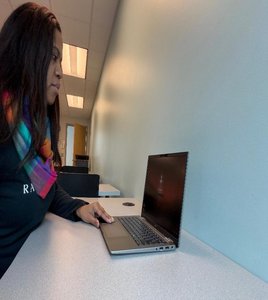
Online exams require strict adherence to testing protocols, including the use of a second camera to monitor the testing environment. The setup must ensure:
Clear view of the student, computer, hands, and workspace
No unauthorized materials or devices present
Proper lighting and quiet environment
Compliance with all instructor and college policies

Course Policies and Expectations
Attendance and Assignment Submission
Weekly attendance is based on timely completion of assignments, quizzes, or labs.
Late assignments incur a 5% deduction and must be submitted within one week; after that, no further extensions are granted.
Online auto-graded assignments are due on the assigned date with no late submissions allowed.
Academic Integrity
Unauthorized use of AI tools is prohibited unless approved by the instructor.
Plagiarism and academic dishonesty result in severe penalties, including failing the course and reporting to Student Affairs.
Students must submit their own work and avoid unauthorized assistance.
Communication and Professionalism
Contact the instructor via BridgeValley email for questions or concerns.
Assignments must be submitted through Brightspace; email submissions are not accepted.
Maintain professionalism and respect in all interactions.
Institutional Learning Outcomes
Effective communication using appropriate technology
Qualitative and quantitative reasoning skills
Civil discourse and social responsibility
Critical thinking and informed decision-making
Additional Resources
Student Services
BridgeValley Police
Teaching and Learning Resource Center
Digital Library
Brainfuse (online tutoring)
Summary
This syllabus provides a comprehensive overview of BIOL 202: Human Anatomy & Physiology II, including course structure, learning outcomes, weekly topics, laboratory activities, technology requirements, and academic policies. Students are expected to engage actively, maintain academic integrity, and comply with all course and testing protocols to succeed in this advanced anatomy and physiology course.
